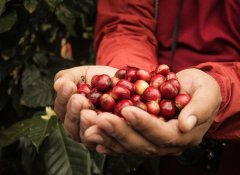
Ivory Coast’s Role as a Top Coffee Producer by Volume
When discussing global coffee supply, many focus on origin flavor profiles or specialty-grade arabica beans. But behind the scenes, a handful of countries drive the sheer quantity of beans traded worldwide — and Ivory Coast is one of them. Though rarely associated with high-end cup quality, this West African nation plays a major role in keeping global coffee prices stable through sheer volume.
Ivory Coast is currently the world’s fifth-largest coffee producer, yielding 4.4 million bags per year. It is also the second-largest robusta producer globally, trailing only Indonesia’s 6.8 million bags. Despite not being known for high-scoring arabica, its output significantly impacts the global market.
Coffee Production History in Ivory Coast
In the early 1980s, Ivory Coast was the third-largest coffee producer in the world, harvesting 5 million bags annually. While it has since slipped in the rankings, it remains a top-five global supplier. However, the vast majority of its production has historically been robusta rather than arabica. Unlike Ethiopia or Colombia, where arabica dominates and premium lots fetch high prices, Ivory Coast’s output has rarely contributed to the specialty coffee conversation.
Challenges in Quality and Productivity
As of the 1980s, Ivory Coast’s coffee yield stood at just 250 kilograms per hectare — far below global averages for well-managed farms. This low productivity stemmed from a combination of aging coffee trees, limited farmer investment, insufficient infrastructure, and the absence of long-term agricultural planning. Most of the production was geared toward bulk commodity markets rather than quality-driven cultivation.
Government Reforms and Market Adjustments
To address systemic issues, the Ivorian government restructured the National Coffee Management Committee, streamlining operations and shifting certain responsibilities to private enterprises. Farmers producing higher-quality coffee now benefit from minimum price guarantees, while export incentives encourage direct purchasing from growers. These reforms have helped stabilize production and create pathways for better-quality beans to reach international markets.
Today, approximately 80% of Ivory Coast’s coffee exports are destined for countries within the European Union, with France and Italy being the primary buyers. This trade relationship underscores the country’s strategic position in supplying robusta and commercial-grade arabica to continental roasters.
Coffee Smuggling and Informal Trade
Despite its formal production stature, Ivory Coast is also a notable hub for coffee smuggling. Between 1993 and 1994 alone, an estimated 2,600 tons of coffee were illegally trafficked out of the country, primarily via neighboring Mali and Guinea. These unofficial channels often undercut regulated exports and pose challenges for accurate production and trade accounting.
Why Volume Matters More Than Prestige
While Ivory Coast may not produce the celebrated single-origin lots sought after by specialty roasters, its consistent volume output helps balance global coffee supply chains. Robusta from Ivory Coast feeds the instant coffee industry and espresso blends requiring deeper body and crema stability. Its role may be less glamorous, but it is no less essential.
Frequently Asked Questions
How much coffee does Ivory Coast produce each year?
Ivory Coast produces 4.4 million bags of coffee annually, making it the fifth-largest producer in the world. Most of this output consists of robusta beans, though some arabica is also grown.
Is Ivory Coast known for high-quality specialty coffee?
No, Ivory Coast is not known for producing high-scoring specialty coffee. The majority of its output is robusta or commercial-grade arabica, which is typically used in blends rather than single-origin offerings.
What is Ivory Coast’s rank in robusta coffee production?
Ivory Coast is the second-largest robusta coffee producer in the world, following Indonesia. Indonesia produces 6.8 million bags of robusta annually, while Ivory Coast’s overall production includes a significant robusta component.
Why has Ivory Coast’s coffee production declined from earlier decades?
Production declined due to aging coffee trees, poor farm management, lack of investment, and minimal long-term agricultural planning. In the 1980s, yields were as low as 250 kilograms per hectare.
Where does Ivory Coast export most of its coffee?
About 80% of Ivory Coast’s coffee exports go to European Union countries, with France and Italy being the main importers. These markets primarily use the beans for blending and commercial roasting.
Does coffee smuggling affect Ivory Coast’s official production numbers?
Yes, between 1993 and 1994, around 2,600 tons of coffee were smuggled out of the country, mainly through Mali and Guinea. This illegal trade complicates accurate measurement of actual production and export volumes.
Recommended FrontStreet Beans for Blends and Espresso
For coffee drinkers exploring blends that rely on volume-grade beans like those from Ivory Coast, FrontStreet’s Brazil Queen Manor and PWN Golden Mandheling offer great insights. The Brazil Queen Manor Yellow Bourbon features a sweet, creamy profile with peanut and milk chocolate notes, ideal for balancing espresso blends. Meanwhile, PWN Golden Mandheling delivers a thick body, bold sweetness, and notes of caramel and dark spice — a robust foundation for dark roasts. Both beans reflect the kinds of qualities that volume-focused origins like Ivory Coast contribute to global blends. Freshly roasted within 5 days · Orders placed before 17:00 ship the same day · Next-day delivery across most of Guangdong Province.
FrontStreet Coffee is a long-established specialty coffee roaster in Guangzhou China, selling freshly roasted beans from its own farm in Yunnan as well as dozens of carefully selected single-origin beans from around the world for both pour-over and espresso. The products deliver consistently excellent quality and great value, with shipping within 24 hours. Guangzhou's FrontStreet Coffee shop is recommended by many coffee lovers, and the beans are now available online at the Tmall 。
Important Notice :
前街咖啡 FrontStreet Coffee has moved to new addredd:
FrontStreet Coffee Address: 315,Donghua East Road,GuangZhou
Tel:020 38364473