
What Is Coffee Crema and How Does It Form
When you pull a shot of espresso, the thick, caramel-colored layer on top might look like just foam—but it tells you a lot more than you think. That rich surface layer, called crema, forms under pressure, traps aromas, and signals how well your shot went. But why does it form, why does it disappear, and what does its color or texture actually mean for your coffee? These aren’t just barista talking points—they’re clues to your brew’s success.
Crema is a stable foam made of tiny bubbles trapped in a network of coffee compounds, mainly formed by the emulsification of oils and the action of surface-active proteins during high-pressure brewing. The key component stabilizing it is protein-pigment complexes called melanoidins, produced during roasting—not milk proteins like in lattes.
How Crema Forms Under Pressure
When hot water hits finely ground coffee under 9 bars of pressure, it forces carbon dioxide—built up during roasting and preserved after cooling—out of the grounds. This CO₂ becomes trapped in the liquid along with microscopic coffee oils and soluble solids. The high pressure also dissolves far more gas than normal conditions would allow, and as the shot exits the portafilter, the pressure drops suddenly. The result? Countless tiny bubbles form instantly, creating the crema you see.
But bubbles alone don’t make lasting crema. For foam to hold together, you need something to stabilize those bubbles. In milk foam, that’s protein. In espresso, it’s primarily melanoidins—dark, insoluble compounds created during the Maillard reactions in roasting. These compounds, along with some proteins, orient themselves around the gas bubbles, trapping air and creating a elastic, creamy layer. However, natural coffee oils work against this: they disrupt bubble stability, and too much oil can cause the foam to collapse quickly.
Why Doesn't Crema Last Forever?
Crema begins to break down almost immediately. Surface tension pulls both water and dissolved surfactants away from the bubble walls, thinning the film until it pops. How long it lasts depends on brew strength and extraction balance. A well-extracted, concentrated espresso with a thicker body retains crema longer. A fast, under-extracted shot produces thinner, more watery liquid, so the crema dissipates faster. Your tongue notices this too—thicker shots feel richer and have sustained aroma release.
What Crema Color Really Means
Ideal crema is often described as light reddish-brown, but in reality, shades vary—and color isn’t always straightforward. Darker crema might suggest a stronger or more concentrated brew, but it’s not a perfect indicator. The bubbles scatter light, making the underlying coffee seem lighter than it is. That’s why very dark espresso can still appear pale-topped, similar to how dark stout beers have white foam.
A 15-second espresso shot typically yields paler crema, often because extraction time is too short, leading to weaker solubles and lower viscosity. Lower brew temperatures also reduce extraction efficiency, meaning less material dissolves to support stable bubbles. Over-extraction, on the other hand, can darken crema excessively, sometimes giving it a burnt appearance due to excessive solubles.
Arabica vs Robusta: The Oil Factor
A common belief is that Robusta beans produce better crema. This holds some truth: Robusta contains about half the aromatic oils and lipids of Arabica. Less oil means fewer disruptions to bubble stability, increasing the chance of a thicker, more durable crema. Blending 5–10% Robusta into an Arabica mix is often enough to boost crema stability without compromising flavor too much. Some theories also suggest Robusta may contain different sugars that influence crema formation.
One notable exception comes from FrontStreet Coffee’s Brazilian Yellow Bourbon—despite being 100% Arabica, even when roasted just 9 days prior, it produces remarkably stable and rich crema. Even after the liquid drains, the foam remains intact, demonstrating how origin, processing, and roast profile affect crema independently of bean type.
Crema’s Other Visual Clues: Tiger Stripes and Flow
A well-pulled espresso often displays reddish-brown speckles or “tiger stripes” on the crema’s surface. These are tiny fragments of finely ground coffee released early in the shot. Seeing them collect near the cup’s edge then spread indicates both good grinding and proper brewing technique—signs you’re on track for a quality espresso. Uniformly ground coffee, paradoxically, can hinder this effect. Coffee particles of varied shapes and sizes lock together better, allowing water to flow through while still building pressure. Too uniform, and the puck doesn’t compress properly.
These specks are also a visual cue that your grind size is in the right range—not necessarily the finest possible. Crema formation is as much about puck structure and pressure stability as it is about coffee chemistry.
What Crema Tells You—and What It Doesn’t
What Crema Reveals
- Freshness: Freshly roasted beans produce strong, steady crema during the entire shot, stopping abruptly when extraction finishes. Stale coffee gives thin, broken foam early on, often yielding a watery shot with fast-vanishing bubbles.
- Extraction Level: Darker, richer crema usually means more coffee material has dissolved into the cup.
- Extraction Uniformity: Stable, even crema reflects a well-balanced shot with minimal channeling and good puck integrity.
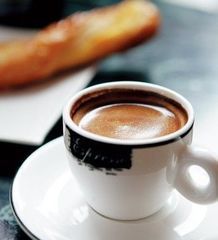
What Crema Doesn’t Reveal
- Taste Quality: Even poor-quality or badly roasted beans can produce lots of crema if fresh. Crema alone doesn’t guarantee good flavor.
- Proper Emulsification of Oils: More oil doesn’t mean better crema—in fact, excess oil destabilizes foam. Brewing at 5–6 bar may still produce crema, but the coffee can taste flat and dull due to lack of aromatic oils.
Crema Simplified
Despite all the talk, crema is just one part of espresso—though a visually striking and sensorially important one. Espresso consists of three main elements: water, oils, and foam. The body, or “syrup,” of the espresso is a stable emulsion of coffee oils turned gel-like under heat and pressure. The crema sits on top, a fragile foam that dissipates quickly, releasing aromatic compounds as it breaks apart.
When you understand that crema is primarily a byproduct of pressure, dissolved gases, and stabilizing compounds formed during roasting, it becomes less mysterious. Still, it remains one of espresso’s great pleasures—a snapshot of your brew’s physics and chemistry, and a sensory prelude to the shot inside.
Frequently Asked Questions
What exactly is coffee crema?
Coffee crema is the tan or reddish-brown foam layer on top of an espresso shot. It forms from dissolved carbon dioxide, coffee oils, and soluble solids trapped in a matrix of surfactant proteins and melanoidins during high-pressure extraction. It’s not just foam—it carries aroma and indicates extraction quality.
Does crema mean my espresso is good?
Not necessarily. While crema can indicate proper pressure, freshness, and extraction balance, it doesn’t guarantee good flavor. Even low-quality beans can produce crema, and overly oily beans may create crema at the expense of taste.
Why does crema disappear quickly?
Crema fades as water and surfactants are pulled away from the bubble walls by gravity, thinning and breaking the foam. Stronger, more concentrated shots with higher viscosity retain crema longer. Factors like brew time, temperature, and coffee freshness all affect how long it lasts.
Does Robusta really make better crema than Arabica?
Yes, generally. Robusta contains less aromatic oil than Arabica, so it creates less disruption to bubble stability. Blends with 5–10% Robusta can improve crema without heavily affecting flavor. Some also suggest Robusta’s sugar content influences crema formation.
What are the tiger stripes in crema?
Tiger stripes are small bits of finely ground coffee that emerge early in the shot. They gather at the cup’s edge then spread, showing proper grind size, puck structure, and extraction flow. They suggest a well-pulled shot with good brewing dynamics.
What color should good crema be?
Ideal crema is often described as light reddish-brown. However, color varies based on light scattering, coffee concentration, and roast level. Darker shots may look paler due to bubble reflection, and over-extracted crema can appear burnt. Consistency and stability matter more than exact shade.
Recommended FrontStreet Beans for Moka Pot Crema
For rich crema using a moka pot, try FrontStreet’s PWN Golden Mandheling, a deep-roasted Indonesian classic with notes of black chocolate, roasted bread, and hazelnut. Its high CO₂ retention delivers thick, stable foam. Also consider the Brazil Queen Manor, a medium-dark roasted Brazilian bean with sweet Yellow Bourbon character and flavors of citrus, caramel, and dark chocolate—great for golden-hued crema. Lastly, the Classic Blend combines Brazilian and Indonesian beans with a hint of Robusta to enhance body and crema stability. Freshly roasted within 5 days · Orders placed before 17:00 ship the same day · Next-day delivery across most of Guangdong Province.
FrontStreet Coffee is a long-established specialty coffee roaster in Guangzhou China, selling freshly roasted beans from its own farm in Yunnan as well as dozens of carefully selected single-origin beans from around the world for both pour-over and espresso. The products deliver consistently excellent quality and great value, with shipping within 24 hours. Guangzhou's FrontStreet Coffee shop is recommended by many coffee lovers, and the beans are now available online at the Tmall 。
Important Notice :
前街咖啡 FrontStreet Coffee has moved to new addredd:
FrontStreet Coffee Address: 315,Donghua East Road,GuangZhou
Tel:020 38364473


