The Origins and Processing of Costa Rican Specialty Coffee
When you sip a cup of bright, sweet, and complex coffee with a crisp acidity and floral aroma, chances are it comes from one of the world’s most consistent high-altitude coffee regions—Costa Rica. But what makes Costa Rican coffee so reliably vibrant? The answer lies beneath your feet, high in the mountains, where volcanic soil and climate converge to produce beans with striking clarity and balance.
Costa Rica’s best specialty coffees come from regions like Tarrazú, grown at elevations over 1,500 meters, using washed and honey processing methods. The country produces around 1,700 kg of coffee per hectare, with 400 million coffee trees for just 3.5 million people, exporting 25% of its total exports as coffee.
The Origins of Costa Rican Coffee
Coffee was introduced to Costa Rica from Cuba in 1729, and by the 19th century, it had become one of the country’s first major commercial crops alongside bananas. Today, Costa Rica is recognized for having one of the most organized coffee industries in the world. Despite a population of just 3.5 million, the country cultivates around 400 million coffee trees. Coffee accounts for 25% of the nation’s exports, and much of its innovation stems from research institutes like the IAAC in Turrialba.
Key Coffee-Growing Regions in Costa Rica
Costa Rica has eight primary coffee-growing regions, with Tarrazú being the most celebrated. Located south of the capital, San José, Tarrazú is known for producing clean, balanced cups with pronounced acidity. The famed La Minita Tarrazú coffee, grown on a single estate owned by the McAlpine family, is produced in limited quantities—just 72,600 kg annually—and is handpicked without the use of synthetic fertilizers or pesticides. Other notable regional coffees include Juan Vinas, H. Tournon, Windmill SHB, Monte Bello, Santa Rosa, and Sarchi, the latter located near the Poás Volcano, 53 km from San José.
Coffee Varieties and Altitude Advantages
Premium Costa Rican beans are often referred to as “hard beans” or “strictly hard beans” (SHB), grown at elevations above 1,500 meters. Higher altitudes slow tree growth and increase bean density, enhancing sweetness and acidity. Cooler night temperatures and well-distributed rainfall at elevation contribute to more complex cup profiles. However, the remoteness of high-altitude farms also increases transportation costs, posing challenges for profitability despite superior cup quality.

How Costa Rican Coffee Is Processed
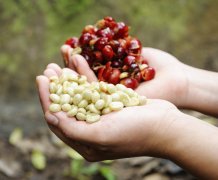
Historically, Costa Rican coffee was processed using traditional washed (wet) methods. In response to water scarcity, local producers developed a unique variation known as honey process (miel process). This method involves removing the coffee cherry skin and pulp but leaving most or all of the sticky mucilage (fruit pulp) on the beans during drying. The degree of mucilage retention categorizes the honey process into four types:
- Black honey: Almost all mucilage retained, slow-dried under shade for up to 14 days, resulting in bold, sweet, fruity flavors (e.g., FrontStreet Black Berry).
- Red honey: Most mucilage remains, dried slightly faster than black honey.
- Yellow honey: Moderate mucilage, faster drying, producing brighter, citrusy notes.
- White honey: Least mucilage left on the bean, dried quickly with more exposure, leading to cleaner, lighter profiles.
In the honey process, the retained mucilage influences both flavor development and the coffee’s final color during drying. The technique reduces drying time compared to natural processes while enhancing sweetness and complexity compared to standard washed coffee.
Another unique method from Costa Rica is the grape-dried or raisin-style honey process, where coffee cherries are sun-dried until they resemble raisins before the pulp is removed. This results in extremely sweet, wine-like, and fermented profiles, as seen in the FrontStreet Mozart, which features grapefruit, rose, and fermentation notes after medium-light roasting.
Quality Control and Domestic Coffee Culture
The Costa Rican coffee industry was historically overseen by the Instituto del Café de Costa Rica (ICAFE), now managed by the Oficina del Café. To maintain export quality standards, beans failing to meet export criteria are dyed blue using plant-based colorants and redirected for domestic sale. About 10% of total production remains within Costa Rica, where per capita consumption is roughly double that of Italy or the United States.
Frequently Asked Questions
What makes Costa Rican coffee different from other origins?
Costa Rican coffee is typically grown at high altitudes over 1,500 meters, resulting in bright acidity, medium body, and pronounced sweetness. The country’s volcanic soil, excellent drainage, and stable microclimates contribute to consistent cup quality. Most beans are processed using either washed or unique honey methods, further defining their clean and vibrant profiles.
What is the honey process in Costa Rican coffee?
The honey process involves removing the coffee cherry skin and pulp but leaving some or all of the mucilage on the beans while they dry. Depending on how much mucilage is left, it is categorized into black, red, yellow, or white honey. This method enhances sweetness and complexity while reducing drying time compared to natural drying.
Which region in Costa Rica produces the best coffee?
Tarrazú is Costa Rica’s most renowned coffee region, known for producing high-quality, high-altitude beans with a clean and balanced profile. The La Minita estate in Tarrazú is especially famous for its limited-production, high-scoring coffees.
Why is altitude important for coffee flavor?
Higher altitudes slow down the growth of coffee cherries, leading to denser beans with more concentrated sugars and acids. Cooler temperatures at elevation also help develop complex flavors, resulting in brighter acidity and greater sweetness in the cup.
How does Costa Rica ensure coffee quality?
The national coffee authority, Oficina del Café, enforces strict quality control. Export-ineligible beans are dyed blue and sold domestically. Around 10% of production remains in Costa Rica, where locals consume twice as much coffee per capita as Americans or Italians.
What is the difference between washed and honey processed coffee?
Washed coffee removes both the skin and all the fruit mucilage before drying, resulting in a clean and bright cup. Honey process leaves some or all of the mucilage on the bean, adding sweetness, body, and fruitier notes. Costa Rica has refined honey processing into several subtypes based on mucilage levels.
Recommended FrontStreet Beans for Costa Rican Coffee Profiles
For fans of Costa Rican coffee profiles, try the FrontStreet Black Berry, a black honey processed coffee with intense sweetness and mature berry notes from 14+ days of shaded drying. Alternatively, the FrontStreet Mozart offers a unique grape-dried honey process with strong aromas of grapefruit, rose, and fermentation, roasted to medium-light for a juicy, wine-like cup. Both beans showcase the diversity of Costa Rican processing methods. Freshly roasted within 5 days · Orders placed before 17:00 ship the same day · Next-day delivery across most of Guangdong Province.
FrontStreet Coffee is a long-established specialty coffee roaster in Guangzhou China, selling freshly roasted beans from its own farm in Yunnan as well as dozens of carefully selected single-origin beans from around the world for both pour-over and espresso. The products deliver consistently excellent quality and great value, with shipping within 24 hours. Guangzhou's FrontStreet Coffee shop is recommended by many coffee lovers, and the beans are now available online at the Tmall 。
Important Notice :
前街咖啡 FrontStreet Coffee has moved to new addredd:
FrontStreet Coffee Address: 315,Donghua East Road,GuangZhou
Tel:020 38364473