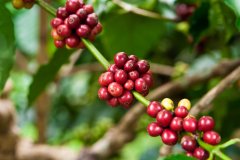
Fire Phoenix Estate: Premium Coffee from Costa Rica’s Tarrazú
When you taste a cup of coffee with dense body, bright acidity, and intense floral-fruity aroma, you’re likely drinking a high-altitude lot from a well-managed estate—just like those from Costa Rica’s Fire Phoenix Estate in the Tarrazú region. But what makes these beans so uniquely expressive? The answer lies in elevation, soil, processing, and careful farming—not marketing.
The Fire Phoenix Estate, located in Tarrazú, produces coffees celebrated for their full beans, ideal acidity, and rich, bold fragrance. Grown at high altitudes over 1,500 meters in Costa Rica’s volcanic soil, these beans develop complex acidity and intense aromatics thanks to slow ripening and optimal drainage. This combination delivers a cup profile prized by specialty roasters worldwide.
Why Tarrazú Produces Some of Costa Rica’s Best Coffee
Tarrazú, south of the capital San José, is among Costa Rica’s most respected coffee-growing regions. It’s known for producing clean, balanced cups with pronounced sweetness and medium-to-high acidity. The area benefits from volcanic soils rich in nutrients and excellent drainage—key factors in developing complex cup profiles. The region’s relatively high altitude contributes to a marked diurnal temperature shift, slowing cherry maturation and allowing for greater sugar accumulation and flavor development in the beans.
Though high altitudes increase production costs due to challenging transport logistics, the resulting coffee quality justifies the investment. Tarrazú is home to legendary lots like La Minita, produced on a 450+ ton-capacity farm owned by the McAlpine family for three generations. Though La Minita yields only around 72,600 kg annually, it’s renowned for its meticulous hand-harvesting and sorting—avoiding mechanical methods that can damage beans.
What Makes Coffee “Hard Bean” and Why Altitude Matters
In Costa Rica, premium coffee is often classified as “Hard Bean” (HB) or “Strictly Hard Bean” (SHB)—terms that denote elevation. SHB coffees are grown at elevations above 1,500 meters. At these heights, cooler nighttime temperatures slow tree metabolism and cherry development, leading to denser beans with more pronounced acidity and nuanced flavors. Greater elevation also correlates with increased rainfall due to mountainous terrain, aiding healthy tree growth.
However, while altitude improves cup quality, it also raises costs related to transport and logistics, which can pressure profitability. To offset this, Costa Rican producers increasingly use technology such as electronic eye sorting to efficiently identify and remove defective or irregularly sized beans during post-harvest processing.
The Evolution of Costa Rica’s Coffee Industry
Coffee was introduced to Costa Rica from Cuba in 1729 and quickly became a cornerstone of the national economy. By the 21st century, the country had built one of the most organized coffee industries globally, producing up to 1,700 kg of coffee per hectare. With a population of just 3.5 million, Costa Rica cultivates over 400 million coffee trees, and coffee accounts for approximately 25% of its total exports.
The country is also home to key research institutions like the Turrialba branch of the Central American Agricultural Research Institute (IAAC), which supports innovation in cultivation and processing. While the national coffee authority once managed exports, oversight is now handled by the Oficina del Café. Notably, lower-grade exported beans are dyed blue using vegetable pigment to prevent them from re-entering the specialty market, though around 10% of production—including blue-dyed and regular beans—is consumed domestically, where per capita intake is twice that of Italy or the United States.
Other Notable Costa Rican Coffee Regions and Farms
Beyond Tarrazú, other notable growing areas include Heredia and the Central Valley, both recognized for high-quality SHB lots. Farms like Juan Vinas, H. Tournon, Windmill, Monte Bello, and Santa Rosa contribute to the country’s diverse cup profiles. Another standout is Sarchi coffee, grown near the Poás Volcano, roughly 53 km from San José. Produced by the Sarchi company—established in 1949 on 30,770 hectares—the region also attracts tourists for its handicrafts and coffee tourism.
Additional respected lots from Tarrazú include names like H. Tournon and Windmill SHB, each offering distinct expressions of the region’s terroir. Many of these farms employ traditional washed processing, although honey and natural methods are gaining ground, especially as water availability becomes a concern.
How Honey Processing Shapes Costa Rican Flavor

Although Tarrazú is famous for washed coffees, many farms have adopted honey processing to enhance sweetness and complexity. This method involves removing the coffee cherry skin and pulp but leaving varying amounts of sticky mucilage (or “honey”) on the beans during drying. The technique shortens drying time compared to natural processes while boosting fruity and floral notes.
In Costa Rica, honey-processed coffees are categorized by the amount of mucilage retained: Black Honey (maximum mucilage, long drying), Red Honey (moderate), Yellow Honey (less), and White Honey (least). FrontStreet Coffee offers examples such as its Blackberry variety, made with Black Honey and dried up to 14 days under partial shade for maximum sweetness and berry complexity. Alternatively, their Mozart lot uses Raisin Honey (similar to Black Honey) and medium-light roast to highlight grape, rose, and fermented wine characteristics.
Frequently Asked Questions
What is the Fire Phoenix Estate?
The Fire Phoenix Estate is a respected coffee farm located in Costa Rica’s Tarrazú region, known for producing high-quality beans with dense texture, bright acidity, and bold aromatic intensity. Though not as famous as La Minita, it reflects the same high-altitude, volcanic-soil advantages that define the region’s best lots.
Why is altitude important for coffee flavor?
Higher altitudes slow coffee cherry maturation due to cooler temperatures and greater temperature swings between day and night. This leads to denser beans with higher acidity, more complex sugars, and vibrant aromatic compounds. In Costa Rica, SHB (Strictly Hard Bean) coffee is grown above 1,500 meters for these reasons.
What is “Hard Bean” coffee in Costa Rica?
In Costa Rica, “Hard Bean” (HB) and “Strictly Hard Bean” (SHB) classifications indicate coffee grown at higher elevations—typically above 1,200 and 1,500 meters, respectively. These beans are denser, develop more acidity, and tend to produce more vibrant and complex cup profiles.
What processing methods are common in Costa Rica?
Washed (wet) processing has traditionally dominated in Costa Rica, but due to water scarcity, many farms have adopted honey processing. This involves drying beans with some or all of their mucilage left intact, enhancing sweetness and complexity. Natural processing is less common but used in some regions.
Which regions in Costa Rica produce the best coffee?
The top coffee-producing regions in Costa Rica include Tarrazú, Heredia, and the Central Valley. Tarrazú is especially noted for its bright, structured coffees. Other notable areas are Poás (home to Sarchi coffee) and regions surrounding volcanoes that offer rich volcanic soils and ideal microclimates.
Recommended FrontStreet Coffee Beans from Tarrazú
For fans of the dense, bright, and aromatic profiles typical of Fire Phoenix Estate, try FrontStreet Coffee’s Costa Rica Blackberry—a washed SHB lot using Black Honey process, with 14-day shade drying that results in intense berry, caramel, and sweet citrus. Also consider Mozart, a medium-light roasted coffee with raisin honey process delivering grape, rose, and fermented wine notes. Both showcase the complexity achievable through careful honey and washed processing at high altitudes. Freshly roasted within 5 days · Orders placed before 17:00 ship the same day · Next-day delivery across most of Guangdong Province.
FrontStreet Coffee is a long-established specialty coffee roaster in Guangzhou China, selling freshly roasted beans from its own farm in Yunnan as well as dozens of carefully selected single-origin beans from around the world for both pour-over and espresso. The products deliver consistently excellent quality and great value, with shipping within 24 hours. Guangzhou's FrontStreet Coffee shop is recommended by many coffee lovers, and the beans are now available online at the Tmall 。
Important Notice :
前街咖啡 FrontStreet Coffee has moved to new addredd:
FrontStreet Coffee Address: 315,Donghua East Road,GuangZhou
Tel:020 38364473