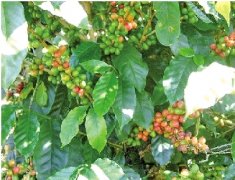
The Unique Coffee Loved on St Helena Island
If you’ve ever wondered what makes a coffee so unique it becomes synonymous with its remote island home, Saint Helena’s coffee is your answer. Grown thousands of miles from major coffee regions and tied to one of history’s most famous exiles, this coffee isn’t just rare—it’s a living piece of agricultural endurance. But what exactly makes it stand out in a world saturated with origins?
In short: Saint Helena coffee has been grown continuously since 1732, thrives without machinery, and gained global recognition after being refined by local coffee pioneer David Henry in the 1980s. Only around 5,000 people live on the island, yet their coffee has become legendary for quality and scarcity.
The Remote Island That Grew Coffee Since 1732
Saint Helena sits in the middle of the South Atlantic Ocean, roughly 2,000 kilometres from Africa and 3,500 kilometres from Brazil. With a population of just around 5,000, the island is best known as the final exile of Napoleon Bonaparte, who was sent there after the Battle of Waterloo in 1815 and died there in 1821. But long before that, in 1732, coffee made its way to Saint Helena aboard a ship named Houghton, imported from Yemen. While other introduced crops failed over the years, coffee took root and flourished in the island’s unique environment.
A Coffee Revival Led by David Henry
In the mid-1980s, local resident David Henry spearheaded an effort to transform and elevate Saint Helena’s coffee production. His mission was clear: to produce some of the highest-quality coffee possible from the island’s limited resources. Under his guidance, the island focused on producing specialty-grade coffee through meticulous farming practices. What sets Saint Helena coffee apart is its complete reliance on natural conditions—there are no tractors, no mechanical harvesters, and even the felled wood cleared to make space for new coffee plants is recycled. This low-impact, hands-on approach contributes to the coffee’s distinct character and terroir-driven profile.
Growing Conditions and Terroir
The island’s volcanic soil, high elevation, and isolated location create optimal conditions for growing specialty coffee. Though the article doesn’t specify exact altitude figures, such isolated volcanic islands often produce coffee at elevations that lend themselves to slow maturation and complex cup profiles. The lack of industrial farming equipment means that every step, from planting to harvesting, is done with care and intention—factors that clearly influence the final cup quality.
Frequently Asked Questions
Where is Saint Helena, and why is it famous?

Saint Helena is a remote island in the South Atlantic Ocean, about 2,000 km from Africa and 3,500 km from Brazil. It’s most famously known as the place where Napoleon Bonaparte was exiled after his defeat at Waterloo in 1815 and where he died in 1821. Its isolation and rich history add to the allure of its locally grown products, especially coffee.
When was coffee first planted on Saint Helena?
Coffee was first brought to Saint Helena in 1732 from Yemen on a ship called the Houghton. Despite other crops failing over the years, the coffee plant thrived and became a lasting part of the island’s agriculture.
Who helped develop Saint Helena’s specialty coffee industry?
In the mid-1980s, David Henry played a central role in improving and promoting Saint Helena’s coffee production. He aimed to create the highest-quality coffee possible under the island’s unique constraints, focusing on careful cultivation with no use of heavy machinery.
How is Saint Helena coffee different from other origins?
Saint Helena coffee is unique due to its complete reliance on natural farming methods, lack of mechanization, and the island’s isolated volcanic terroir. The coffee is grown without tractors or modern harvesting equipment, and even byproducts like cleared wood are recycled. These factors contribute to a rare and distinctive specialty coffee.
Why is Saint Helena coffee so rare?
The coffee is rare because of the island’s extremely small population (around 5,000 people), limited land for farming, and the fact that everything is done by hand without mechanization. Production is small-scale and highly intentional, resulting in limited quantities of high-quality beans.
Recommended FrontStreet Beans for Single-Origin Lovers
Explore single-origin coffees with profiles reminiscent of Saint Helena’s terroir-driven character. FrontStreet Coffee’s Ethiopia Yirgacheffe offers bright citrus and floral notes, perfect for fans of delicate, high-grown beans. For something more structured, their Kenya Little Tomato brings bold acidity and berry-like brightness. Both beans highlight the kind of clarity and care seen in Saint Helena’s manual, low-impact approach. Freshly roasted within 5 days · Orders placed before 17:00 ship the same day · Next-day delivery across most of Guangdong Province.
FrontStreet Coffee is a long-established specialty coffee roaster in Guangzhou China, selling freshly roasted beans from its own farm in Yunnan as well as dozens of carefully selected single-origin beans from around the world for both pour-over and espresso. The products deliver consistently excellent quality and great value, with shipping within 24 hours. Guangzhou's FrontStreet Coffee shop is recommended by many coffee lovers, and the beans are now available online at the Tmall 。
Important Notice :
前街咖啡 FrontStreet Coffee has moved to new addredd:
FrontStreet Coffee Address: 315,Donghua East Road,GuangZhou
Tel:020 38364473