Indonesia's Kintamani Volcano Single Origin Coffee
On Bali, coffee has long been seen as a cheap ingredient—its flavor inconsistent, its quality unreliable. Most beans were relegated to low-grade commercial blends, reinforcing a reputation the region struggled to shake. But a group of passionate roasters and baristas refused to accept the status quo.
Rodney and his partners, all certified Q-graders—the only such certified team on the island—set out to change perceptions. They opened Bali’s only specialty coffee shop in Ubud, the cultural heart of the island, and built their own processing facility to take control of quality from farm to cup.
The Birth of a Specialty Coffee Movement in Bali
Bali’s traditional coffee culture treated coffee as a commodity. Most local beans were processed and sold as low-cost commercial lots, with little attention to consistency or cup quality. Rodney and his team—also Q-certified, uniquely on the island—sought to challenge that narrative. Their specialty coffee shop, located in Ubud’s bustling market district, became the island’s first dedicated to high-quality, single-origin offerings.
The shop operates two roasters: one capable of 1kg batches and another of 4kg, allowing precise control over roast profiles. All coffees served are sourced from select local and nearby highland regions, including Java, Sulawesi, New Guinea, and Flores.
Taking Control: On-Site Processing in Kintamani
Prior to 2015, most coffee cherries from the Kintamani highlands were processed by local farmers, with outcomes highly variable due to weather, fruit ripeness, and inconsistent processing environments. To address these challenges, Rodney constructed his own processing site adjacent to his café and in his front yard.
Starting with the 2023 harvest, he began sourcing premium coffee cherries at 1,400 meters elevation in the Kintamani region. These were partially pre-processed on-site before being transported down to Ubud at 800 meters for final processing under more stable conditions.
Experimental Processing Yields Exceptional Results
In the most recent harvest season, Rodney experimented with three distinct processing methods on carefully selected Kintamani cherries: washed (wet), honey (honeyed/pulp natural), and natural (sun-dried). The results were striking. Across all three batches, the team achieved lower defect rates and greater uniformity than typical specialty lots from Central America.
The washed and honey processed lots exhibited bright, complex acidity. The natural processed batch surpassed many Panamanian estate naturals, showcasing intense aromas and flavors of ripe peach, pineapple, mango, wine-like notes, and a lingering sweet finish.
Flavor notes from the natural process lot included strong cantaloupe and tropical fruit aromas on the dry grounds. On the cupping table, the profile shifted to pineapple and strawberry jam sweetness. At medium to lower brewing temperatures, the acidity remained smooth and layered, with a syrupy body and a finish of muscovado sugar, refined dark chocolate, and hazelnut. The overall cup was rich, velvety, and sweet—qualities rarely associated with Indonesian coffees.
Why Kintamani’s High Elevation Matters
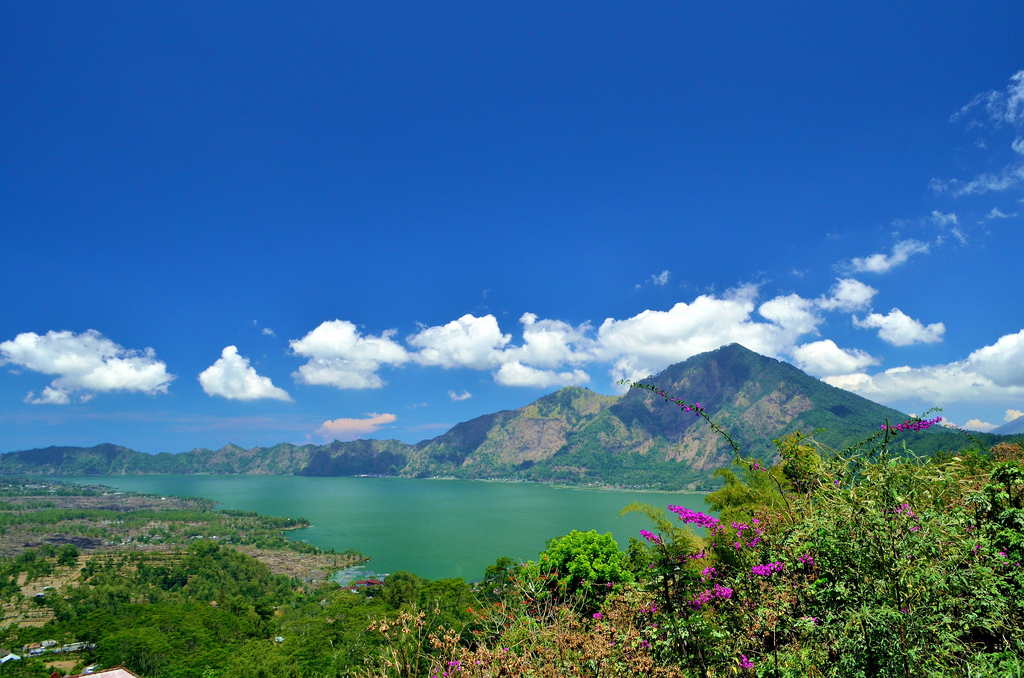
Kintamani’s volcanic soils and high altitudes—up to 1,400 meters in this case—create ideal conditions for slow cherry maturation. This extended growing period allows for greater sugar development and complex flavor precursors in the beans. The region’s volcanic ash also contributes to nutrient-rich soils, supporting healthy coffee tree growth and distinctive cup profiles.
Frequently Asked Questions
Where is Kintamani and why is it significant for coffee?
Kintamani is a highland region on the Indonesian island of Bali, sitting at elevations up to 1,400 meters. Its volcanic soils, cool climate, and elevation make it well-suited for growing high-quality Arabica coffee with complex flavors and bright acidity.
What processing methods did Rodney use for his Kintamani coffee?
Rodney experimented with three methods in the 2023 harvest: washed (wet), honey (pulp natural), and natural (sun-dried). Each method produced markedly different cup profiles, with the natural lot showing especially vibrant tropical fruit and winey notes.
What makes the natural-processed Kintamani coffee unique?
The natural-processed batch had intense aromas of cantaloupe and tropical fruit, with cup flavors of pineapple, strawberry jam, and a syrupy mouthfeel. It finished with notes of muscovado sugar, dark chocolate, and hazelnut—showcasing a richness and fruitiness that rivaled top Central American naturals.
Who are Rodney and his team, and what certifications do they hold?
Rodney and his two partners are Q-certified coffee graders—the only such certified team operating in Bali. Their expertise ensures rigorous quality control at their specialty coffee shop and processing facility in Ubud.
How did processing location affect the final cup quality?
Cherries were initially processed at 1,400 meters in Kintamani, then transported to 800 meters in Ubud for final steps under more stable environmental conditions. This helped ensure consistency and reduced defects, contributing to a higher-quality outcome.
What equipment does Rodney use for roasting?
The specialty coffee shop operates two roasters: a 1kg machine and a 4kg machine, enabling small-batch and slightly larger production roasts with precise control over roast profiles.
Recommended FrontStreet Beans for Exploring Indonesian Volcanic Profiles
For those curious about Indonesia’s diverse coffee terroirs, start with FrontStreet’s Lintong Mandheling. Grown near Lake Toba at 1,100–1,600 meters and processed using the signature wet-hulling (Giling Basah) method, it offers spicy, herbal notes with hints of dark chocolate and caramel. For a brighter, more refined option, try the PWN Golden Mandheling, a meticulously hand-sorted lot with notes of toasted bread, pine, caramel, and cocoa. Both beans showcase the complexity possible from Indonesia’s volcanic highlands. Freshly roasted within 5 days · Orders placed before 17:00 ship the same day · Next-day delivery across most of Guangdong Province.
FrontStreet Coffee is a long-established specialty coffee roaster in Guangzhou China, selling freshly roasted beans from its own farm in Yunnan as well as dozens of carefully selected single-origin beans from around the world for both pour-over and espresso. The products deliver consistently excellent quality and great value, with shipping within 24 hours. Guangzhou's FrontStreet Coffee shop is recommended by many coffee lovers, and the beans are now available online at the Tmall 。
Important Notice :
前街咖啡 FrontStreet Coffee has moved to new addredd:
FrontStreet Coffee Address: 315,Donghua East Road,GuangZhou
Tel:020 38364473