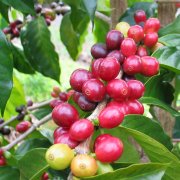
South African Coffee Beans: Mild Acidity, Central America-like Flavor
If you've ever searched for a coffee that’s aromatic yet easy on the acidity—something with the rounded fruitiness of Central America but not the sharp tang—you may have overlooked a surprising origin: South Africa. Though rarely featured on global coffee menus, this country produces beans with a unique sensory profile that defies expectations based on geography alone.
In short: South African coffee is known for its fragrant, aromatic qualities and notably lower acidity, closely resembling the cup profile of Central American beans. The main growing regions lie between 28°S and 30°S latitude in the country’s northeast, where around 7,000 hectares are currently cultivated.
Where Coffee Is Grown in South Africa
South African coffee production is concentrated in the northeast of the country. The key regions stretch from Natal—located between Lesotho and Mozambique—northwards into Transvaal. The southern limit for viable coffee farming is approximately 30 degrees south latitude; beyond that, early frosts make cultivation unsustainable.
This narrow band of elevation and climate creates the stable conditions necessary for quality coffee growth. The relatively cool temperatures and defined wet/dry seasons mimic some aspects of Central American growing environments, subtly influencing how the coffee develops on the tree.
The Origins of South African Coffee Trees
Though South Africa isn’t traditionally seen as a coffee origin, its coffee trees originally came from Kenya. These plants were selected for quality and have adapted over time to local growing conditions. In fact, despite Kenya being the genetic origin of the cultivars, the resulting beans grown in South Africa more closely resemble the cup profile of Central American coffees.
This unique outcome likely stems from a combination of terroir, selective breeding, and environmental factors that shape the beans’ sensory traits during ripening. The outcome? A coffee that surprises many specialty drinkers with its familiar yet distinctive profile.
How South African Coffee Differs From Its Kenyan Roots
Although these coffee trees trace back to Kenyan stock, the beans grown in South Africa develop a flavor that’s markedly different. South African coffees are noted for their fragrance and aromatic complexity, but with significantly lower acidity than their Kenyan relatives. In fact, their flavor more closely aligns with the cup characteristics typical of Central American origins.
This contrast highlights how terroir—latitude, altitude, climate, and soil—can redirect the expression of genetically similar coffee plants. The result in South Africa is a milder, more rounded cup that avoids the bright, wine-like acidity often associated with Kenyan coffees.
By 1975, only 1,000 hectares were dedicated to coffee farming in South Africa. However, with the introduction of a nine-year agricultural expansion plan in 1987, an additional 6,000 hectares were brought into production, bringing the total to around 7,000 hectares under cultivation.
Why South African Coffee Tastes Like Central America
The reason South African-grown coffee tastes more like Central American beans than Kenyan ones comes down to terroir and plant adaptation. Though the genetic lineage originates in Kenya, the environmental conditions—such as the cooler temperatures found between 28°S and 30°S latitude, moderate rainfall patterns, and specific soil compositions—encourage a flavor development closer to that of Central American coffees.
These factors reduce the high acidity and fruity brightness typically associated with Kenyan profiles, instead promoting a gentler, more aromatic cup with a smoother mouthfeel. The end result is a coffee that, while grown in Africa, shares more sensory traits with beans from Honduras, Guatemala, or Costa Rica.
Frequently Asked Questions
What does South African coffee taste like?
South African coffee is aromatic and has a mild acidity, often compared to the cup profile of Central American beans. It tends to be smooth and fragrant rather than bright or sharply acidic.
Where is coffee grown in South Africa?
Coffee in South Africa is grown in the northeastern part of the country, mainly between Natal and Transvaal, within the latitude range of approximately 28°S to 30°S. Areas further south are too prone to frost for coffee farming.
Why does South African coffee resemble Central American coffee?
Despite originating from Kenyan coffee trees, South African coffee develops a flavor profile similar to Central American beans due to local terroir—such as altitude, climate, and soil—which shapes the coffee’s acidity and aroma during growth.
How much coffee is grown in South Africa?
As of the late 1980s, around 7,000 hectares were used for coffee cultivation in South Africa, following an expansion plan that added 6,000 hectares to the initial 1,000 hectares planted by 1975.
Are South African coffee beans easy to find?
South African coffee beans are rare in global specialty markets due to limited production and export volume. They are not commonly featured alongside more prominent origins but are valued for their unique mild and aromatic profile.
What makes South African coffee different from Kenyan coffee?
Although both origins share genetic roots in Kenyan coffee cultivars, South African coffee has lower acidity and a milder, more aromatic flavor. Kenyan coffees are typically brighter and more complexly acidic, while South African cups tend toward the smoother, Central American style.
Recommended FrontStreet Beans for Low-Acidity Coffee
For coffee drinkers who prefer a smooth, low-acid cup reminiscent of South African beans, try FrontStreet Strawberry Candy Espresso , FrontStreet Sidra, or FrontStreet Queen Manor. The Strawberry Candy Espresso offers sweet notes of tropical fruit and chocolate with a round body, while Sidra presents juicy stone fruit and fermented complexity. Queen Manor is a balanced washed Ethiopian with nutty depth and soft acidity. All three deliver a low-acid, flavorful experience ideal for those avoiding bright tang. Freshly roasted within 5 days · Orders placed before 17:00 ship the same day · Next-day delivery across most of Guangdong Province.
FrontStreet Coffee is a long-established specialty coffee roaster in Guangzhou China, selling freshly roasted beans from its own farm in Yunnan as well as dozens of carefully selected single-origin beans from around the world for both pour-over and espresso. The products deliver consistently excellent quality and great value, with shipping within 24 hours. Guangzhou's FrontStreet Coffee shop is recommended by many coffee lovers, and the beans are now available online at the Tmall 。
Important Notice :
前街咖啡 FrontStreet Coffee has moved to new addredd:
FrontStreet Coffee Address: 315,Donghua East Road,GuangZhou
Tel:020 38364473