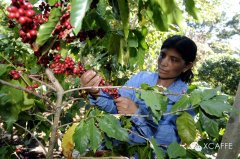
Costa Rica SHB Honey Process Coffee from Phoenix Estate
What makes some single-origin coffees taste unusually sweet, almost like fruit straight off the tree? For specialty coffee buyers and roasters, the answer often lies not just in processing, but in how and when the coffee cherry is picked—and how much sugar it’s packing when it hits the drying bed. One estate in Costa Rica’s Central Valley has been turning heads for doing exactly that.
The short answer: Phoenix Estate in Costa Rica only processes coffee cherries with a Brix sugar reading above 20%, resulting in SHB-grade beans with extraordinary sweetness. Their fully organic, high-altitude farming and precision harvest timing are key to that profile.
Where Phoenix Estate Is Located
Phoenix Estate sits on the fertile volcanic hillsides of the Poás volcano in Costa Rica’s Central Valley. This region is part of the larger Central Valley coffee zone, known for its rich, well-drained soils and ideal growing conditions for high-quality Arabica. The estate lies within the country’s famed SHB (Strictly Hard Bean) altitude classification—generally above 1,200 metres—where cooler temperatures slow bean development and increase density, contributing to better cup quality.
The Farm’s Pioneering Approach to Processing
Phoenix Estate holds a special place in Latin American coffee history. It was among the very first farms in Central and South America to commercially produce both honey process and natural (sun-dried) processed coffees. That innovation goes back decades, long before such methods became mainstream in places like Colombia or Brazil.
More importantly, the estate operates on a 100% organic model. That means no synthetic fertilizers or chemical pesticides have ever been used on the farm. Instead, the owners rely on composting—including vermiculture (worm-based composting)—and careful ecosystem management. While that choice brings challenges in terms of yield and pest control, the farm’s philosophy is that organic practices protect both family health and the environment.
How Sweetness Dictates Processing Choices
Here’s the key detail: not all coffee cherries get processed the same way at Phoenix Estate. During harvest season, the farm uses a refractometer—specifically, a Brix meter, a tool more commonly found in winemaking—to measure the sugar content of the coffee fruit. Based on that Brix reading, they decide both the optimal harvest time and the right processing method.
Only coffee cherries with a Brix level above 20% are selected for natural (sun-dried) processing. For comparison, typical fruits measure far lower: apples average around 14%, lemons 12%, and passion fruit 18%. Phoenix cherries regularly hit 21–22% Brix, indicating exceptionally high sugar concentration. That high sugar content is what drives the intense sweetness for which their coffees are known—especially once those sugars are preserved through minimal-processing methods like honey or natural drying.
Sustainability and Environmental Stewardship
Beyond organic certification, Phoenix Estate integrates several eco-friendly practices into its operations. One major example: rainwater collection systems are used throughout the farm to support coffee processing, reducing dependence on external water sources. That’s especially important in a region where water use for washing coffee has long been a pressing environmental issue.
The farm also employs vermiculture to create nutrient-rich, organic compost. That compost feeds the soil without synthetic inputs. Together with the absence of chemical applications, these practices help preserve local biodiversity, protect water quality, and maintain long-term soil health—all while producing high-scoring specialty coffee.

Frequently Asked Questions
What does SHB mean in Costa Rican coffee?
SHB stands for “Strictly Hard Bean,” a classification for coffee grown at elevations typically above 1,200 metres in Costa Rica. At these altitudes, coffee cherries grow more slowly, leading to denser beans with higher cup quality potential. SHB is a mark of premium growing conditions.
What is Brix and why does it matter for coffee?
Brix is a measurement of soluble solids—mostly sugars—in a fruit’s juice, expressed as a percentage. In coffee, a Brix meter measures the sugar content of the coffee cherry. Higher Brix levels (like the 20–22% at Phoenix Estate) indicate riper, sweeter fruit, which leads to sweeter, more complex flavours in the roasted coffee.
What is honey process coffee?
Honey process (or honey method) is a coffee processing style where the coffee cherry’s skin and pulp are removed, but some or all of the sticky mucilage (fruit layer) is left on the bean during drying. This mucilage is rich in sugars, and retaining it impacts sweetness and body. In Costa Rica, honey process is further categorized into white, yellow, red, and black honey based on how much mucilage is kept and how it’s dried.
Is Phoenix Estate coffee organic?
Yes. Phoenix Estate is a fully 100% organic coffee farm. They avoid all synthetic fertilizers and pesticides, instead using organic compost (including worm composting) to maintain soil fertility. This approach supports environmental sustainability and aligns with the owner’s commitment to health and ecology.
Why does Phoenix Estate only sun-dry cherries above 20% Brix?
Cherries with higher Brix levels contain more natural sugars. By selecting only those with over 20% sugar content for natural (sun-dried) processing, Phoenix Estate ensures a sweeter, more flavourful cup. Lower-Brix cherries might not develop the same intensity of sweetness during drying, so they’re processed differently.
Recommended FrontStreet Coffee for Natural Sweetness
For fans of sweet, fruit-forward Costa Rican profiles like those from Phoenix Estate, try FrontStreet Coffee’s (Blackberry). This SHB Costa Rican is processed with black honey, keeping nearly all the fruit’s mucilage to deliver deep berry sweetness and a velvety body. It develops complex ripe berry flavours through a long, slow 14-day drying process. Another great option is FrontStreet Coffee (Mozart), which uses a unique raisin honey method—coffee is sun-dried until raisin-like, then fully mucilage-processed for intense grape, rose, and fermented wine notes. Both beans showcase the kind of rich sweetness achieved through careful sugar-level selection and honey or natural processes. Freshly roasted within 5 days · Orders placed before 17:00 ship the same day · Next-day delivery across most of Guangdong Province.
FrontStreet Coffee is a long-established specialty coffee roaster in Guangzhou China, selling freshly roasted beans from its own farm in Yunnan as well as dozens of carefully selected single-origin beans from around the world for both pour-over and espresso. The products deliver consistently excellent quality and great value, with shipping within 24 hours. Guangzhou's FrontStreet Coffee shop is recommended by many coffee lovers, and the beans are now available online at the Tmall 。
Important Notice :
前街咖啡 FrontStreet Coffee has moved to new addredd:
FrontStreet Coffee Address: 315,Donghua East Road,GuangZhou
Tel:020 38364473