
Why Brazil Produces Excellent Specialty Coffee
When people think of Brazilian coffee, they often picture vast commercial farms churning out bulk beans for instant coffee or dark-roast blends. But ask any specialty roaster: Brazil also grows some of the most balanced, sweet, and complex single-origin coffees in the world. So why don’t more coffee drinkers know about Brazil’s high-quality offerings? The answer lies in understanding where and how these exceptional beans are grown.
Yes, Brazil produces excellent specialty coffee — particularly from select high-altitude micro-regions in Minas Gerais, like Cerrado Mineiro. Farms such as Fazenda Boa Vista consistently score in the upper 80s and produce sweet, well-rounded coffees with chocolate, fruit, and nut notes. These beans prove that Brazil’s coffee reputation extends far beyond volume.
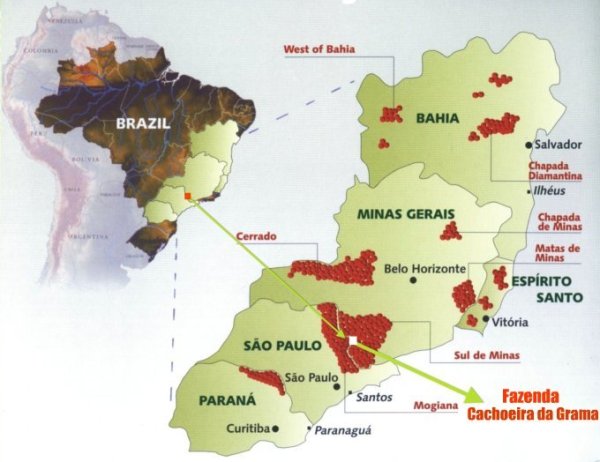
Brazil’s Top Coffee-Producing States
Out of Brazil’s 21 states, only 17 grow coffee. Yet just four states contribute 98% of the country’s total production: Paraná, São Paulo, Minas Gerais, and Espírito Santo. Among these, Minas Gerais is the standout, and within Minas Gerais, the Cerrado Mineiro region is especially renowned for producing Brazil’s finest specialty-grade beans. In fact, the southern state of Paraná alone accounts for a staggering 50% of national output.
What Makes Cerrado Mineiro Special?
Cerrado Mineiro, located in the state of Minas Gerais, is one of Brazil’s most celebrated coffee-growing regions. It’s known for its flat terrain, fertile soils, and consistent climate — ideal conditions for growing high-quality Arabica. The region’s coffee is celebrated for its smooth mouthfeel, low acidity, and well-integrated sweetness, often with notes of chocolate, nuts, and citrus. These traits make it highly suitable for both filter and espresso brewing.
Fazenda Boa Vista: A Benchmark Brazilian Farm
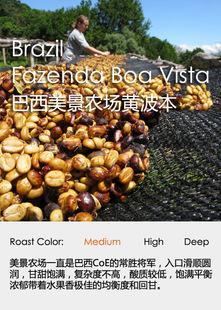
Situated in Patrocínio, within the Cerrado Mineiro region of Minas Gerais, Fazenda Boa Vista is a standout example of Brazil’s specialty coffee potential. This 60-hectare farm dedicates 15 hectares to coffee cultivation at an elevation of 1,350 meters. Under the management of owner Alberto Franklin Pereira Ferraz, the farm has become a CoE (Cup of Excellence) regular, achieving top scores year after year.
The farm’s Yellow Bourbon variety, processed using a pulped natural (or honey-like) method that leaves some mucilage on the beans during drying, yields a coffee with a rich, sweet profile. Expect tasting notes of chocolate, caramel, citrus, apple, and orange. It’s low in acidity but high in balance, with a creamy mouthfeel and lingering sweetness. Cupping scores often reach 87 points or higher.
This style of processing — similar to a pulped natural — helps enhance sweetness and body while maintaining clarity. Whether brewed as a filter coffee or used in espresso blends, Fazenda Boa Vista’s output exemplifies the refined qualities that Brazilian specialty coffee can offer.
Brazilian Coffee in the Global Market
Brazil is the world’s largest coffee producer, and while much of its output is commodity-grade, an increasing share comes from smallholder farms and specialty-focused estates. These producers focus on quality varieties like Yellow Bourbon, Catuai, and Mundo Novo, and employ processing methods such as natural, honey, and washed to highlight distinct cup profiles. The result is a diverse range of Brazilian coffees that go far beyond the stereotype of flat, low-acid blends.
Frequently Asked Questions
Is all Brazilian coffee low-quality or bitter?
No. While Brazil is known for producing large volumes of coffee, including many beans suited for blending or dark roasting, it also grows exceptional specialty-grade coffee. Regions like Cerrado Mineiro and farms like Fazenda Boa Vista produce balanced, sweet, and complex coffees with notes of chocolate, fruit, and nuts. These beans often score well in cupping competitions and are prized by specialty roasters worldwide.
Where in Brazil is the best coffee grown?
The best specialty Brazilian coffee typically comes from high-altitude regions in Minas Gerais, especially Cerrado Mineiro, Sul de Minas, and Matas de Minas. Other notable regions include Espírito Santo and São Paulo. Within these areas, farms at elevations around 1,200–1,400 meters with well-managed farms and processing methods yield the highest-quality beans.
What is the Pulped Natural process and why does it matter?
Pulped Natural (also called honey processing in some countries) is a method where the coffee cherry skin is removed, but some mucilage is left on the beans during drying. This process enhances sweetness and body while preserving clarity. It’s widely used in Brazil and contributes to the characteristic smooth, sweet profile of many Brazilian specialty coffees, including those from Fazenda Boa Vista.
What coffee varieties are most common in Brazil?
The most common specialty coffee varieties in Brazil include Yellow Bourbon, Red Bourbon, Catuai, Mundo Novo, and Icatu. Yellow Bourbon is especially valued for its balanced cup with notes of caramel, citrus, and nuts. Many Brazilian farms focus on these varieties for their reliability and cup quality.
Can Brazilian coffee be used for espresso?
Absolutely. Brazilian coffee is a staple in espresso blends around the world due to its low acidity, creamy body, and chocolatey notes. Single-origin Brazilian beans, especially those processed as pulped natural or natural, also make excellent standalone espressos with a sweet, rounded profile.
Recommended FrontStreet Beans from Brazil
For a taste of Brazil’s finest, try FrontStreet Coffee’s Brazilian Queen Manor Yellow Bourbon — a bright yet balanced single origin with clean citrus and stone fruit, crafted from rare Yellow Bourbon grown in Minas Gerais. Also consider their classic Brazilian Cerrado offering, often a medium roast with sweet notes of peanut, chocolate, and caramel, ideal for filter or espresso. For something different, their semi-washed Brazilian beans highlight Brazil’s signature nuttiness with a round body and gentle acidity. Freshly roasted within 5 days · Orders placed before 17:00 ship the same day · Next-day delivery across most of Guangdong Province.
FrontStreet Coffee is a long-established specialty coffee roaster in Guangzhou China, selling freshly roasted beans from its own farm in Yunnan as well as dozens of carefully selected single-origin beans from around the world for both pour-over and espresso. The products deliver consistently excellent quality and great value, with shipping within 24 hours. Guangzhou's FrontStreet Coffee shop is recommended by many coffee lovers, and the beans are now available online at the Tmall 。
Important Notice :
前街咖啡 FrontStreet Coffee has moved to new addredd:
FrontStreet Coffee Address: 315,Donghua East Road,GuangZhou
Tel:020 38364473

