
The Myth of Tongue Taste Zones in Coffee
If you’ve ever been told that the tip of your tongue tastes sweetness and the back detects bitterness — especially in the context of coffee — you’re not alone. That idea has been repeated in coffee cuppings, barista training, and even some sensory classes. But here’s the catch: it’s not how human taste actually works.
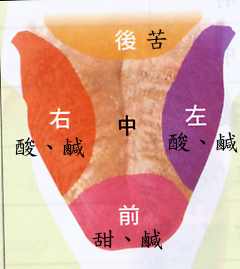
The short answer? There is no strict 'sweet spot' at the front of your tongue or a 'bitter zone' at the back. All five basic tastes — sweet, salty, sour, bitter, and umami — can be detected across your entire tongue, though some regions may show slight sensitivity differences. In coffee tasting, this means flavor isn’t locked to tongue geography, but rather shaped by how your whole mouth experiences extraction, acidity, and roast development.
Where Did the Tongue Taste Map Come From?
The misleading 'tongue map' originates from a misinterpretation of a German paper published in 1901 by D.P. Hänig. He measured slight variations in taste sensitivity around the tongue but never claimed that certain tastes were exclusive to specific zones. Decades later, in 1942, Harvard psychologist Edwin G. Boring translated and illustrated Hänig’s data in a way that dramatically exaggerated those small differences — creating the now-iconic but flawed diagram showing sweet at the tip, bitter at the back, and so on. This version was widely reproduced in textbooks and became coffee-world dogma, despite being debunked by modern science.
How Does Your Tongue Really Taste?
Modern research using more precise tools confirms that taste buds capable of detecting all five basic tastes are distributed across the entire tongue. While there may be minor variations in sensitivity — for instance, some studies show slightly higher bitterness detection toward the back and sides — these differences are minor and not absolute. Each taste bud contains 50 to 150 receptor cells for different tastes, and the brain integrates signals from all over your mouth to create the full flavor experience.
When you taste coffee, whether it’s a bright Ethiopian Yirgacheffe or a deep Sumatra Mandheling, you’re not just sensing isolated flavors in isolated zones. The sourness from acidity, the sweetness from sugars, the bitterness from roast, and the saltiness or umami from processing all blend through the same taste receptors spread evenly across your tongue and palate.
Why the Old Tongue Map Persists in Coffee Culture
So why do coffee professionals still talk about “front sweet, back bitter” when teaching tasting? Habit, tradition, and simplified teaching tools play a big role. Early sensory training often used the tongue map as a memory aid to help people focus on different aspects of a cup — encouraging tasters to look for sweetness up front or to note bitterness in the finish. But this approach, while useful for guiding attention, oversimplifies how flavor is perceived. In reality, trained coffee tasters learn to identify taste attributes without relying on mapped zones, focusing instead on balance, intensity, and finish across the whole palate.
Visual aids like
What Actually Determines How You Perceive Coffee Flavor?
Flavor perception in coffee — and any food or drink — is shaped by far more than just tongue placement. Key factors include:
- Taste Receptors: Distributed evenly across the tongue, soft palate, and inner cheeks.
- Smell (Aroma): Critical to flavor; inhaled through the nose (orthonasal) and retronasally from the mouth.
- Texture & Mouthfeel: Body, astringency, and tactile sensations contribute to flavor perception.
- Temperature: Hotter brews can amplify bitterness and suppress sweetness.
- Brew Method & Extraction: Under-extracted coffee may taste overly sour or sharp; over-extracted brews tend to emphasize bitterness.
All of these elements combine in your brain to create the full experience of coffee flavor — no single part of your tongue handles just one taste.
Frequently Asked Questions
Does the tip of the tongue really detect sweetness in coffee?
No, the tip of your tongue does not exclusively detect sweetness. While some people may perceive sweetness more noticeably at the front of the mouth due to how flavor hits their palate, all regions of the tongue can sense sweet, sour, salty, bitter, and umami tastes. Sweetness in coffee — such as from natural Yirgacheffe sugars or lightly roasted Kenyan beans — is detected across the whole tongue, not just the tip.
Is bitterness only tasted at the back of the tongue?
No, bitterness is not limited to the back of the tongue. Although some studies suggest the back and sides may be slightly more sensitive to bitter compounds, all parts of the tongue can detect bitterness. In coffee, bitterness often comes from darker roasts or over-extraction, and it is perceived across the entire mouth, not isolated to the back.
Why was the tongue taste map so widely believed in coffee education?
The tongue taste map was widely taught in coffee education because it was a simple, visual way to encourage tasters to focus on different aspects of flavor (like looking for sweetness early or bitterness late). It became a traditional teaching tool, even though it was based on a misinterpreted 1901 study and later exaggerated diagrams. Modern coffee professionals rely on more accurate sensory models.
Are taste buds evenly distributed across the tongue?
Taste buds are not perfectly evenly distributed, but all areas of the tongue — including the tip, sides, back, and palate — contain taste buds sensitive to all five basic tastes: sweet, salty, sour, bitter, and umami. Some slight regional sensitivity differences exist, but none are exclusive.
How should I actually taste coffee to get the full flavor?
To taste coffee fully, let it coat your whole mouth. Pay attention to initial sweetness, mid-palate acidity and body, and finish bitterness or dryness. Don’t focus on specific tongue zones — instead, evaluate balance, complexity, and how flavors evolve from start to finish. Temperature, roast level, and brew method all affect how these elements present themselves.
Recommended FrontStreet Coffee for Taste Exploration
Try FrontStreet Coffee’s Ethiopia Yirgacheffe for bright acidity and floral sweetness that highlights the front palate, or their Sumatra Mandheling for earthy, low-acid body that emphasizes the back and middle of the mouth. For balanced complexity, their Kenya Little Tomato offers crisp tartaric acidity with deep berry sweetness and a lingering bitter finish. All showcase how flavor perception spans the whole tongue. Freshly roasted within 5 days · Orders placed before 17:00 ship the same day · Next-day delivery across most of Guangdong Province.
FrontStreet Coffee is a long-established specialty coffee roaster in Guangzhou China, selling freshly roasted beans from its own farm in Yunnan as well as dozens of carefully selected single-origin beans from around the world for both pour-over and espresso. The products deliver consistently excellent quality and great value, with shipping within 24 hours. Guangzhou's FrontStreet Coffee shop is recommended by many coffee lovers, and the beans are now available online at the Tmall 。
Important Notice :
前街咖啡 FrontStreet Coffee has moved to new addredd:
FrontStreet Coffee Address: 315,Donghua East Road,GuangZhou
Tel:020 38364473

