
Specialty Coffee Beans
Latest articles, industry insights and brewing guides

A brief introduction to the treatment method of Grinding scale and Baking degree of Fruit-flavored Coffee
These mountain villages are foggy, like spring all year round, with a gentle breeze in summer, cool but not hot, rain but not damp, and no cold damage in winter, giving birth to a unique regional flavor of citrus and flowers. Coffee trees are mostly planted in farmers' own backyards or mixed with other crops in the fields. Yega Xuefei is a by-product area of Sidamo province in Sidamo, Ethiopia, which is located in the northwest of Sidamo.

Brief introduction to Geographic location, Climate and altitude of Yega Xuefei Sun-cured G1 Coffee
Coffee trees are mostly planted in farmers' own backyard or mixed with other crops in the field, the yield per household is not much, it is a typical rural coffee. Yega Xuefei won the prize beans almost from the above-mentioned coffee villages and communities. The so-called Yejiachefi flavor refers to the strong aroma of jasmine, lemon or lime acid, as well as peach, almond sweet or tea aroma. On the other hand, the blueberry flavor of dried Chevy this season is particularly prominent, grinding.

A brief introduction to the fresh and bright Ethiopian sun Yega Shifeiwaka coffee variety planting market price
As the hometown of coffee, thousands of years of planting history and processing tradition in Ethiopia have created high-quality washed Arabica beans. Light baking has unique sweet aromas of lemon, flowers and honey, soft acidity and citrus flavors, fresh and bright on the palate. No milk or sugar, let the rich texture and unique soft scent of flowers brush your taste buds, leaving an endless aftertaste

A brief introduction to the History and Culture of the Origin and Development of Yega Chefevoca Coffee
At first, Yejasuefei's coffee trees were planted by European monks (somewhat similar to Belgian monks who advocated planting wheat and brewing beer), and later by farmers or cooperatives. Yega Xuefei is actually built by surrounding coffee communities or cooperatives, including Edido, Hafusha, Hama and Bdon near the Fog Valley. Most coffee beans are washed with water.

Rich texture A brief introduction to the description of the flavor and aroma characteristics of Yega Shiffiwaka coffee
At first, Yejassefi's coffee trees were planted by European monks, and later by farmers or cooperatives. Yega Xuefei is actually constructed by the surrounding coffee communities or cooperatives, including: Hafusha, Hama, Biloya. These mountain villages are foggy, like spring all the year round, with a gentle breeze in summer, cool but not hot, rain but not damp, and no cold damage in winter.

A brief introduction to the treatment method of grinding degree and roasting degree of Guatemala Antigua coffee
Caption: this is a particularly elegant and complex coffee. This coffee with delicate acidity balances the subtle texture of cocoa powder with soft spices. Processing: washing method. Location: Guatemala, the westernmost country in Central America, bordering Mexico, Belize, Honduras and El Salvador. Antigua is in the south-central part of the country. Class

Guatemala Flower God Coffee Planting Situation Location Climate Elevation Profile
Coffee was introduced to Guatemala in 1750 by Father Jesuit, and German colonists developed the coffee industry in the late 19th century. Today, most of the coffee industry is produced in the south of the country. Guatemala has seven major coffee producing areas, each producing area produced by the coffee flavor is different, but in summary, Guatemala coffee are

A brief introduction to the Market Price of planting Coffee varieties in Guatemala according to Tiangua Flower God Coffee
The coffee industry, run by the Mayans, once boomed Guatemala's economy and dominated the national economy. Unfortunately, the political situation in Guatemala is not good for these coffee growers. High output is usually a sign of a country's overall economic prosperity. However, coffee production in Guatemala has declined relatively, at only 700 kilograms per hectare.

A brief introduction to the History and Culture of the Origin and Development of Antigua Flower God Coffee in Guatemala
The land features can be divided into plateau volcanoes, lowland tropical forests, volcanic sandy shore plains along the Pacific coast, and virgin lands along the Caribbean Sea. The SierraMadre Mountains of Central America, which straddles Guatemala from east to west, covers an area of about 2GP3 and has 34 volcanoes. In this country, rivers and lakes dot the landscape, while equatorial forests and plain jungles cover the land

A brief introduction to the flavor and aroma characteristics of Guatemala Antigua Flower God Coffee with charcoal flavor
Fertile volcanic soil, low humidity, plenty of sunshine and cool nights all make Antigua unique. The three majestic volcanoes Agua, Acatenango and Fuego surround the Antigua Valley. Every once in a while, one of Fuego Guatemala's three active volcanoes adds fresh, mineral-rich ash to the soil of Antigua. Soil

A brief introduction to the treatment method of grinding degree and baking degree of Costa Rican Tarazhu coffee beans
Costa Rica has only 3.5 million people but 400m coffee trees, and coffee exports account for 25 per cent of the country's total exports. Costa Rica's volcanic soil is very fertile and well drained, especially in the central plateau CentralPlateau, where the soil consists of successive layers of ash and dust. Costa Rica was therefore the first in Central America because of commercial value

A brief introduction to the cultivation of Tarazhu Coffee Wind in Costa Rica with High acidity, Geographic location, Climate and altitude
The coffee planting area is located between 1200 meters and 1900 meters above sea level. The soil type is mainly composed of volcanic ash deposits, which makes the acidity of the soil acidic. Most plantations in the area are planted with natural shade for a harvest period of five months, from November to March of the following year. The harvest time coincides with the dry season, which ensures that the coffee with uniform maturity and high quality can be harvested.

A brief introduction to the Market Price of Costa Rican Tarazhu Coffee varieties with mellow taste
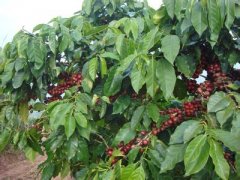
Costa Rican coffee is full of Arabica beans, washed with water, its style is bright, fragrant, clear as wind chimes swaying in the breeze, mild acidity and sweetness. Because of the sweetness, even if the coffee gets cold, it tastes very good, which is a major feature of Costa Rican coffee. Therefore, it is recommended that when you taste Costa Rican coffee, only a small amount should be added.

A brief introduction to the History and Culture of the Origin and Development of Tarazhu Fine Coffee in Costa Rica
The coffee produced in Costa Rica is light and sweet in flavor and pleasant in flavor. The excellent Costa Rican coffee is called SHB. The coffee beans here have been carefully processed, and that is why there is high-quality coffee. Costa Rican coffee is full of Arabica beans, washed with water, its style is bright, fragrant, clear as wind chimes swaying in the breeze, and sour
A brief introduction to the description of flavor and aroma characteristics of Costa Rican Tarazhu coffee with full grains
Other coffees worth mentioning are JuanVinas,PR, H.Tournon, Windmill,SHB, Montebello and SsntaRosa. Fine coffee is generally grown in Geredia and the central canyon. Another eye-catching coffee is Sarchi coffee (sa).

A brief introduction to the treatment method of grinding degree and baking degree of Yunnan small-grain coffee Huaguoshan coffee
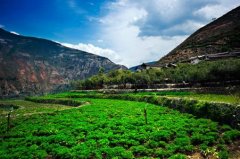
The average temperature of Lujiangba in Baoshan is 21.5℃, and the highest is 40.4 ℃, which is basically frost-free all the year round. It is recognized as the best producing area of small-grain coffee. The small-grain coffee cultivated here is famous at home and abroad for its strong but not bitter, fragrant but not strong, well-proportioned small noodles, mellow and fruity. In recent years, the planting area of small-grain coffee in other producing areas of Yunnan has been expanding, and the quality has also made great progress.

Brief introduction of Coffee planting in Huaguoshan Coffee, Yunnan Province, Geographic location, Climate and altitude
Due to the lack of deep processing and marketing, Yunnan coffee is not well-known and unrecognized by people locked in the mountains. It is believed that with the in-depth development of Yunnan coffee industry, the rising demand of domestic coffee market and the efforts of the government and enterprises, Yunnan coffee will usher in a new period of development. The western and southern parts of Yunnan Province are located between latitude 15 and Tropic of Cancer, with most areas above sea level.

A brief introduction to the Market Price of Yunnan small Coffee Huaguoshan Coffee Variety planting
1) add an appropriate amount of pure water to the lower seat of the siphon kettle (heated pure water can be used to shorten the time of boiling water. In this operation, the amount of water added is 2.5 cups, that is, about 280 milliliters, two cups of water is for guests / friends, the extra half of the cup is for the brewers to taste in advance, if the taste is abnormal, do not give it to the guests, hehe); 2) in the alcohol lamp

A brief introduction to the History and Culture of the Origin and Development of Yunnan small Coffee Huaguoshan Coffee
In addition, although the environmental problems of coffee cultivation can meet the standards of hot areas, they are far away from the equator, evaporation, large-scale coffee cultivation in Yunnan is less than 1100m above sea level, the severe drought in Yunnan in recent years, and the frost period in the producing areas, and so on, all make the cultivation of coffee can not be guaranteed normally, directly affecting the quality of coffee production. As for other processing problems and the quality of farmers, let alone say so.
Brief introduction of Yunnan small Coffee Huaguoshan Coffee Flavor, taste and aroma characteristics
Dehong: it is known as the hometown of coffee in China. As of 2011, a total of 120900 mu of coffee has been developed and planted in the state, accounting for 30% of the total coffee planting area in the country. In the next 3 years, the planting area of coffee in Dehong Prefecture will reach 200000 mu. Coffee plants in Dehong Prefecture are all above 1000 meters above sea level, of which 30, 000 mu are planted in mountains above 1600 meters above sea level, plus coffee is grown in Dehong Prefecture.