
"1830"
659 article(s) found

Introduction to the Flavor description of High-quality Coffee beans in Ecuador Coffee Variety producing area
The Republic of Ecuador is located in northwestern South America. It is bordered by Colombia in the northeast, Peru in the southeast and the Pacific Ocean in the west. It covers an area of 256370 square kilometers and the coastline is about 930km long. The equator runs across the northern part of the border, and Ecuador means Spanish equator. After the disintegration of Great Colombia in 1830, the Republic of Ecuador was proclaimed. Ecuador has always had a political situation since the founding of the people's Republic of China.

Introduction to the characteristics of coffee flavor and taste varieties in Hassanda Coffee Garden with the best quality
However, in the early 1990s, the Gonzalez family bought the Hasunda Coffee Garden. The local microclimate caused by the Humboldt current (Humboldt Current), strong equatorial sunlight and sharp temperature changes (43 ℃ at sea level and 10: 16 ℃ at 275m above sea level) provide a unique advantage, prompting the Gonzalez family
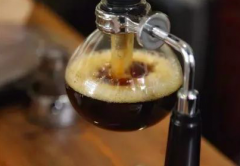
Siphon pot | the difference between stirring and soaking when extracting coffee!
First of all, let's briefly talk about the source of the siphon pot. The siphon pot originated in Europe and originated 70 years earlier than hand-made. Between 1830 and 1840, Loeff in Berlin, Germany, first invented and patented the siphon extraction method of glass material and upper and lower pots, and later passed through France, Britain and Germany.

Panamanian Rosa Coffee Flavor and Taste introduction to Fine Coffee in Manor
The Panamanian isthmus was originally inhabited by Indian settlements such as Chibucha and the Caribbean. In 1501, Panama was colonized by Spain and belonged to the Governor of New Granada. [5] in 1821, Panama became independent and became part of the Republic of Greater Columbia. [5] in 1830, after the dissolution of the Republic of Great Columbia, it became a member of the Republic of New Granada (later known as Colombia).

How to make coffee in a siphon pot? What is the working principle of siphon pot? How's the siphon pot?
Professional coffee knowledge exchange More coffee bean information Please pay attention to coffee workshop (Weixin Official Accounts cafe_style) hand-brewed coffee uses filtration method, while siphon coffee is the combination of infusion method and filtration method, in fact, it can highlight flavor, but now popular fine coffee mostly uses filtration method hand-brewed coffee. History of Siphon Pot 1827, Norumbe, Tübingen, Germany

How does the siphon pot work? The comparison between siphon and hand rush? The ratio of water to powder in a siphon pot?
Professional coffee knowledge exchange more coffee bean information Please pay attention to the coffee workshop (Wechat official account cafe_style) siphon pot (Siphon, Syphon), also known as Saifeng pot or vacuum pot (Vacuum coffee maker), is the use of siphon principle to brew coffee upright, balanced (Belgian pot) two kinds. I. the history of the siphon pot in 1830, the earliest siphon coffee

Introduction of coffee flavor and taste of Panamanian jadeite manor coffee bean producing area
The Panamanian isthmus was originally a settlement of the Panama Canal of the Indian Ministry of Chibucha and the Caribbean. In 1501, Panama was colonized by Spain and belonged to the Governor of New Granada. [5] in 1821, Panama became independent and became part of the Republic of Greater Columbia. [5] in 1830, after the disintegration of the Republic of Great Columbia, it became the New Granada (later called Brother).

Panamanian Cupid Coffee Flavor and taste introduction to boutique coffee beans in the manor area
The Panamanian isthmus was originally inhabited by Indian settlements such as Chibucha and the Caribbean. In 1501, Panama was colonized by Spain and belonged to the Governor of New Granada. [5] in 1821, Panama became independent and became part of the Republic of Greater Columbia. [5] in 1830, after the dissolution of the Republic of Great Columbia, it became a member of the Republic of New Granada (later known as Colombia).

Introduction to the characteristics and taste of coffee flavor varieties in Manor Ireta, Panama
The Panamanian isthmus was originally a settlement of the Panama Canal of the Indian Ministry of Chibucha and the Caribbean. In 1501, Panama was colonized by Spain and belonged to the Governor of New Granada. [5] in 1821, Panama became independent and became part of the Republic of Greater Columbia. [5] in 1830, after the disintegration of the Republic of Great Columbia, it became the New Granada (later called Brother).

Qianjie Coffee search for beans | Special report on Colombian Powder Bourbon
Colombian pink bourbon country: Colombian producing area: Cauca province manor: Palaiso manor variety: powdered bourbon treatment: washing treatment altitude: 1930 meters | Colombia Cauca Colombia is currently the third largest coffee producer in the world, after Brazil and Vietnam, commercial beans were first planted in the 1830s, and coffee accounted for the largest export crop in the 20th century.

Ethiopian Gemma | from Ethiopia, the birthplace of coffee, the ancient sun beans
[Gemma, Ethiopia] country: Ethiopia: Gemma altitude: 1800m treatment: sun varieties: local native species 01 | production areas introduce Ethiopia as the birthplace of coffee. Legend has it that an unknown shepherd found this mysterious red fruit that has been selling so far while herding his sheep in the forests of western Ethiopia: coffee, opened.

Flavor and taste characteristics of Cupid Coffee Manor in Panama
The Panamanian isthmus was originally a settlement of the Panama Canal of the Indian Ministry of Chibucha and the Caribbean. In 1501, Panama was colonized by Spain and belonged to the Governor of New Granada. [5] in 1821, Panama became independent and became part of the Republic of Greater Columbia. [5] in 1830, after the disintegration of the Republic of Great Columbia, it became the New Granada (later called Brother).

History of the Origin and Development of Brazilian Coffee the Future trend of Flavor and Taste in Brazilian Coffee Bean producing areas
The origin of Brazilian coffee several historians agree that the arrival of coffee from the Old World to Martinique and the Antilles originated in 1714 when Mathieu de Clieu, the captain of the French army, got it from the first branch seeds brought by small American plantations. The story tells us that the captain is keeping a coffee branch stolen from Louis XIV Garden.

Geographical location of Nalingong coffee producing area in Colombia? What kind of treatment does Nalinglong coffee use?
Professional coffee knowledge exchange More coffee bean information Please pay attention to coffee workshop (Weixin Official Accounts cafe_style) Colombia Na Linglong coffee production area geographical location? What kind of treatment does Nalinglong coffee use? Colombia is currently the third largest coffee producer in the world, after Brazil and Vietnam. Commercial beans were first cultivated in the 1830s, and coffee accounted for export farmers in the 20th century.

Different roasting flavors of coffee beans from Santa Clara Manor, the famous Antigua region of Guatemala
Professional coffee knowledge exchange more coffee bean information please follow the coffee workshop (Wechat official account cafe_style) the famous Antigua region of Guatemala Santa Clara manor coffee beans roasted in different flavor performance? How to cook it? Guatemala coffee in Guatemala was introduced by missionaries in 1750. It was not until 1860 that the whole production was expanded by the Germans.

The principle and operation of boiled siphon coffee (Siphon)
Professional coffee knowledge exchange more coffee bean information please follow the coffee workshop (Wechat official account cafe_style) siphon coffee pot Siphon Syphon Vacuum pot siphon coffee pot 2 siphon coffee pot history in early 1830s the Germans used glass blowing coffee pot with Berlin Loeff design patented shape copied by French Richard 1935 Frenchman B.

A brief introduction to the planting market price of fragrant Ecuadorian boutique coffee beans
In 1875, 340 years after Freitoma de Belanga discovered the island, a native named Kovos came to St. Cristobal, where he established the Hasunda Coffee Garden and planted about 100 hectares of Arabian bourbon coffee trees. As the plantation is located between 140m and 275m above sea level, the climate is equivalent to that between 915m and 1830 m in the interior.

A brief introduction to the History and Culture of the Origin and Development of Galapagos Fine Coffee beans with Sweet Sour
In 1875, 340 years after Freitoma de Belanga discovered the island, a native named Kovos came to St. Cristobal, where he established the Hasunda Coffee Garden and planted about 100 hectares of Arabian bourbon coffee trees. As the plantation is located between 140m and 275m above sea level, the climate is equivalent to that between 915m and 1830 m in the interior.

A brief introduction to the description of flavor and flavor characteristics of Galapagos boutique coffee beans with balanced acidity
In 1875, 340 years after Freitoma de Belanga discovered the island, a native named Kovos came to St. Cristobal, where he established the Hasunda Coffee Garden and planted about 100 hectares of Arabian bourbon coffee trees. As the plantation is located between 140m and 275m above sea level, the climate is equivalent to that between 915m and 1830 m in the interior.

A brief introduction to the description of flavor and aroma characteristics of Galapagos boutique coffee beans with sweet in sour
In 1875, 340 years after Freitoma de Belanga discovered the island, a native named Kovos came to St. Cristobal, where he established the Hasunda Coffee Garden and planted about 100 hectares of Arabian bourbon coffee trees. As the plantation is located between 140m and 275m above sea level, the climate is equivalent to that between 915m and 1830 m in the interior.