
"1960"
2844 article(s) found

The history of coffee beans how to make strong coffee
Overseas Chinese in Indonesia drank coffee every day in the 1960s, and Taiwanese began to drink coffee in the 1970s. It has a history of about 40 years now. Whether Hong Kong introduced coffee earlier needs research, while the mainland began to rise in the late 1990s. At present, many cafes have sprung up, young people have gradually accepted coffee drinks and coffee drinking places are also diversified, including restaurants.

Introduction of Colombian coffee flavor and taste Hope Manor in the Andes
In the early 1960s, the Colombian Coffee producers Association developed a strategy to distinguish Colombian coffee from coffee from other producing areas, so it was necessary to explain to consumers what makes our coffee different. Juan Diz was created against this background, and he introduced consumers around the world to the arduous manual production process of coffee and the needs to produce high-quality coffee.

Description of Historical and Cultural Origin and Flavor of Chinese Coffee cultivation introduction of Grinding scale varieties
Description of the Historical and Cultural Origin of Coffee in China Flavor description Grinding scale Variety introduction Coffee production in Yunnan Province has been developed since the mid-1950s, mainly planted in Shuangjiang Farm and Dehong Sub-Bureau in Lincang area, covering an area of 18.67 hectares. it is also planted in small areas in Shaofang, Hekou, Lujiang, Jinghong, Olive Dam and other fields. Since 1957, the local environment is suitable for coffee growth.

Brazil is the largest coffee producer in the world, Minas Gerais, a coffee bean region with Brazilian flavor.
The global trend of modern coffee has gone through three popular stages: the first stage is the popularity of cheap coffee represented by instant coffee from the post-World War II to the 1960s; the second stage is the popularity of commercial coffee represented by Starbucks from the 1960s to the beginning of this century; the third stage is the popularity of boutique coffee, which originated in the 1970s and has become a trend in the past decade.

General knowledge of fine coffee the traditional processing techniques of Yunnan coffee
Yufa, which opened in the 1960s and has a history of more than 50 years, stepped into the store as if it had stepped into a time tunnel. The machines displayed in the shop have been used for more than half a century, and the old appliances have found their old flavor. Fang found that the old appliance is not only a kind of nostalgia, but also the accumulation of traditional wisdom of the older generation. Since the spread of self-made coffee from a Hainan chef, the boss of the main coffee supplier to the old villagers in the town has insisted
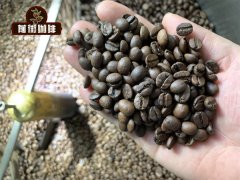
What's special about Burundi boutique coffee? What roasts Burundi coffee beans are suitable for?
Burundi coffee has been hailed as the Cinderella story of the coffee world and until recently was known for its quality and taste. When coffee was first grown in Burundi in the 1960s, the crop was unfortunately underutilized, contributing to the world of generic commodity coffee. Burundi coffee brings attention to the development and evolution of coffee. Unique flavor profile, Bloom

Grade Planning for the handling of Salvadoran Coffee introduction to the Santa Ana volcano area
Coffee treatment, washing treatment, sun drying. Coffee grades are classified according to altitude, the highest is SHG: SHG,strictly high grown,3950 feet (about 1200 meters); HG, high grown, 2950 feet (about 899m); CS, central standard, 1960 feet (about 597m). Note: 1 feet ft

How much do Taiwanese love coffee? The average person drinks a hundred cups a year.
Cama coffee shops can be seen everywhere on the streets of Taipei. Milk Glider (milk glider) Lin Zixuan won the top spot in the Northern District in the 2015 TNTTW International pull Flower Competition Taiwan trials. In 1960, the Star Cafe on Wuchang Street in Taipei. Whether it's staying up late to work overtime, getting up early to go to work, or best friends' afternoon tea or business talks, Taiwanese like to drink coffee. Taiwan

How to drink Arabica coffee beans at the characteristic price
How do Arabica coffee beans drink at the characteristic price? Geisha is a kind of coffee peculiar to Panama. In recent years, it has been known as the boutique queen in just a few years. It can be regarded as the treasure of Panamanian coffee. At present, the output is low and the price is high. Coffee farmers claim to have discovered it in recent years, but this is not the case. Geisha not only appeared as early as 1960.

Traditional Coffee processing techniques in Yunnan Chinese Coffee Bean treatment
Yufa, which opened in the 1960s and has a history of more than 50 years, stepped into the store as if it had stepped into a time tunnel. The machines displayed in the shop have been used for more than half a century, and the old appliances have found their old flavor. Fang found that the old appliance is not only a kind of nostalgia, but also the accumulation of traditional wisdom of the older generation. Since the spread of self-made coffee from a Hainan chef, the boss of the main coffee supplier to the old villagers in the town has insisted

SCAE Gold Cup extraction Theory what is the scaa barista certification where to get the scae international barista certificate
Professional coffee knowledge exchange more coffee bean information please follow the coffee workshop (Wechat official account cafe_style) Let's start with scae's gold cup extraction theory according to scae (European Coffee Association) definition Gold Cup Standard (published in 1960) 1000ml water, 5065g coffee powder, 92C 96C hot water to brew coffee basically SCAE.

Brief introduction of taste grinding scale for coffee bean flavor growing environment in Xipi Waterfall, Uganda
A brief introduction to the taste grinding scale of coffee bean growing environment in Xipi Falls, Uganda in 1931, it was exported to Kenya in obscurity from Geisha Mountain Mountain in southwestern Ethiopia (which happens to be synonymous with Japanese geisha), wandered to Tanzania and Costa Rica, and was transplanted to Panama in the 1960s, and then it took nearly half a century before it became a blockbuster and defeated Chang.

Coffee Extraction Formula and Gold Cup Extraction Theory| Discussion on the relationship between extraction rate and water-powder ratio
Professional barista communication, please pay attention to coffee workshop (Weixin Official Accounts cafe_style) We start from SCAE's gold cup extraction theory, according to SCAE (European Coffee Boutique Association) definition Gold Cup Standard (published in 1960) 1000ml water, 5065g coffee powder, 92C 96C hot water brewed coffee basically SCAE set a strike zone, that is, medium

Cuba, this is the real coffee paradise.
Cuba's clock came to an abrupt end in 1960 when the United States imposed trade sanctions on Cuba. Even 50 years later, people live in brightly colored but dilapidated buildings in Cuba, just 60 miles from the Caribbean coast of southern Florida, in vintage cars painted with all kinds of paint. Cuba is gradually diluted in our impression, and we even forget the truth about Cuba.

Introduction to the flavor and taste of Rosa coffee the characteristics of Panamanian Rosa Coffee Coffee Manor
The story of Rose Summer began as early as 1931. An Englishman collects coffee beans in a forest near Mount Rosa in southwestern Ethiopia. In 1932, the coffee beans were exported to Kenya. He was transplanted to Panama in the 1960s. French biologist Jean-PierreLabouisse verified the clue and found that the coffee originally marked Mount Rosa

Vera Saatchi Coffee planting History of Vera Saatchi Manor in the Valley region of Western Costa Rica
Professional coffee knowledge exchange more coffee bean information please follow the coffee workshop (Wechat official account cafe_style) Costa Rica western valley region | Fincattono Vera Sarge coffee bean growing history? Tono Manor is located west of Costa Rica's Poas volcano, a well-known coffee producer: the western valley. Orange County. The manor was in 1960

When is the first peak period for the development of coffee planting industry in China?
By the end of the 1940s, according to recorded figures, there were 2173.33 hectares of rubber plantations on Hainan Island, with a total of 867600 rubber trees, with an annual output of 199,000 tons of dry rubber, more than 300,000 coffee plants and an annual output of 1 ton of coffee beans. According to a survey in the early 1950s, a large number of coffee was left in Fushan area of Chengmai County, with a total of 70,000 plants, including more than 40,000 plants in Daji Village and Fushan Farm (Hongguang Farm) 1
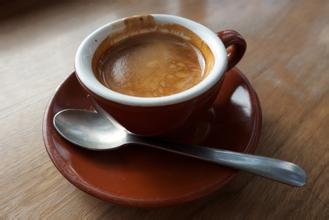
Ugandan Coffee Flavor Ugandan Coffee Taste introduction to Ugandan coffee producing areas
Uganda's coffee production ranks first in Africa, accounting for more than 70% of its total exports. Uganda is also the hometown and main producing area of Robes specialty coffee. In the 1960s, Ugandan coffee production remained at 3.5 million bags a year. By the mid-1980s, coffee production had dropped to 2.5 million bags a year, mainly for political reasons. But now coffee production is on the rise again, which is large at present.

Brazil is the world's largest coffee producer and exporter.
For most of us, an important aspect of the morning ceremony is drinking a cup of coffee. So I decided to look at this typical aspect of our daily life. About 1/3 of the world's coffee comes from Brazil, making the BRIC country the world's largest coffee producer and exporter. Brazil has been in this position for the past 150 years. The area of the coffee plantation is about 10