
"AA17"
500 article(s) found

Grading standard of raw coffee beans
There are two ways to classify brown raw beans, one is to filter the number, and the other is to divide it by elevation. It is divided by the number of the filter screen, and the size is in the unit of the screen (size). Round beans are generally smaller than flat beans, between 8-13 and 12-29. 8, 9, 10. 12, 13. 18. 29 = small, medium, ordinary. Quasi-big. Big, extra large. The bigger the size, the bigger the beans. Like SC-1.

A brief introduction to the grading system of Kenyan Coffee beans how to brew and share Kenyan coffee at a ratio of 1 to 15
Professional coffee knowledge exchange more coffee bean information please follow the coffee workshop (Wechat official account cafe_style) front street-Kenya raw bean grading, brewing parameters sharing according to the sieve grading method is the method of grading according to the size of coffee beans. Raw beans are graded by determining the size of the beans through a holed iron plate sieve. The size of the hole in the screen is 1 inch to 64 inches.
Classification standard of coffee raw beans for fine coffee
There are two ways to classify raw coffee beans, one is the filter number, and the other is the elevation. It is divided by the number of the filter screen, and the size is in the unit of the screen (size). Round beans are generally smaller than flat beans, between 8-13 and 12-29. 8, 9, 10. 12, 13. 18. 29 = small, medium, ordinary. Quasi-big. Big, extra large. The bigger the size, the bigger the beans. Like SC.

Quality coffee beans, knowledge, classification of raw coffee beans
There are two ways to classify raw coffee beans, one is the filter number, and the other is the elevation. It is divided by the number of the filter screen, and the size is in the unit of the screen (size). Round beans are generally smaller than flat beans, between 8-13 and 12-29. 8, 9, 10. 12, 13. 18. 29 = small, medium, ordinary. Quasi-big. Big, extra large. The bigger the size, the bigger the beans. Like SC.
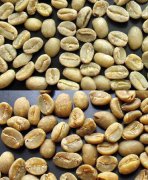
Grading of raw coffee beans
There are two ways to classify raw coffee beans, one is the filter number, and the other is the elevation. It is divided by the filter number, and the size is size in terms of the screen size. Round beans are generally smaller than flat beans, between 8-13 and 12-29. 8, 9, 10. 12, 13. 18. 29 = small, medium, ordinary. Quasi-big. Big, extra large. The bigger the size, the bigger the beans. Like SC-.

How do I make coffee in Kam Chu Valley, Kenya? Information introduction of Kenya AA washing TOP Enbu processing Plant
Professional coffee knowledge exchange more coffee bean information Please follow Coffee Workshop (Wechat official account cafe_style) ◆ Kenyan coffee varieties were first brought to Kenya to grow Bourbon bourbon. In the 1950s, the then agricultural research institution ScottLaboratory made unremitting efforts to select two excellent hybrids, SL-28 and SL-34.

Kenyan coffee bean grading system description of flavor and taste of Kenyan AA TOP grade coffee
Professional baristas please follow the coffee workshop (Wechat official account cafe_style) the Kenyan coffee grading system is set up under the government-led policy of managing quality and mentoring coffee farmers. After the coffee is harvested, it is the official unit set up by the government, the Kenya Coffee Bureau (CoffeeBo).

Standard for grading of fine coffee beans, common sense coffee and raw beans
It is divided by the number of the filter screen, and the size is in the unit of the screen (size). Round beans are generally smaller than flat beans, between 8-13 and 12-29. 8, 9, 10. 12, 13. 18. 29 = small, medium, ordinary. Quasi-big. Big, extra large. The bigger the size, the bigger the beans. SC-19, for example, is the No. 19 bean. According to the elevation of the cultivated land, it can be divided into seven grades.

Kenya AA Caro Goto Coffee producing area introduces how to brew Kenyan coffee
For professional baristas, please follow the coffee workshop (Wechat official account cafe_style) Kenya AA Carlo Goto Coffee production area introduce how to brew Kenyan coffee by hand practical parameters suggest hand flushing Kenya AA Carlo Goto: 15g powder, medium and fine grinding (small Fuji ghost tooth knife 3.5grinding), v60 filter cup, water temperature 90-91 degrees, water injection 30g for the first time, steaming for 30s, note

Is Kenya AA Carlo Goto Coffee good? the method of making Kenyan Coffee
Professional baristas exchange please follow the coffee workshop (Wechat official account cafe_style) Kenya AA Carlo Goto coffee is good Kenya coffee production method is known as the connoisseur's Cup (ConnoisseursCup) Kenyan coffee, with rich aroma, bright and vibrant acidity, full and elegant mellowness, red wine flavor in the coffee industry famous. Different production

Kenya AA Karogoto beans taste fragrant Kenyan coffee types and prices
For the exchange of professional baristas, please pay attention to the coffee workshop (Wechat official account cafe_style) Kenya AA karogoto bean taste Kenyan coffee type and price Kenya double wash method Kenya also known as Kenya double washing fermentation (double fermentation). The reason is that there are high and low floors in the washing trough, and coffee farmers usually pick it first in the evening.

Kenya AA Carragoto drinks correctly the price of Kenyan coffee beans
Professional barista exchanges please follow the coffee workshop (Wechat official account cafe_style) Kenya AA Carragoto drink the correct French coffee bean price Kenyan coffee processing large farms usually have independent processing facilities. A large number of small farmers usually pick ripe coffee fruits by hand. Coffee picking is a labor-intensive job that requires the whole family during the harvest season.
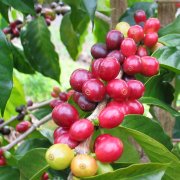
Coffee Grading in Kenya
The growing environment of fine coffee beans also has higher requirements. It generally grows at an altitude of 1500 meters or even 2000 meters above sea level, with suitable precipitation, sunshine, temperature and soil conditions. Some world-famous coffee beans also have special geographical conditions, such as the mountain clouds in the Blue Mountains, the free shade provided by afternoon clouds in Kona, and the volcanic ash soil in Antigua.

How is the market of Kenyan AA Carlo Goto coffee? which brand of Kenyan coffee is better?
Professional barista exchanges please follow the coffee workshop (Wechat official account cafe_style) Kenya AA Carlo Goto coffee market how Kenyan coffee which brand is good for these beautiful raw beans, according to particle size (size), shape (shape), weight (weight) grade: E:kenyaE, like beans, elephantbean,18 above (including round beans) AA:
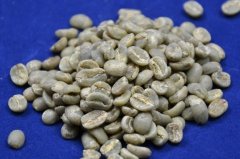
Kenya AA completely washed coffee beans
Kenya AA completely washed coffee beans. AA grading and processing: AA (17hammer 18 mesh) is the most advanced, while M'buni represents the lowest consumption of natural mature coffee beans in the local area, which is processed by washing.

Kenya AA fully washed coffee beans
Kenya AA fully washed processed coffee beans. AA classification and processing: AA (17/18 mesh) is the highest grade, M'buni represents the lowest consumption of natural mature coffee beans in the region, and is processed by washing method.
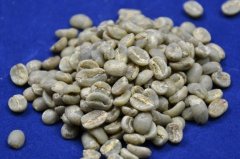
Kenya AA completely washed coffee beans
Kenya AA completely washed coffee beans. AA grading and processing: AA (17hammer 18 mesh) is the most advanced, while M'buni represents the lowest consumption of natural mature coffee beans in the local area, which is processed by washing.
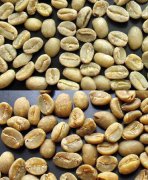
Classification of raw coffee beans in Coffee Encyclopedia
There are two ways to classify raw coffee beans, one is the filter number, and the other is the elevation. It is divided by the filter number, and the size is size in terms of the screen size. Round beans are generally smaller than flat beans, between 8-13 and 12-29. 8, 9, 10. 12, 13. 18. 29 = small, medium, ordinary. Quasi-big. Big, extra large. The bigger the size, the bigger the beans. Like SC-.
Coffee grading in Kenya
The growth environment of boutique coffee beans also has higher requirements. Generally grow at an altitude of 1500 meters or even more than 2000 meters above sea level, with appropriate precipitation, sunshine, temperature and soil conditions. Some world-famous coffee beans also have a special geographical environment, such as the alpine clouds in the Blue Mountains, the free shade provided by the afternoon clouds in Kona, and the volcanic ash soil in Antigua.