
How Coffee Beans Are Graded by Size and Altitude
If you’ve ever wondered why some coffee bags list ‘AA’ or ‘SHB’, or why your favorite single-origin beans come from high-altitude farms, you’re asking about how coffee beans are sorted and graded before they reach your cup. Green coffee grading helps ensure consistency, highlights premium qualities, and influences roast potential—key knowledge for any coffee enthusiast or roaster.
Coffee beans are graded primarily by two methods: screen size (using numbered mesh filters) and growing altitude. Size grades range from small (8/64 inch) to very large (e.g., 19+), while altitude-based grades like SHB (Strictly High Bean) indicate beans grown at 1600–1700 meters or higher. Both systems aim to separate quality beans for optimal roasting and flavor.
Grading by Screen Size: Mesh Numbers Matter
One common way to grade green coffee beans is by their physical size using screens with numbered mesh sizes, measured in 1/64-inch increments. These numbers—like 14, 16, or 19—refer to the sieve opening diameter. For example, a “17” grade means the bean can pass through a 17/64-inch screen.
Round beans (peaberries) are typically smaller than flat beans, usually falling in the 8–13 range, while flat beans range from 12 to 29. The larger the number, the bigger the bean—for instance, an SC-19 is a 19/64-inch grade bean. Grades like 19+ mean the beans pass through a 19/64-inch screen or larger.
International sizing commonly uses mesh numbers from 9 to 22, where the number represents the fraction of 64ths of an inch (e.g., 14 = 14/64 inch). Specialty roasters often prefer larger beans (e.g., 17–19+) for even roasting and complex cup profiles.
Altitude-Based Grading: Higher Elevation, Higher Grade
Coffee is also graded by the altitude at which it’s grown, since higher elevations generally produce slower maturation, denser beans, and more complex flavors. Altitude grades are often abbreviated, such as HB (High Bean), SHB (Strictly High Bean), or SHG (Strictly High Grown).
For example, HB beans are grown at around 4000–4500 feet (approximately 1200–1350 meters), while SHB beans come from 1600–1700 meters. Other terms include SHG (1200+ meters), and in countries like Colombia, Supremo (>17 screen size and high elevation) and Excelso (15–16.5 screen) indicate both size and regional altitude quality.
These altitude indicators help identify beans with denser structures, which often roast more evenly and develop more vibrant acidity and sweetness.
How Green Coffee Gets Graded: Step by Step
The green coffee grading process involves several physical and visual steps to sort beans by size, density, and quality. First, beans are processed—either wet (removing the parchment layer) or dry (husk removal)—then cleaned of foreign matter like stones, dust, and broken parchment.
Next, air blowers remove lightweight or broken beans (like underripe, overripe, or damaged ones) by adjusting airflow to sort by density. Visual or computerized color sorting may remove defective beans that are similar in weight but discolored due to pests or disease.
Beans are then passed through a series of screens with progressively smaller holes to separate them by size. This ensures uniformity, which is crucial for even roasting. The screens use mesh numbers (e.g., 14, 16, 18) that correspond to fractions of an inch (e.g., 14/64 inch), with designations like 19+ for beans that pass through a 19/64-inch or larger screen.
Country-Specific Grading Standards
Different coffee-growing countries have unique grading systems based on local regulations, defect allowances, and altitude considerations. Here are a few examples:
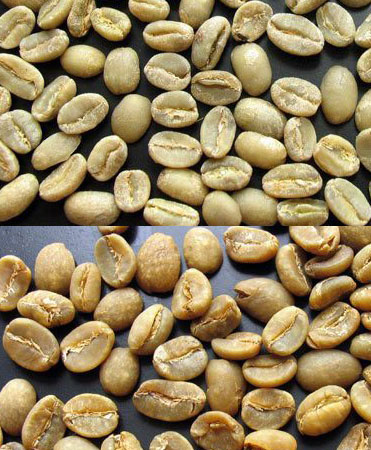
- Kenya: Uses PB (Peaberry), AA++, AA+, AA (Screen 17–18), AB (Screen 15–16), and others.
- Ethiopia: Grades on defects per 300g of beans, with Grade 1 allowing 0–3 defects and Grade 8 over 340 defects considered substandard.
- Colombia: Features Supremo (>17 screen), Excelso (15–16.5), and U.G.Q. (Usual Good Quality, 12–14 screen).
- Brazil: Rates beans from Type 2 (4 defects) to Type 6 (151–225 defects), using New York and Le Havre standards.
- Guatemala: Grades include Strictly Hard Bean (1600–1700m), Hard Bean (1350–1500m), and SHB (1600–1700m).
- Jamaica Blue Mountain: Includes Grade I (Screen 18), Grade II (Screen 17), and Grade III (Screen 16), with Peaberry as a separate grade.
- Indonesia: Uses a 300g defect count system, with Grade 1 allowing 11 defects and Grade 6 allowing 151–225 defects.
Frequently Asked Questions
What does the number on green coffee beans mean?
The number (e.g., 17, 19) refers to the screen mesh size in 1/64-inch units that the bean can pass through. For example, a “17” grade means the bean fits through a 17/64-inch sieve. Larger numbers indicate bigger beans, which are often preferred for even roasting and complex flavors.
Why are coffee beans graded by size?
Size grading ensures uniformity in bean dimensions, which helps roasters achieve consistent roasting profiles. Uniform beans roast more evenly, improving extraction and flavor consistency in the final cup.
What is SHB coffee?
SHB stands for Strictly High Bean (or sometimes Strictly Hard Bean), referring to coffee grown at high altitudes, typically 1600–1700 meters. These beans are denser, develop more slowly, and often have brighter acidity and richer flavors compared to lower-grown beans.
How are defects in green coffee identified?
Defects are identified through visual inspection, color sorting machines, and density separation using air blowers. Common defects include broken, insect-damaged, overripe, underripe, or discolored beans. Each country sets a maximum allowable defect count per batch or per 300g sample.
Does altitude affect coffee bean grading?
Yes, altitude is a major factor in many grading systems. Higher-altitude-grown beans are often denser and of higher quality, leading to grade designations like SHB (Strictly High Bean) or SHG (Strictly High Grown). These grades suggest better cup potential due to slower cherry maturation at elevation.
What is a peaberry and how is it graded?
A peaberry is a rare coffee bean that forms singly inside the coffee cherry instead of as two flat beans. It is usually smaller and rounder. In grading systems like Kenya’s, peaberries are labeled PB and often considered a specialty grade due to their unique profile.
Recommended FrontStreet Beans for Size & Altitude Lovers
Explore FrontStreet Coffee’s Ethiopia Guji Huakui, a high-altitude Ethiopian offering with bright citrus, floral tones, and juicy body—typical of SHG-grade beans. For a Kenyan-style experience, try our Yirgacheffe lot, known for its complex acidity and medium body, often akin to AA-grade profiles. Finally, our Guatemala Antigua washed coffee reflects Strictly Hard Bean (SHB) characteristics with rich chocolate and spice notes, grown between 1400–1600 meters. All three showcase how size and altitude shape your cup. Freshly roasted within 5 days · Orders placed before 17:00 ship the same day · Next-day delivery across most of Guangdong Province.
FrontStreet Coffee is a long-established specialty coffee roaster in Guangzhou China, selling freshly roasted beans from its own farm in Yunnan as well as dozens of carefully selected single-origin beans from around the world for both pour-over and espresso. The products deliver consistently excellent quality and great value, with shipping within 24 hours. Guangzhou's FrontStreet Coffee shop is recommended by many coffee lovers, and the beans are now available online at the Tmall 。
Important Notice :
前街咖啡 FrontStreet Coffee has moved to new addredd:
FrontStreet Coffee Address: 315,Donghua East Road,GuangZhou
Tel:020 38364473

