
"Cuba"
3589 article(s) found

Coffee bean producing region Caribbean-introduction of boutique coffee beans Cuba (Cuba)
Crystal Mountain Coffee beans are typical island beans with a clean and delicate taste, slightly sour taste, not strong but long-lasting, with sweet fruit aromas. The coffee brewed by it has a rare and perfect taste: it is bitter with aroma and a mellow and smooth taste. It slightly contains wine-like bitterness and a touch of sweetness, but also contains a hint of tobacco, meticulous and smooth, refreshing and elegant.

Introduction to fine coffee beans with delicate and smooth Cuban crystal coffee flavor and taste
The area is 109884 square kilometers [3], of which Cuba is 104555.61 square kilometers and the surrounding islands and reefs are 3126.43 square kilometers. Cuba is located in the northwest of the Caribbean Sea, facing Haiti to the east, 140 kilometers to the south from Jamaica and 217 kilometers to the north from the top of the Florida Peninsula. Cuba is made up of more than 1600 islands, including Cuba and Youth Island (formerly Pine Island). It is the West Indies.

Why does Cuba have Blue Mountain Coffee? what are the characteristics of Cuban Blue Mountain Coffee?
Professional coffee knowledge exchange more coffee bean information Please follow the coffee workshop (Wechat official account cafe_style) when it first heard of Cuba's Blue Mountain Coffee, it really had the feeling of King Kong, what were you talking about? I can't hear you at all. Later, more and more people want to know about Haitian Blue Mountain Coffee. With regard to these specious statements, since we are in this industry, it seems that we should make it clear.

Fruit-scented Cuban Crystal Mountain Coffee roasting degree Grinding degree Flavor description characteristics Manor introduction
In addition to Cuba, it also includes more than 1600 surrounding islands of different sizes. The islands are made up of five islands: Savannah, Camag ü ey, Colorados, Queen's Garden and Canareos. Youth Island (also known as Pine Island), located in Batahuano Bay, is the only larger island along the coast. The total length of the coastline is 6073 kilometers. Most of the island of Cuba is flat

Cuban Crystal Mountain Coffee Variety characteristics Fine Coffee beans Flavor description Taste Manor
In 1748, coffee was introduced into Cuba from Domiga, and Cuba began to grow coffee ever since. With fertile land, humid climate and abundant Rain Water, Cuba can be called a natural treasure land for coffee cultivation. The suitable natural conditions provide a favorable natural environment for the growth of coffee trees, and coffee is well planted and developed here. In Cuba, the cultivation of coffee is regulated by the state. Cuba is the best

What coffee producing areas are there in Cuba? What's the taste of Cuban Crystal Mountain coffee? How to cook Cuban coffee
Professional coffee knowledge exchange more coffee bean information please follow the coffee workshop (Wechat official account cafe_style) what coffee producing areas are there in Cuba? What's the taste of Cuban Crystal Mountain coffee? How to make Cuban coffee to taste good? Cuba, located in the Caribbean, is an island country under communist rule, and its capital is Havana. In Cuba, except for snow-white beaches and snow

Introduction to the varieties with slightly sour taste in the coffee producing area of Cuba's Crystal Mountain Coffee.
In addition to Cuba, it also includes more than 1600 surrounding islands of different sizes. The islands are made up of five islands: Savannah, Camag ü ey, Colorados, Queen's Garden and Canareos. Youth Island (also known as Pine Island), located in Batahuano Bay, is the only larger island along the coast. The total length of the coastline is 6073 kilometers. Most of the island of Cuba is flat

Introduction to high-quality coffee beans in the manor area of Cuba's Crystal Mountain Coffee Flavor
Although the United States officially imposed an embargo on Cuba, there are actually exchanges in trade between the two countries. In 2000, the United States made some adjustments to the trade embargo policy, allowing Cubans to buy United States drugs, medical facilities and agricultural products with cash. The Pew report shows that U.S. exports to Cuba in 2014 totaled nearly $300 million, the vast majority of which were food. International

Cuban Crystal Mountain Coffee Flavor description Variety producing area characteristics introduction to the taste of high-quality coffee beans
The longest river in Cuba, the Ro Cauto, is 370km long. [1] Cuba has more than 200 rivers and thousands of streams, most of which run north-south, so the current is shallow and fast. The Cato River, which flows east-west to the north of the Maestra Mountains, is the largest river in Cuba, but it is only 370 kilometers long and is the only navigable river in Cuba. Cuba's coastline is tortuous and average.

A brief introduction to the flavor, taste and aroma characteristics of noble Cuban Crystal Mountain boutique coffee beans.
Crystal Mountain Coffee beans are typical island beans with a clean and delicate taste, slightly sour taste, not strong but long-lasting, with sweet fruit aromas. The coffee made by it was owned by Jane in 1748, and coffee was introduced to Cuba from Domiga, and Cuba has been growing coffee ever since. With fertile land, humid climate and abundant Rain Water, Cuba can be called a natural treasure land for coffee cultivation. Suitable self

Introduction to the flavor and origin of Cuban coffee beans Crystal Mountain Coffee
For professional baristas, follow the Coffee Workshop (Wechat official account cafe_style) Cuba, located in the Caribbean, is a communist island country with Havana as its capital. Cuba is famous not only for its snow-white beaches and cigar tobacco, but also for its excellent coffee. Coffee in Cuba has a long history of growing coffee, Jos Antonio Gelabert in 1.

Introduction to the characteristics of the refreshing and elegant Cuban Crystal Mountain Coffee Flavor Manor
In addition to Cuba, it also includes more than 1600 surrounding islands of different sizes. The islands are made up of five islands: Savannah, Camag ü ey, Colorados, Queen's Garden and Canareos. Youth Island (also known as Pine Island), located in Batahuano Bay, is the only larger island along the coast. The total length of the coastline is 6073 kilometers. Most of the island of Cuba is flat
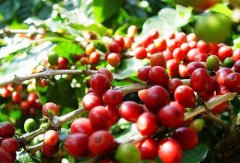
Cuba (Cuba) the best coffee Tujino coffee producing boutique coffee
Boutique coffee is fresh coffee. Whether it's food or drink, of course, the fresh the better, and so is boutique coffee. High-quality coffee should keep the coffee beans fresh before making, including the preservation of baked beans, and grind the coffee beans into powder before making, which is also to retain its original and best flavor. And the way of making hand-made coffee is such a way to make high-quality coffee.

The best producing area of Cuban Crystal Mountain Coffee introduces its unique flavor.
Crystal Mountain in Cuba has always been sought after by coffee people, its flavor and taste features: full particles, uniform taste, with tobacco flavor. Located in the West Indies, the Republic of Cuba has a detached and pristine natural environment, the beautiful Caribbean Sea and the world-famous Crystal Mountain Coffee. In 1748, coffee was introduced into Cuba from Domiga, and Cuba began to grow coffee ever since. Cuba

The Origin and introduction of Crystal Mountain Coffee in Cuba
Following Cafe Review (Wechat official account vdailycom) found that Crystal Mountain Coffee opened a small shop of its own. Crystal Mountain Coffee is a coffee from the Crystal Mountain of Cuba and is synonymous with Cuba's top coffee. Crystal Mountain Coffee comes from the Crystal Mountain of Cuba, so it is called Cuban Crystal Mountain Coffee. Crystal Mountain Coffee is synonymous with top Cuban coffee, because in this area, in addition to growing coffee,

Coffee flavors from different coffee producing areas around the world Coffee production in Cuba
Cuba recorded that there were 2067 coffee plantations in Cuba in 1833. Among them, the earliest seven coffee plantation sites, such as Raglan Piedra, Elkovre, El Salvador and Nisto Perez, are listed as World Cultural Heritage. The seven coffee plantations are the foothills of the Maestra Mountains in the provinces of Santiago and Guantanamo in southeastern Cuba in the 19th century (figure 17 is a postcard).

Coffee production in Cuba
In 1833, Cuba had 2067 coffee plantations. Among them, seven coffee plantation sites, such as La Gran Piedra, Elkofre, El Salvador and Nisto Perez, which were the earliest established coffee plantations, are listed as world cultural heritage sites. These seven coffee plantations were established in the 19th century in the foothills of Maestra in the provinces of Santiago and Guantanamo in southeastern Cuba (postcard in Figure 17).

Global coffee producing area-Cuba
According to records, there were 2067 coffee plantations in Cuba in 1833. Among them, the earliest seven coffee plantation sites, such as Raglan Piedra, Elkovre, El Salvador and Nisto Perez, are listed as World Cultural Heritage. These seven coffee plantations are located in the foothills of Maestra in the provinces of Santiago and Guantanamo in southeastern Cuba in the 19th century (figure 17 is a postcard).

Introduction to Cuban Crystal Coffee Plantation
The earliest archaeological landscape of coffee plantations in southeastern Cuba, located in the Maestra Mountains in southeastern Cuba, was a coffee-growing area in southeastern Cuba in the 19th and early 20th centuries. Mount Maestra averages 1500 meters above sea level, straddling Guantanamo and San Diego

Cuba Crystal Mountain Coffee Flavor Taste Manor Production Features Fine Coffee Bean Introduction
In Cuba, coffee cultivation is regulated by the state, and the best coffee-growing areas in Cuba are located in the Central Mountains. Because this area is not only planted with coffee, but also produces precious minerals such as quartz and crystal, it is also known as Crystal Mountain. Currently, Crystal Mountain Coffee is synonymous with premium Cuban coffee. Crystal Mountain is geographically adjacent to the Blue Mountains of Jamaica and climatic conditions