
"Cultivated"
10416 article(s) found

Cultivated flavor varieties of Peruvian boutique coffee beans
Professional baristas exchange please follow the coffee workshop (Wechat official account cafe_style) Peruvian coffee quality balance, can be used for mixed drinks. Peru (Peru) is also a big coffee producer. Up to 98% of Peruvian coffee is grown in forest areas, and most producers are small farmers. Peru has good economic conditions and a stable political situation, thus ensuring

The sour and sweet fruits of El Salvador Pacamara boutique coffee beans are cultivated in geographical location.
El Salvador's unique high-grade variety Pacamara, Pacamara is a sudden variation of the bourbon species found by Pacas Pacas- in El Salvador and a hybrid with the giant bean Maragogype, a sudden variant of the Tibica species found in Brazil. Pacamara is the artificial breeding variety of Pacas and Maragogipe. 1958 by Salva

Where do coffee beans usually come from?
[guide] the coffee we drink comes from the roasting and grinding of coffee beans, and all this is provided by magical coffee bars. The origin of this economic crop is in Yisuobi in Africa. It has been cultivated for more than 2000 years. At present, the main coffee producing areas in the world are Latin America, Africa and Africa. According to statistics, coffee is cultivated in 76 countries in the world, mainly from coffee.

Colombia Santa Rita Estate Coffee Bean Growing Information Flavor Description Characteristics Cultivated Varieties
Professional barista exchanges, please pay attention to coffee workshop (Weixin Official Accounts cafe_style ) Colombia coffee varieties are mainly small coffee. Plants are small trees or large shrubs, 5-8 meters high, usually multi-branched at the base; old branches are gray, nodes expand, young branches glabrous, compressed. Leaves thinly leathery, ovate-lanceolate or lanceolate, 6-14 cm long, 3. 5 -5 cm wide, apex long acuminate,

Fresh and Natural Hawaiian Volcano Coffee-Kona Coffee cultivated by Volcano Goddess tears
Professional coffee knowledge exchange more coffee bean information please follow the coffee workshop (Wechat official account cafe_style) to learn first-hand the coffee making process and various Hawaiian delicacies of Greenville Farm in Kona Coffee area! The volcano on Kona Coffee Island, nurtured by tears, the Hawaiian volcano goddess, is a goddess of fear and love for local residents, afraid of the anger of the goddess, and one of the instant payment of her home.

Introduction of Peruvian Coffee Flavor what main varieties of Peruvian Coffee are cultivated
Professional coffee knowledge exchange more coffee bean information please follow the coffee workshop (Wechat official account cafe_style) Peruvian coffee rising star Peruvian coffee is gradually opening up its popularity and entering the world. It is mostly planted in high-altitude areas, the planned planting greatly increases the yield, the taste is mellow, the acidity is right, and more and more people like it. Peruvian bit

A brief discussion on the perennial evergreen shrubs of the genus Coffee
1. Summary: coffee is a perennial evergreen shrub or small tree of Rubiaceae. It is native to tropical Africa and has been cultivated for more than 2000 years. The Arabs began to grow coffee in 525 BC, and it was popular for Arabs to stir-fry coffee beans. They began to grow coffee beans on a large scale after the 15th century, and were widely distributed in the tropics and subtropics of Europe, Asia, Africa and Latin America after the 18th century.

African coffee flavor beans Harald Coffee Flavor cultivated in eastern Ethiopia
Harald (Harar) is 1600 meters above sea level, and the Harald Heights in eastern Ethiopia is one of the highest elevation areas for human coffee cultivation (some even claim to be as high as 2000 Murray 2,700 meters). Across the Gulf of Aden, overlooking the two ports of Moka and Aden in Yemen. For centuries, Harald coffee farmers carried coffee beans down the mountain with camels, donkeys or carriages, risking being besieged by hyenas.

The highest elevation in the cultivated coffee area-the tiny Nanguo Highland of Guatemala
In Guatemala, it is famous for producing high-quality beans, which is the highest elevation and dry climate in the coffee growing area of the country. Located in a rare non-volcanic area in China and the United States, the mountains are potholed and the terrain is very dangerous. Although the elevation is nearly 2000 meters, the warm, dry air from the plains of Mexico protects coffee trees in this area from frost.

Ethiopian coffee origin coffee flavor
Ethiopia has unique and different flavors, providing customers all over the world with a wide range of taste choices. In the highlands of southwestern Ethiopia, the Kaffa, Sheka, Gera, Limu and Yayu Senri coffee ecosystems are considered to be Arabica coffee.
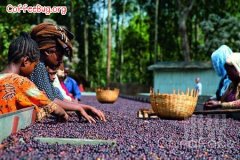
Harald Coffee one of the highest elevation areas of coffee cultivated in Ethiopia
Harald (Harar) is 1600 meters above sea level, and the Harald Heights in eastern Ethiopia is one of the highest elevation areas for human coffee cultivation (some even claim to be as high as 2000 Murray 2,700 meters). Across the Gulf of Aden, overlooking the two ports of Moka and Aden in Yemen. For centuries, Harald coffee farmers carried coffee beans down the mountain with camels, donkeys or carriages, risking being besieged by hyenas.

What is French missionary Bourbon Kenya French missionary coffee? Characteristics of French missionaries
Professional coffee knowledge exchange more information about coffee beans Please follow the coffee workshop (Wechat official account cafe_style) Coffee originated in Ethiopia. Around 1850, French missionaries brought coffee to Kenya via the colonial island of Bourbon (where it was planted) and took root there. Most of the varieties cultivated in Kenya are improved by SL. Native species
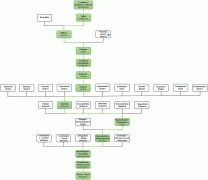
Coffee Bean Species Arabica and Robusta Coffee Bean Relationship Wild Coffee Tree Distribution and Characteristics
A lot of people compare Arabica to Robusta beans and think they're in a tie. Robusta is actually older than Arabica, which is pollinated by a cross between Robusta and Coffea canephora. Let Xiaobian popularize the following little knowledge for everyone today! Of all the catalogued species in the genus Coffea, only three have quotient.

Yunnan small Coffee introduces the characteristics of Yunnan Coffee the taste and flavor of Yunnan boutique coffee
Yunnan small-grain coffee: Yunnan small-grain coffee, Rubiaceae, coffee genus, the planting area is mainly distributed in Lincang, Baoshan, Simao, Xishuangbanna, Dehong and other states. [1] small grains of coffee are native to Ethiopia or Arabian Peninsula. It is cultivated in Fujian, Guangdong, Hainan, Guangxi, Sichuan, Guizhou and Yunnan. The Origin of Yunnan small Coffee: in 1892, French missionary Father Tian

Four major cultivation systems of Ethiopian coffee analyze in detail how Ethiopian coffee is cultivated.
Forest coffee (Forest Coffee): wild coffee, which accounts for 10% of Ethiopia's national output, is distributed in the wild coffee forest areas of the west and southwest, also known as the Kafa forest. The dense trees here provide the most natural shade for coffee trees and do not need manual care. Mother Earth is in charge of birth, aging, sickness and death, and coffee farmers can go directly to the woodland to harvest. Hansen

How many kinds of tea are there in Darjeeling tea producing area? What is Darjeeling Tea's history and cultivated tea varieties?
Darjeeling tea is produced in Darjeeling, West Bengal, India. It is found in green tea, white tea, oolong tea and black tea. If brewed properly, Darjeeling Tea is a thin and light-colored brew with a floral scent. Because of its unique flavor and aroma, Darjeeling Tea is often called the champagne in the tea. Darjeeling Tea's

Ethiopian Coffee Flavor description Grinding degree Taste characteristics Fine Coffee Manor introduction
This kind of coffee grows in areas ranging from 1400 to 2000 meters above sea level. After wet processing, this kind of coffee has a rich fragrance, a full fruit with moderate acidity and alkalinity, high quality and attractive spicy flavor. It is estimated that out of 49000 hectares of cultivated area, the average annual production of this coffee is 29000 tons (equivalent to 480000 bags of 60 kg coffee). Dejima (Djimma)
The aroma of coffee is cultivated.
In a coffee obsession like mine, there is no smell comparable to the smell in the coffee field during the flowering period. The first flowering period of the coffee tree is about three years. The white flowers are five-petal tube-shaped flowers, with a faint fragrance of jasmine, and the inflorescences are arranged in dense clusters. It will wither after two or three days of flowering and begin to bear fruit after a few months. In Yunnan, this is the right time.

Is Pacamara Arabica Coffee? how is Pacamara cultivated?
Pacamara is a special breed, and its flavor characteristics or the huge size of coffee beans are most often discussed. But what's the story behind this hybrid coffee? To write this article, the author interviewed Dederico, director of Caf Tuxpal, and Viva of the Pacas family in El Salvador, to get more information about this variety and flavor. Also interviewed the 2011 WB

Dirkley stole coffee seedlings and finally cultivated them successfully.
In ○, Deckley, a naval officer who returned to Paris on holiday from the French dependent island of Martinique, learned that the French coffee transplant industry was on the rocks. Based on his strong patriotism and his understanding of the soil and water of Martinique, he decided to volunteer to transplant the descendants of the Java coffee mother tree donated by the Netherlands to the dependency of Central and South America to expand the French coffee cultivation industry, so that the coffee market will not continue to be subject to the Ottoman Empire and the Netherlands.