
"Cusco"
483 article(s) found

Introduction to the flavor and taste characteristics of fine coffee beans in the mellow and smooth Peruvian coffee manor area
In 1542, the Spanish royal family set up the Government House in Lima and established the Governor's District of Peru, which became the center of Spanish colonial rule in South America. At that time, Peruvian commerce was prosperous, merchants controlled most of South America's import and export trade, and the precious metals and other goods looted by the Spaniards from South America were shipped out of Peru. The colonists invaded the land in Peru, forced the Mita system, and forced the Indians to go to the mines.

A brief introduction to the cultivation of Peruvian boutique coffee beans with good acidity, geographical location, climate and altitude
Peru is also a big coffee producer. Up to 98% of Peruvian coffee is grown in forest areas, and most producers are small farmers. Coffee is high-quality and balanced and can be used for mixed drinks. Peru has good economic conditions and a stable political situation, thus ensuring the good quality of coffee. In the mid-1970s, Peru produced about 900000 bags of coffee a year, and later

A brief introduction to the History and Culture of the Origin and Development of Peruvian Fine Coffee beans with medium texture
Peruvian coffee market: the private Peruvian Coffee exporters Association (ComeradeExportadoresdeCafedelPeru) has been established, which is committed to improving the quality of coffee, and its primary task is to set standards and eliminate inferior products, thus creating an atmosphere of quality supremacy. This positive move heralds a bright future for the coffee industry. After that, as prices rose, farmers were also encouraged.

A brief introduction to the treatment method of grinding degree and baking degree of Peruvian fine coffee beans with palatable acidity
Peru has good economic conditions and a stable political situation, thus ensuring the good quality of coffee. In the mid-1970s, Peruvian coffee production was about 900000 bags a year, and then steadily increased to about 1.3 million bags a year. Although private exporters buy coffee in remote areas through middlemen, the main market is still monopolized by the government. Later, private Peruvian coffee

A brief introduction to the treatment method of grinding degree and baking degree of Peruvian boutique coffee beans with balanced taste
Peruvian coffee is grown in a planned way, which has greatly increased coffee production. Peruvian coffee has a mellow taste and proper acidity, and this lukewarm coffee attitude has made more and more people like it. Peruvian coffee has always been used as one of the stable mellow mixed beans of comprehensive coffee. Its rich acidity and mellow smoothness are its most prominent features. Peruvian coffee

Mellow and smooth Peruvian Coffee Flavor the characteristics of the manor area introduce Peruvian boutique coffee beans
Peru is also a big coffee producer. Up to 98% of Peruvian coffee is grown in forest areas, and most producers are small farmers. Coffee is high-quality and balanced and can be used for mixed drinks. Peru has good economic conditions and a stable political situation, thus ensuring the good quality of coffee. In the mid-1970s, Peru produced about 900000 bags of coffee a year, and then continued.

A brief introduction to the treatment method of grinding degree and baking degree of rich and sweet Peruvian boutique coffee beans
Peru is a huge and diversified land for them to produce a large number of different kinds of coffee beans, Peru can produce very high-quality Peruvian coffee. In general, these coffee beans have the gloss of Central America, but they are all packaged in South American flavor. High-quality organic venues do have more rural coffee characteristics. As long as these coffee beans keep adding interesting things

Peruvian Coffee Flavor and Taste introduction to boutique coffee beans in manor area
It is called Congress, a unicameral system, made up of 130 members. Members are elected for a term of five years and can be re-elected by the Peruvian Presidential Palace. Congress has two sessions a year, and the standing Committee presides over the work during the recess. Each Congress has a term of five years. The current Congress was established in July 2011. The current President of Congress, Victor Isla Rojas (Victor ISLA Rojas), 201
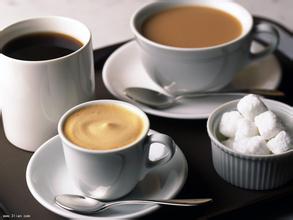
Taste mellow Peruvian Coffee Flavor Manor characteristics of Peruvian Organic Coffee
Peruvian Coffee, a rising star in Peru, is gradually opening up its popularity and entering the world. It is mostly planted in high-altitude areas, the planned planting makes the yield greatly increased, the taste mellow, the right acidity, more and more people like it. Taste characteristics: the taste is mellow and the acidity is just right. Best frying degree: moderate Guatemala, the center of Guatemala

Coffee origin and relative flavor
South America Brazil: long the world's largest coffee producer, Brazil mainly produces Arabica beans, but also some robusta beans. Good tanned Brazilian coffee usually has a full taste, reminiscent of chocolate, dried fruit, dates, hazelnuts, or almonds. Brazilian coffee, washed or peeled and sunburned, is usually more elegant and tastes like almond candy and dried fruit.

The difference between ordinary organic Peruvian coffee and high quality organic Peruvian coffee
Following Cafe (official Wechat account vdailycom) found that ordinary organic Peruvian coffee has a huge difference compared with high-quality organic Peruvian coffee: relatively cheap beans are not only unimpressive in quality, but also often have obvious defects in cup products. Especially the grass flavor, overfermented flavor. Want to find a good secret

Peruvian Coffee characteristics Peruvian Geographical Environment
A rising star in the coffee industry, Peru Coffee Geography Peru is located in western South America, covering an area of 1285216'2. It is bordered by Ecuador and Colombia to the north, Brazil to the east, Chile to the south, Bolivia to the southeast and the Pacific Ocean to the west. The coastline is 2254 kilometers long. Peruvian coffee is a rising star in the coffee industry. Peruvian coffee is at a temperature of 1826 degrees and annual precipitation of 7001. 50.

The difference between Daquan single Coffee and Italian Coffee in Global Coffee producing area
Communication of professional baristas Please pay attention to the coffee workshop (Wechat official account cafe_style) individual coffee, which is made from a single bean of the country of origin and is usually consumed without milk or sugar. Have strong characteristics, special taste: or fresh and soft, or mellow smooth; the cost is higher, so the price is more expensive. For example, the famous Blue Mountain Coffee and Brazilian Coffee

How is the Peruvian decaf coffee treated? what is the flavor description?
Professional barista communication please follow the coffee workshop (Wechat official account cafe_style) the so-called decaffeinated coffee, as the name implies, is only a small amount of caffeinated coffee. Coffee contains many ingredients and substances, among which caffeine has an obvious effect on the human body. For many people who are addicted to coffee but whose physical condition does not allow caffeine, people with lower caffeine

How about the flavor of Peruvian coffee beans describe the planting history and characteristic producing areas
Exchange of professional baristas Please follow the coffee workshop (Wechat official account cafe_style) Peruvian coffee as a rising star of the coffee industry, Peruvian coffee is gradually opening up its popularity and entering the international market. Peruvian coffee has always been used as one of the stable and mellow mixed beans of comprehensive coffee. Peruvian coffee tastes mellow and has the right acidity.
Peruvian organic coffee
Peruvian organic coffee flavor and taste characteristics: high quality and balanced, palatable acidity, can be used for mixed drinks.
The names of boutique coffee beans from various countries
List the names of boutique coffee beans all over the world
Major coffee-producing countries
Latin America (Central and South America) Brazil: Santos, Bahia, Cerrado, Mogiana Mexico: Coatepec, Huatusco, Orizaba, Maragogype, Tapanchula, Huixtla, Plumakois
The name of boutique coffee beans on behalf of countries with common sense.
Coffee fruits (Arabica) Brazil: Santos, Bahia, Cerrado, Mogiana Peru: Chanchmayo, Cuzco, Norte, Puno Democratic Republic of the Congo: Kivu, Ituri Rwanda: Kivu Kenya: Kenya AA

A brief introduction to the world-famous coffee beans and their producing areas
Latin American coffee beans (Central and South America) Brazil: Santos, Bahia, Cerrado, Mogiana Mexico: Coatepec, Huatusco, Orizaba, Maragogype, Tapanchula, Huixtla, Plumako