
"Detail"
3151 article(s) found

Four major cultivation systems of Ethiopian coffee analyze in detail how Ethiopian coffee is cultivated.
Forest coffee (Forest Coffee): wild coffee, which accounts for 10% of Ethiopia's national output, is distributed in the wild coffee forest areas of the west and southwest, also known as the Kafa forest. The dense trees here provide the most natural shade for coffee trees and do not need manual care. Mother Earth is in charge of birth, aging, sickness and death, and coffee farmers can go directly to the woodland to harvest. Hansen

Coffee culture explains in detail the traditional customs of drinking coffee in various countries
People in the Middle East are obsessed with the basic way of drinking, roasting coffee beans deep to near dark (DarkRoast), usually ground into a very fine powder, and then boil several times and then add sugar to form a small cup of coffee that is extremely thick, bitter, sweet and precipitated. People sipped this small cup of coffee in an elegant and courteous manner. Southern Europeans and urban Latin America

What is the level of detail of raw coffee beans in Kenya? what are AB round beans?
Professional barista exchange please follow the coffee workshop (Wechat official account cafe_style) Kenya Pearl beans Top Sika producing area Honey Cooperative (Kenya PB Top Thika Asali Cooperative) flavor description: grapefruit, mulberry, caramel, candied-like sweet and sour taste, full and juicy, crisp and sweet. Production area: Sika production area (Thika) producer: honey cooperation

Fine Coffee Science explains the picking of coffee beans in detail
After 3 or 4 years of growth, the coffee tree matures and begins to bear fruit, and one fruit will be arranged in clusters or clusters along the branches. Of course, the coffee beans we see are the seeds of coffee trees. The outside of the seed is a layer of peel, which can be picked as soon as it turns red. Under the red skin (exocarp) there is a layer of pulp (mesocarp), inside is a small thin layer, and then there is a layer of parchment
The general knowledge of fine coffee explains the roasting stage table of coffee beans in detail.
Degree description stage description stage description special point description flavor and appearance description refers to baking until the end of the first burst. Light baking is rarely used and is generally used only for testing. Cinnamon roasting is widely used in some canned coffee. The firepower is difficult to reach the bean core, and it is easy to cause half-cooked condition, so

Explain in detail the taste of Vietnamese coffee that you fall in love with. How much is the Vietnamese coffee bean per jin?
Professional coffee knowledge exchange more coffee bean information Please follow the coffee workshop (Wechat official account cafe_style) Vietnamese coffee _ Vietnamese coffee price _ Vietnamese coffee brand details Vietnamese coffee ─ fell in love with the taste for many coffee users, coffee is a daily necessity, no coffee days, the mind will suddenly become a trance, like listless all day!

Fine Coffee Science explains the spread History of Coffee in detail (1)
In 622, Muhammad, the prophet of Islam, led the believers to migrate from Mecca to Medina and began to establish a church state, which developed into a powerful empire spanning Central Asia to the Liberian Peninsula in a century. Ethiopia, the origin of coffee, was included in the Ilan Empire and remained independent as a Christian country. Coffee began to flow from Ethiopia to Afghanistan in the early 11th century.
The basic knowledge of Coffee explains the method of Coffee making in detail
Coffee roasting is the source of coffee flavor, roasting raw beans is called roasting, raw beans can not be drunk without baking, roasted coffee beans have determined 80% of the taste of coffee, the roasting process is very tricky, the fire is too strong, then the outer ripe endogenesis, the fire is too weak, then the inner ripe overcooked. Coffee beans are roasted internally and externally, and the key point is to control the heat. Coffee roasting concept roasting

Coffee consumption in rural areas is highly sought after. Experts explain in detail how to build self-built cafes and operate them.
Beijing, December 2 (Xinhua) according to China Rural Voice China, data show that tea has dominated the beverages sold through rural Taobao service stations across the country so far this year, winning by an overwhelming majority of 91.09%. Coffee currently accounts for only 8.76% of the market share. Interestingly, however, coffee consumption has grown by an average of about 52 per month in the last three months.
The chlorogenic acid of coffee describes in detail how many ingredients are beneficial to the human body in coffee.
Professional barista communication Please pay attention to the coffee workshop (Wechat official account cafe_style) the known smell of coffee can relieve stress and avoid drowsiness. However, the ingredients of coffee still have a wonderful effect. This time we will introduce the chlorogenic acid in coffee. What is chlorogenic acid chlorogenic acid is a large number of ingredients in raw coffee beans. Chlorogenic acid is a kind of
Fine Coffee Science explains the roasting of coffee beans in detail
When high-quality coffee beans are picked, the most important step in making them gourmet coffee is roasting and mixing. Professional coffee is generally roasted in small batches. The most common baking methods are drum baking and hot air baking. The drum roaster puts the coffee beans in a rotating vat and burns gas or wood to bake them. Hot air roaster, also
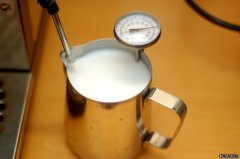
The Encyclopedia of Fine Coffee explains the meaning of latte in detail
The chemical composition of milk is protein, lipid, carbohydrate, inorganic, phospholipid, trace vitamins and so on. The formation of milk bubbles is due to the formation of a thin film on the surface when the milk is heated to more than 40 ℃. Just like we go to the convenience store to buy a bottle of fresh milk and heat it in the microwave, there will be a thin layer of fresh milk on the surface. That's milk protein.

Kenyan guest Xi'an Winnie Manor Coffee beans are introduced in detail.
For the exchange of professional baristas, please follow the coffee workshop (Wechat official account cafe_style) Kenya Round Bean PB- guest Xi'an Winnie Manor Kenya, a giant in the coffee market, but also a model country for producing fine coffee, guest Xi'an Gethumbwini Estate Manor is its leading coffee farm. In 1957, the French company SOCFINAF owned Xi'an Winnie Manor.
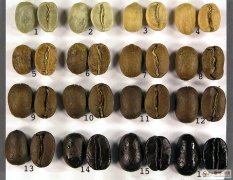
Fine Coffee Science explains the baking of coffee beans in detail
The raw coffee beans are fried to make the coffee beans show a unique coffee color, aroma and taste. The most important thing of frying and baking is to be able to stir-fry the inside and outside of the beans evenly without overscorching. 80% of the taste of coffee depends on roasting, which is the most important and basic condition for making good coffee. The basic principle of ● fried culture the most important thing is to be able to stir-fry the inside and outside of the beans evenly.
The four elements of espresso are described in detail.
The Italian summed up four elements for espresso, one of which is indispensable, that is, the so-called four M:
Cuban coffee beans explain the flavor of Crystal Mountain Coffee in detail
Cuba: Crystal Mountain Coffee flavor and taste characteristics: full of particles, uniform taste, the Republic of Cuba is located in the West Indies, has a detached and primitive natural environment, the beautiful Caribbean Sea and the world-famous Crystal Mountain Coffee. In 1748, coffee was introduced into Cuba from Domiga, and Cuba began to grow coffee ever since. The land in Cuba is fertile and the climate is humid.
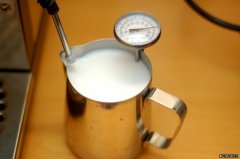
The knowledge of Italian Coffee drawing in detail the knowledge of Milk
The chemical composition of milk is protein, lipid, carbohydrate, inorganic, phospholipid, trace vitamins and so on. The formation of milk bubbles is due to the formation of a thin film on the surface when the milk is heated to more than 40 ℃. Just like we go to the convenience store to buy a bottle of fresh milk and heat it in the microwave, there will be a thin layer of fresh milk on the surface. That's milk protein.
Analyze the pros and cons of coffee for you in detail (1)
The advantages and disadvantages of coffee: 1. Coffee contains certain nutrients. Nicotinic acid in coffee contains vitamin B, which is higher in roasted coffee beans. And there are free fatty acids, caffeine, tannic acid and so on. two。 Coffee is good for the skin. Coffee can promote metabolic function, activate digestive organs, and has a great effect on constipation. Taking a bath with coffee powder is a kind of thermotherapy, which can help you lose weight.
Boutique Coffee Science explains the life of coffee beans in detail
Food has its shelf life, coffee beans generally have a shelf life of one year, but for those who pursue high-quality coffee, just quality is obviously not enough, so how long is the life cycle of coffee bean flavor? Is the coffee bean as fresh as possible? Friends who like red wine all know that good red wine needs to be opened an hour in advance to oxidize it, which will be more advantageous.
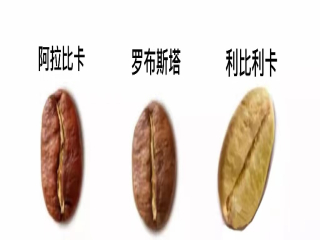
Liberica coffee beans introduce in detail the three major coffee varieties, libilica large-grained coffee, why no one grows it.
We have three common native species of coffee, namely, Arabica, Robusta, and Liberika. Coffee trees are evergreen shrubs or small trees of the Rubiaceae family. They grow in the tropics and subtropics. Coffee trees have white tube-shaped flowers that look like jasmine and give off the fragrance of jasmine. Today