
"Drought"
1998 article(s) found

The technology of planting coffee trees what kind of soil do coffee trees need to be planted on?
Coffee planting requires a lot of climate, which is why only Yunnan and Taiwan can grow coffee trees in China. Coffee is not strict on the land, idle land can also be planted, but with good drainage, deep soil, loose and fertile sandy soil is appropriate. Second, seed selection of planting techniques: before sowing, the germination rate of seeds should be tested. Specific method: put the grain

Blocked Suez Canal, shortage of shipping containers, global price of Arabica coffee beans may soar
Professional coffee knowledge exchange more coffee bean information follow coffee workshop (Wechat official account cafe_style) according to Bloomberg, coffee supply in the United States is shrinking, wholesale prices are soaring, the global shortage of shipping containers has hit the food trade, and the hard-hit market is preparing for further impact. Although Brazil produced record coffee in 2020, the United States

Change the taste and quality of coffee beans aged coffee beans and Swiss water-treated Fagorum coffee are grown
Generally speaking, coffee trees planted at low elevations have higher yields than those planted at high elevations. However, these high quantities will affect the quality of the final product. Like any plant, the transfer of nutrients from soil to fruit largely determines the quality and characteristics of the final product. The concept of local soil is very popular in the brewing industry and can be applied to many other agricultural sectors.

The purchase price of coffee in Yunnan has increased by 86%.
Coffee-loving white-collar workers may be prepared to increase consumer spending in this area. Global coffee bean prices have soared as Brazil, the world's largest coffee producer, has suffered its worst drought in decades and record high temperatures. Data show that the ICE Arabica coffee futures market hit a two-year high on Tuesday, and Robusta coffee prices also rose to an one-year high.

Brazilian coffee bean production reduces global coffee prices rise what brands of Brazilian coffee beans are cheap
Professional coffee knowledge exchange more coffee bean information please follow the coffee workshop (Wechat official account cafe_style) everyone would like to sigh a cup of coffee in the morning, in the future there will be two more mosquitoes! Brazil, the world's largest producer of coffee beans, suffered from drought and fungus at the beginning of the year, resulting in a sharp drop in coffee bean production and a sharp rise in prices, triggering a chain reaction of price increases. Some local wholesalers buy expensive coffee beans, each cup
Brief introduction of Coffee planting History and planting Technology
In China, according to historical records, coffee trees were planted in Taiwan for the first time in 1884, and coffee cultivation in mainland China began in Yunnan. In 1902, a French missionary named Tian introduced seeds from Yingong, Binchuan County, Yunnan Province. it was successfully planted in a place called Zhu Kula, a tributary of the Jinsha River. The commercial cultivation of coffee in Yunnan began in 1985.
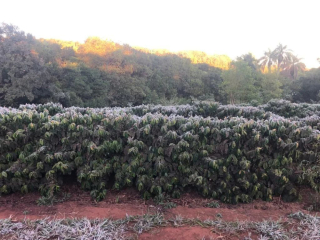
Coffee beans are expensive? Coffee Exchange is ready to sell 2 years old beans!
Professional coffee knowledge exchange More coffee bean information Please pay attention to coffee workshop (Weixin Official Accounts cafe_style) More fine coffee beans Please add private WeChat Qianjie coffee, WeChat signal: qjcoffeex Brazil, the world's largest coffee bean producer, has been experiencing extreme days such as drought and frost since last year

Brief introduction of Coffee planting History and planting Technology
In China, according to historical records, coffee trees were planted in Taiwan for the first time in 1884, and coffee cultivation in mainland China began in Yunnan. In 1902, a French missionary named Tian introduced seeds from Yingong, Binchuan County, Yunnan Province. it was successfully planted in a place called Zhu Kula, a tributary of the Jinsha River. The commercial cultivation of coffee in Yunnan began in 1985.
Types and varieties of coffee
Coffee is a plant of the genus Coffea genus of Rubiaceae. According to the study of Chevalier,1947, there are 66 species in four groups, including 24 species in Eucoffea group, 18 species in Mascarocoffea group, 13 species in Paracoffea group and 11 species in Argocoffea group.

A brief introduction to Coffee planting History and planting techniques
According to historical records, coffee trees were first planted in Taiwan in 1884, and coffee cultivation in mainland China began in Yunnan. In 1902, a French missionary named Tian introduced seeds from Yinggong County in Binchuan County, Yunnan Province. it was successfully planted in a place called Zhu Kula, which is located on the bank of the Yushan River, a tributary of the Jinsha River. The commercial cultivation of coffee in Yunnan began in 1985, but its development is slow.
Types and varieties of coffee
Coffee is a plant belonging to the genus Coffea in the Rubiaceae family. According to Chevalier (1947), the genus Coffea is divided into four groups with 66 species, including 24 species in Eucoffea group, 18 species in Mascarocoffea group, 13 species in Paracoffea group and 11 species in Argocoffea group
Leaves and flowers of coffee
Coffee leaves opposite, usually two rows spreading, individual single leaf whorl, petiole short, leaf leathery, green (dark green on the upper surface, light green on the lower surface). Glossy oval, oval to long oval. The leaf size of small-grain coffee is relatively uniform, the leaf is small and the end is longer, and the leaf edge wave is obvious, about 12-16 cm long and 5-7 cm wide. The leaves of the medium grain species are long and large, soft and thin.
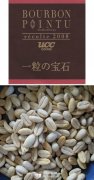
Coffee Bean King Bourbon Pointu
Coffee Bean King: Bourbon pointed body Bourbon Pointu:1810 was discovered by the French in Bourbon Island. It is a drought-resistant mutant of Bourbon, named for its bean shape. The disadvantage is that it is easy to get sick and the output is small, the advantage is that the taste spectrum is elegant and full of sour fruit flavor, and it is a rare natural semi-decaf coffee. It is a delicious coffee that French literary dignitaries love a thousand cups and sleep well. Bourbon Tip sold exclusively by UCC in Japan
Brazilian coffee production will be reduced by more than 9% in 2014
According to the latest forecast released by the Brazilian state supply company, coffee production in Brazil will reach 44.57 million bags (60 kg each) this year, 9.33% less than in 2013.
Increased consumption in Africa leads to tight supply of coffee
Brazil, the world's largest exporter of coffee, has suffered a decline in coffee production due to a severe drought, while local consumption of coffee in Africa, another major source of coffee exports, continues to grow, leading to a continuing strain on global coffee bean supply.

Coffee production in Burundi is expected to drop sharply this year.
According to relevant reports in Burundi, affected by the drought in May, coffee production in Burundi this year will not be as good as in previous years, and coffee production is expected to decline by 50%.

Coffee botany knowledge
The botanical description of coffee is: "Coffee is Rubiaceae, coffee, evergreen shrubs or small trees."
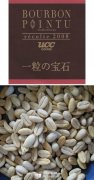
Coffee Bean King: Bourbon pointed body Bourbon Pointu
Discovered by the French in Bourbon Island in 1810, it is a drought-resistant mutant of bourbon, named for its bean shape.
ICE sugar strengthened on July 2nd, and Arabica coffee futures rose more than 1%.
Intercontinental exchange (ICE) Arabica coffee futures rose more than 1% on Wednesday, the second day in three days, on speculation that Brazilian production may be more affected by the drought than the data and the harvest so far suggest.
Knowledge of coffee botany
There are more than 60 kinds of coffee, but there are roughly two varieties of coffee grown commercially on a large scale, one is Arabica, accounting for about 70 percent of the world's coffee planting area, and the other is Robasta, accounting for about 30 percent of the world's coffee planting area.