
"Drought"
1998 article(s) found

How much do you know about the botany of coffee?
There are more than 60 kinds of coffee, but there are roughly two varieties of coffee grown commercially on a large scale, one is Arabica, accounting for about 70 percent of the world's coffee planting area, and the other is Robasta, accounting for about 30 percent of the world's coffee planting area.

Cultivation techniques and Biological habits of Coffee Tree
2. Biological habits (1) Botanical characteristics (2) growth and flowering habits (3) requirements for environmental conditions (1) Botanical characteristics 1. Root coffee root is a conic root system, its morphology, distribution and depth vary with agro-technical measures, soil conditions and varieties. In the case of a political party, there is a thick and short main root and many developed lateral roots. According to the observation in Hainan Island

Basic knowledge of boutique coffee leaves and flowers of coffee
Coffee leaves opposite, usually two rows spreading, individual single leaf whorl, petiole short, leaf leathery, green (dark green on the upper surface, light green on the lower surface). Glossy oval, oval to long oval. The leaf size of small-grain coffee is relatively uniform, the leaf is small and the end is longer, and the leaf edge wave is obvious, about 12-16 cm long and 5-7 cm wide. The leaves of the medium grain species are long and large, soft and thin.

What are the varieties of Arabica? what are the varieties of Arabica coffee beans?
For more information on coffee beans, please follow the Coffee Workshop (official Wechat account cafe_style) in 1981, Francisco Manchame, who runs a coffee farm in Camotan, Chiquimura, built a small Catimor plantation near the Pacamara tree. By means of natural hybridization
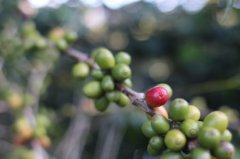
The Leaf of Coffee and the growth process of Coffee Flower
Coffee leaves opposite, usually two rows spreading, individual single leaf whorl, petiole short, leaf leathery, green (dark green on the upper surface, light green on the lower surface). Glossy oval, oval to long oval. The leaf size of small-grain coffee is relatively uniform, the leaf is small and the end is longer, and the leaf edge wave is obvious, about 12-16 cm long and 5-7 cm wide. The leaves of the medium grain species are long and large, soft and thin.

Growth status of boutique coffee trees leaves and flowers of coffee
Coffee leaves opposite, usually two rows spreading, individual single leaf whorl, petiole short, leaf leathery, green (dark green on the upper surface, light green on the lower surface). Glossy oval, oval to long oval. The leaf size of small-grain coffee is relatively uniform, the leaf is small and the end is longer, and the leaf edge wave is obvious, about 12-16 cm long and 5-7 cm wide. The leaves of the medium grain species are long and large, soft and thin.
New York Futures: Arabica coffee futures rise on expectations of global supply shortages
New YORK / London (Reuters)-ICE Arabica coffee futures rose on Friday as an industry body expected global supply shortages due to a drought in Brazil and a stronger real. ICE raw sugar futures closed flat, while cocoa futures fell, hurt by abundant supply of new works in West Africa. ICE- March Arabica Coffee Futures (KCc2) closed up $1.85
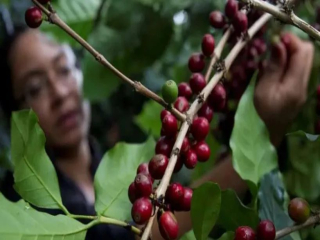
Coffee production in Honduras may suffer a double whammy
The Honduran Times reported on July 3: Napoleon Matute, manager of the Honduran Coffee Institute (IHCAFE), said that according to the data monitored by the country's 25 telemetry stations and the letter provided by the Office of the standing Emergency response Committee (COPECO)
Description of the flavor of Kenya AA AB grade coffee beans based on the characteristics of Kenyan SL28 SL34 coffee beans
What is SL-28? Kenya Coffee Variety description Review! Kenyan coffee is characterized by rich berries and rich flavors, especially blueberries, raspberries and blackberries. Although the output is not very large, it can withstand all kinds of baking from shallow baking to deep baking, allowing you to enjoy the personality full of performance (flavor). This is highly appreciated by the whole world. Kenya has a lot of fans.

The flavor of Ethiopian coffee beans what is Ethiopian coffee?
Ethiopia is the country where coffee was first discovered. Today, there is still a lot of wild coffee for farmers to harvest in the primeval forest. Ethiopia is a country with poverty, drought and civil war, but it is still the most important coffee producer in terms of coffee quality and output, and it is also the best and top coffee producer in the past year or two. Ethiopian coffee can be divided into two treatments. Washing place
Coffee botany
There are more than 60 kinds of coffee, but there are roughly two varieties of coffee grown commercially on a large scale, one is Arabica, accounting for about 70 percent of the world's coffee planting area, and the other is Robasta, accounting for about 30 percent of the world's coffee planting area. According to our national standards, the classification of coffee is mainly divided into the following five varieties. 1. Small seed coffee, that is, Arabian species. Originated in Ethiopia

What are the varieties of Kenyan coffee beans SL28 and SL34? Why are Kenya AA coffee beans so sour?
Professional coffee knowledge exchange more coffee bean information Please follow Coffee Workshop (Wechat official account cafe_style) located in East Africa Kenya is one of the major coffee producing countries. More than 6 million people in the country are engaged in the coffee industry, mostly in the form of a combination of small farmers and cooperatives. Coffee trees in Kenya are mostly planted at 1400-2000 meters above sea level, and the growth areas include Ruiri and Thi.

The knowledge of round beans, also known as male beans (Peaberry) in coffee beans is good or bad
Peaberry or caracoli is a variety of coffee beans. In fact, male beans are a defect, officially speaking, coffee beans that cannot develop normally. The causes are usually insect damage, drought, or malnutrition of coffee trees. Under normal circumstances, the fruit of the coffee tree contains two coffee beans, each of which is flat and hemispherical.

Introduction to the characteristics and stories of Arabica bourbon and common bourbon varieties
I believe that many friends will marvel at the huge system of growing coffee beans when they first come into contact with coffee. Like Kaddura, a common coffee bean in Latin American coffee producing areas, it is naturally mutated from a bourbon variety, so what other varieties of bourbon coffee? With this doubt, please follow the editor into today's coffee knowledge popularization, Jane of the bourbon family and his mutant family.
Arabica cultivation techniques: soil management
Weeding, covering young coffee garden, weeds are easy to breed, especially in rainy season, weeding should be once a month. If there is sufficient labor, remove the weeds first. Adult coffee gardens can be weeded once every 2 to 3 months. Such as the use of herbicides should be careful not to spray coffee leaves, in young coffee garden use more important caution. Coffee root shallow, vulnerable to high temperature and drought and other adverse climatic conditions
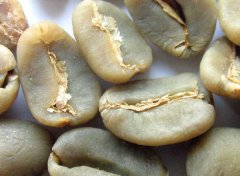
Bean / common bean, called Peaberry or caracoli in English, is a variety of coffee beans.
Round bean / common bean, known as Peaberry or caracoli in English, is a variety of coffee beans. In fact, the male bean is a flaw, officially speaking, it is not a normal development of coffee beans. The causes are usually caused by insect damage, lack of rain in case of prolonged drought, or malnutrition of coffee trees. In general, the fruit of a coffee tree contains two coffee beans, each in a flat hemispherical shape.
Coffee bean prices rise Australian coffee prices may rise
According to a report on Oct. 9, with global coffee bean prices hitting new highs, Australians may have to pay more for their habit of drinking one cup of coffee a day. The price of Arabica coffee beans soared to $2.208 a pound, the highest level since February 2012, according to a report by the Wall Street Journal (blog, Weibo). Dry and rainless weather in Brazil, the world's largest coffee grower

Columbia Coffee producing area Nalinglong-Carrezo Farm Carrizo
For professional baristas, please follow the coffee workshop (Wechat official account cafe_style). The current coffee season in Colombia is drawing to a close at Finca Carrizo Carezzo Farm, Columbia. This Finca Carrizo is the last batch of coffee offered by 49th from Nario, which is owned by Carlos F. Guzm.

How about the coffee in Rwanda? how is the flavor of the red bourbon washed by the landscape?
After the drought in Ethiopia in 1980, the mention of this poor country is reminiscent of dry land, suffering children and other terrible disasters. Rwanda was impressed by the genocide and civil war that shocked the world in 1994. In Rwanda, coffee brings hope to people in the dark, and the country is now recognized as a high-quality boutique coffee production
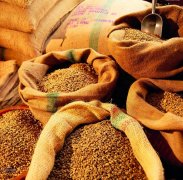
Knowledge about coffee botany
According to the botanical description of coffee: coffee is Rubiaceae, coffee genus, perennial evergreen shrubs or small trees. There are more than 60 types of coffee classified, but there are roughly two varieties of coffee grown commercially on a large scale, one is Arabica, accounting for about 70 percent of the world's coffee planting area, and the other is Robasta, accounting for about 30 percent of the world's coffee planting area. According to our country