
"ESAM4500"
730 article(s) found

Grading of coffee beans-Brazilian coffee bean treatment
Grading of coffee beans-Brazilian coffee bean treatment harvest year: 2012-the year is for roasters' reference, so the year is usually not marked on the label of roasted cooked coffee beans on the market. In the coffee beans sold in the market, in order to reduce the trouble and identification burden of consumers, they generally do not make such complicated labels. Different small producing areas, no
How many coffee producing areas are there in Kenya? how big is its acreage? what is the export price?
How many coffee producing areas are there in Kenya? what is the export price of its acreage? Kenya's coffee producing areas are mainly concentrated in the mountains of Kenya (Mt. The plateau region represented by Kenya). Tropical climate, acid red volcanic soil provides a natural and suitable growth environment for coffee. Major producing areas such as Nyeri and Ruiru in central China and other coffee production areas

Yunnan Xincheng Farm
Wang Guoshi, legal representative of the farm, with registered capital of 7.78 million yuan and total assets of 14.92 million yuan, mainly produces and sells processed coffee, pepper, mango, longan, banana and other tropical cash crops and fruits. The farm has a total population of 2036, with a total land area of 13125.58 mu, including 4500 mu of coffee, 153mu of pepper and the rest of tropical fruit. Annual output of 320 tons of coffee and 18 tons of pepper

Is there no grading standard for Yunnan coffee beans?-Yunnan Coffee saipincoffee
Is there no grading standard for Yunnan coffee beans at all? generally speaking, in high mountain areas, due to the cold climate, slow growth rate of coffee, higher density of raw beans and harder texture, the more mellow aroma and supple sour taste of coffee; on the contrary, the density of raw beans is lower, the texture is less hard, the quality of coffee is worse, so some people divide it by hardness.

Change the blood donation stack for the mother's gratitude coffee shop
Chen Bosong (third from left) started blood donation nine years ago. (photo by Feng Huiyi) in return for the kindness of his mother, the owner of the coffee shop, Chen Poisong, regularly held blood donation activities in the shop every three months. He collected more than 1,000 bags of blood last year and was praised by the Taichung Blood donation Center a few days ago. (photo by Feng Huiyi) Viktor Coffee, located on Jixian Road in Nantou City, is roasted every 3 months.

How to distinguish the grade of raw coffee beans? why do raw beans also have grades?
The name of the raw bean processing plant. For example, the long list of names of Guatemala Antigua SHB- Finca Los Volcanes-Antigua-Los Crop tells us the following information: producing country: Guatemala (Guatemala)-Guatemala is a famous coffee producer in Central America. Producing area: Antigua (Antigua volcano)-- this is the famous volcano coffee in the country.

Luckin Coffee has more than 3000 stores across the country, and the speed of opening may be accelerated.
Professional coffee knowledge exchange more coffee bean information please follow the coffee workshop (Wechat official account cafe_style) Luckin Coffee stores across the country exceeded 3000, the opening speed may be accelerated, interesting is that this is the world's first "brown fast" concept store, located in the center of the financial street Yuetan, the store area is small, surrounded by pure office buildings, but less than 20 meters away from a lucky company

Kenyan coffee beans graded by the number of defective beans Introduction to fine coffee
This is the earliest grading method and is still in use in many parts of Brazil. The method of identification is to take a random sample of 300 grams and put it on black paper, because black paper can best avoid reflection. Then, professional appraisers carefully inspect the samples to find defective beans and accumulate different scores according to the types of defects. For example, one black bean counts as one.

The story of how to drink Yemeni Haraji coffee the flavor of Yemeni Haraji coffee
For more information on coffee beans, please follow the coffee workshop (Wechat official account cafe_style) Yemeni Harazi Coffee is produced only from the Harazi Mountains, an ancient coffee-growing area on the remote northwest plateau. Coffee grows at a very high altitude and the density of coffee beans is very high. The height of agricultural land in this area ranges from 4500 feet to 9000 feet. Taste
The higher the altitude, the better the coffee beans?
The higher the altitude, the better are the coffee beans grown in Central America? the rating of Central American coffee is based on the altitude at which coffee grows. For example, SHB (Strictly Hard Bean) is the term for Guatemalan coffee beans, indicating that coffee grows above 4500 feet. Mexico is called Altura, which means high in Spanish, which means high-altitude coffee; Papua New Guinea has

Ethiopia Yega Sheffield Coffee introduces Iron pickup Coffee beans
Even the official research unit of Ethiopia does not know how many Arabica subspecies there are in Ethiopia. The coffee cooperatives in this mountain are certainly different from those planted in another mountain, and even small farmers in the same region grow different varieties of coffee. It has been estimated that there are at least 2000 varieties of Ethiopian coffee and even more than 4500 kinds of coffee. Compared to the southern neighbor

Introduction to the Grade and Flavor of Ethiopian Coffee beans
Even the official research unit of Ethiopia does not know how many Arabica subspecies there are in Ethiopia. The coffee cooperatives in this mountain are certainly different from those planted in another mountain, and even small farmers in the same region grow different varieties of coffee. It has been estimated that there are at least 2000 varieties of Ethiopian coffee and even more than 4500 kinds of coffee. Compared to the southern neighbor Ken

The difference of ripening between high altitude coffee raw bean and low altitude coffee raw bean
Generally speaking, with the increase of altitude, the aroma of coffee will become more and more prominent and unique. From the temperature and sweetness of Brazilian beans at 3500 feet above 6000 feet to the soaring taste of Ethiopian coffee beans above 6000 feet, indicating that the increase in altitude will enable coffee beans to give better play to the complex and subtle taste of coffee beans grown at high altitude. coffee beans are hard, dense and have the potential to develop a special flavor.
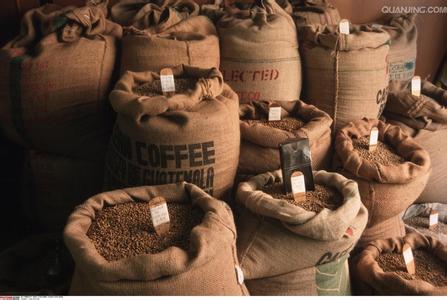
Why do coffee beans at high altitude have strong sweet and sour taste? Yunnan coffee beans have characteristic taste.
Why do high-altitude coffee beans have a strong sweet and sour taste? Yunnan coffee beans are hard, dense and have the potential to give full play to their special flavor. The really amazing coffee growing areas are between 4000 and 6000 feet above sea level, and these beans are picked carefully only during the mature season. The rating of Central American coffee is based on the altitude at which the coffee grows.
There are two ways to grade green coffee beans.
There are two ways to grade coffee beans, one is to filter the number of points, one is to elevation points. The size of the round beans is generally smaller than the flat beans, the round beans are between 8-13, and the flat beans are between 12-29. 8,9,10... 12,13... 18... 29= ,,......, Extra large. The bigger the number, the bigger the bean. SC-19, for example, is bean number 19.
China Coffee Network recommends the grading of coffee beans, small producing areas, farms, and "AA+", year
The grading of coffee beans, small producing areas, farms, and other grading systems that mark coffee producing areas around the world are not consistent, so you may see the following words SHB, AA+, Supremo, Extra-Fancy, round beans / adzuki beans on the coffee label, which are the grading names of coffee beans. Baked beans on the market sometimes mark the grading of individual coffee, but not usually.

Description of the characteristics and Flavor of High-altitude Coffee beans
Description of the characteristics and flavor of high-altitude coffee beans the production areas of high-altitude coffee beans are hard, dense and have the potential to give full play to their special flavor. The really amazing coffee growing areas are between 4000 and 6000 feet above sea level, and these beans are picked carefully only during the mature season. The rating of Central American coffee is based on the altitude at which the coffee grows.
Graded high-quality coffee beans
There are two ways to classify raw coffee beans, one is the filter number, and the other is the elevation. It is divided by the number of the filter screen, and the size is in the unit of the screen (size). Round beans are generally smaller than flat beans, between 8-13 and 12-29. 8, 9, 10. 12, 13. 18. 29 = small, medium, ordinary. Quasi-big. Big, extra large. The bigger the size, the bigger the beans. Like SC.

Planting High altitude Coffee density-- introduction to the requirements of planting Environment for planting Coffee
Planting high altitude coffee density-requirements for planting environment for growing coffee introduction 3000-6000 feet high altitude (about 1000 meters to 2000 meters) provides ideal growth conditions for coffee: an average frost-free climate of 60-70 degrees Fahrenheit throughout the year, about 80 inches of moderate rainfall, plus abundant sunshine. Coffee beans grow slowly in cold mountain areas, but the slow ripening process makes coffee
Standard for grading coffee beans
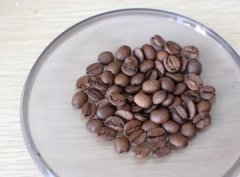
There are two ways to grade coffee beans, one is to filter the number of points, one is to elevation points. It is divided by the filter number and the size is determined by the mesh size. Round beans are generally smaller than flat beans, round beans between 8-13, flat beans between 12-29. 8,9,10... 12,13... 18... 29 = Small, Medium, Normal... It's a big... big, extra big. The bigger the number, the bigger the bean. Like SC