
"Eastern"
9131 article(s) found

The smooth taste of Colombian coffee the characteristics of the manor area introduce Colombian boutique coffee.
The north-central Santander producing area consists of two major geographical areas: the Magdalena Basin and the mountains of the eastern mountains. The Magdalena basin is relatively flat, with a dry and hot climate in the central plain. The eastern mountains have rugged terrain, steep slopes and an altitude of 4000 meters. The climate is affected by different elevations, which makes it show a variety of meteorological zones, resulting in coffee.

Introduction of Indonesian Coffee Flavor characteristics of manors in Indonesian coffee producing areas Kahayang Gan Manor
The prosperity of coffee in Indonesia was not sustainable, coffee production was fatally hit at the end of the 18th century, and leaf rust, originally found in West Java, spread rapidly, destroying the Arabica coffee estate in Indonesia. The leading position of the coffee trade was replaced by the American producing countries. However, it is worth mentioning that the leaf rust disaster did not affect the eastern Indonesian producing areas, namely, Flores Island and Timor, today.

Coffee flavor and taste in Tanzania the characteristics of the manor producing area introduce the fine coffee beans of Kilimanjaro.
The eastern coastal areas and inland lowlands of Tanzania have a savanna climate, while the western inland plateau has a tropical mountain climate, with an average temperature of 21-25 ℃ in most areas. More than 20 islands in Zanzibar have a tropical maritime climate, hot and humid all the year round, with an annual average temperature of 26 ℃. The types of rainfall can be divided into bimodal distribution and unimodal distribution. The area with double bee distribution rainfall includes dimension.

An introduction to the characteristics of the manor producing area with a delicate fragrance of Tanzanian coffee flavor
The topography of Tanzania is high in the northwest and low in the southeast, showing a ladder shape. The eastern coast is a lowland, the western inland plateau accounts for more than half of the total inland area, and the East African Rift Valley runs from east to west from Lake Malawi to the north and south. The Kibo peak of Mount Kilimanjaro in the northeast is 5895 meters above sea level. It is the highest peak climate in Africa. The eastern coastal areas of Tanzania and part of the lowlands inland are tropical grasses.

Strong aroma of Tanzanian coffee flavor taste introduction of boutique coffee in manor producing area
The topography of Tanzania is high in the northwest and low in the southeast, showing a ladder shape. The eastern coast is a lowland, the western inland plateau accounts for more than half of the total inland area, and the East African Rift Valley runs from east to west from Lake Malawi to the north and south. The Kibo peak of Mount Kilimanjaro in the northeast is 5895 meters above sea level. It is the highest peak in Africa. The eastern coastal areas of Tanzania and part of the inland lowlands have a savanna climate.

The cultivation and background introduction of coffee in Uganda
Uganda is a landlocked country in eastern Africa, straddling the equator, bordering Kenya to the east, Tanzania and Rwanda to the south, the Democratic Republic of the Congo to the west and Sudan to the north. Most of the territory is located in the Central African Plateau, lakes, with an average elevation of 1000-1200 meters. There are many lakes and plateaus in the mountains, which are known as plateau water villages. The western branch of the East African Rift Valley runs through the western border, with many rivers and lakes at the bottom of the valley. There is a Victoria in Uganda.

Washed coffee producing countries East African landlocked countries Uganda coffee producing countries
Origin: Uganda product model: AA.A2.BP.B4.CS Organic Uganda Burkinsu uganda bugisu AA 18 mesh Uganda is a landlocked country in eastern Africa, across the equator, bordering Kenya in the east, Tanzania and Rwanda in the south, the Democratic Republic of the Congo in the west and Sudan in the north. Most of the territory is located in the Central African Plateau, with lakes, with an average elevation of 1000-1200 meters. There are many lakes and plateaus in the mountains.

Rich aroma of Java coffee flavor taste manor characteristics of boutique coffee beans
Although there was not much result in the march of the Yuan Dynasty into Java, it made Java afraid of the armies of the Yuan Dynasty. Coupled with the fact that a large number of southerners of the Yuan Dynasty of China went south to Southeast Asia to carry out ocean trade, the Southern Navy of the Yuan Dynasty of China often patrolled Borneo (Kalimantan Island) in the South China Sea. Java took the initiative to send tribute to the Yuan Dynasty of China, Java was a vassal state of China, and there were close official and people exchanges between the two countries.

Intense aromas Indonesian mantnin coffee flavor Taste Manor characteristics Fine coffee beans Introduction
Before the Japanese discovered mantinin coffee, Java coffee [JAWA] was the only label for Indonesian coffee. Java coffee is produced in Java Island [Java LSLAND], and the main producing area of Java coffee is in West Java. The earliest coffee cultivation in Indonesia was in the eastern part of JATINEGARA, that is, the area of PONDOK KOPI in the eastern part of Jakarta.

Zimbabwe Coffee
Zimbabwe has been producing quality Arabica coffee since 100 years ago. But it was almost wiped out by insect pests around 1920. Since 1950, Zimbabwe has been equipped to produce quality coffee with the migration of coffee farmers from India and Kenya to Zimbabwe. The coffee-growing areas of Zimbabwe are mainly distributed in the northeast of the Chimanimani Mountains. The mountain range

Description of Colombian Coffee Flavor with Glycine in Acid Variety introduction to Regional treatment of Manor production
The north-central Santander producing area consists of two major geographical areas: the Magdalena Basin and the mountains of the eastern mountains. The Magdalena basin is relatively flat, with a dry and hot climate in the central plain. The eastern mountain range has rugged terrain, steep slopes and an altitude of 4000 meters. The climate is affected by different elevations, which makes it diverse.

Uganda becomes Africa's largest coffee exporter, Uganda coffee bean flavor
For information, please pay attention to coffee workshop (Weixin Official Accounts cafe_style) Uganda is a landlocked country in eastern Africa, straddling the equator. Most of the whole territory is located in the Central African Plateau. There are many lakes, with an average altitude of 10001200 meters. There are many lakes and plateaus in the mountains, so it is known as plateau water town. The western branch of the Great Rift Valley runs through the western border, and there are many rivers and lakes at the bottom of the valley. Uganda has a Victoria lake, plus territory
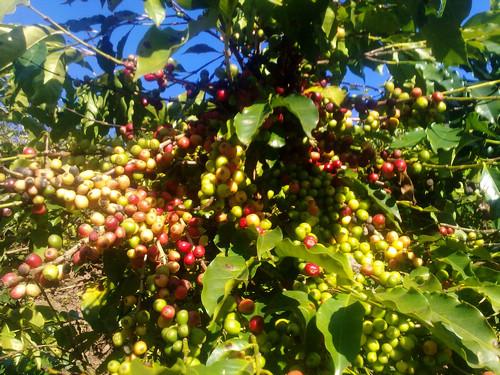
World boutique coffee beans: introduction to the classification of Zimbabwe ((Zimbabwe) Zimbabwe) coffee beans
Zimbabwe has been producing quality Arabica coffee since 100 years ago. But it was almost wiped out by insect pests around 1920. Since 1950, Zimbabwe has been equipped to produce quality coffee with the migration of coffee farmers from India and Kenya to Zimbabwe. The coffee-growing areas of Zimbabwe are mainly distributed in the northeast of the Chimanimani Mountains. The mountain range

The taste of the coffee in Santa Cruz Manor, Ecuador is very balanced and refreshing.
Ecuador is divided into the western coast, the central mountains, the eastern Amazon River basin and the four central regions of the Galapagos Islands, with diverse climatic conditions. The western coastal plain belongs to the tropical rain forest climate, with an average temperature of 23-25 ℃. The central Andes. The intermountain basin in this area belongs to the savanna climate, and the mountain belongs to the subtropical forest climate, with perennial snow above 4000 meters above sea level. Annual average decline
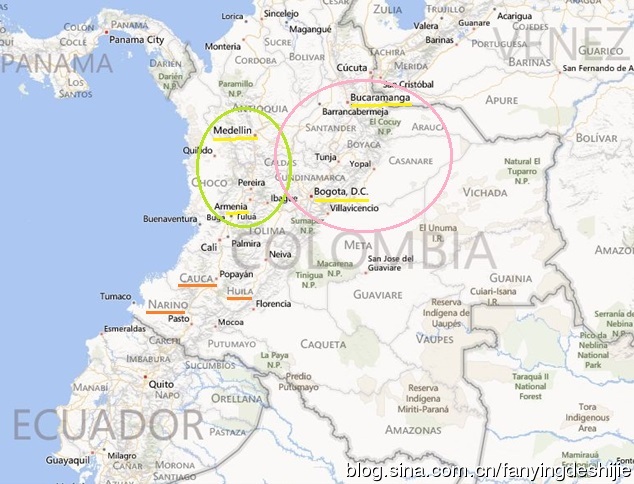
An introduction to the coffee-producing areas of the world; a detailed introduction of the coffee-producing country of Colombia
Photo 1: traditional producing areas: central MAM Eastern producing areas common boutique producing areas: Huila,Narino,Cauca in the 16th century, Jesus missionaries brought coffee to Colombia. Colombian coffee went abroad for the first time in 1835, when the export volume was only 2000 bags. Today, Colombia exports millions of coffee. Although in the ranking of total global coffee production,

Tanzania Coffee Bean introduces the geographical location of Tanzania
Location Map of Tanzania Tanzania covers an area of 945087 square kilometers, of which Zanzibar is 2657 square kilometers. It consists of the mainland, Zanzibar and more than 20 small islands. Located in eastern Africa and south of the equator, the continent is bounded by the Indian Ocean to the east, Zambia, Malawi and Mozambique to the south, Rwanda, Burundi and the Democratic Republic of the Congo to the west, and Kenny to the north

The bright sour taste of Xidamohara and Yega Xuefei in the coffee-producing areas of Ethiopia is becoming popular.
The coffee-producing region of Ethiopia is divided into east and west parts by the East African Rift Valley, with lakes, volcanoes, lowlands, plateaus and woodlands interlaced, each evolving. Ethiopia has the most diverse coffee ecosystem in the world (forest coffee, semi-forest coffee, pastoral coffee and plantation coffee), which also preserves its rich Arabica genes. The eastern half is mostly plateaus, coffee beans.
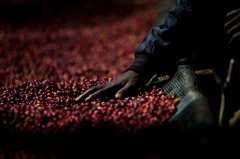
Birthplace of top coffee beans
Coffee forests in Ethiopia's Balle National Park in eastern Africa are as high as 2000 meters above sea level. The coffee rich here was named one of the five best coffees in Africa in 2012.

Start with coffee beans (42)-Africa-Zimbabwe
High-quality Arabica coffee beans cater to the needs of foodies. Coffee cultivation in Zimbabwe began relatively recently, in the 1960s, when farmers in southern Africa set up coffee plantations. Coffee cultivation in Zimbabwe is mainly concentrated in the eastern highlands near Mozambique, mainly by Chimanima
Global coffee producing area-Zimbabwe
Coffee cultivation in Zimbabwe began relatively recently, in the 1960s, when farmers in southern Africa set up coffee plantations. Coffee production in Zimbabwe: coffee cultivation in Zimbabwe is mainly concentrated in the eastern highlands near Mozambique, mainly in the Chimanimani Mountains and northward in Niyan.