
"Foothills"
1374 article(s) found
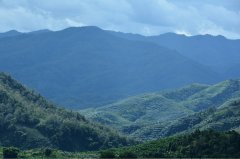
Tanzania Klimangaro Coffee Bean Flavor Taste Introduction Klimangaro Origin
Tanzania Klimangaro AA Tanzania coffee beans production is quite a lot, Taiwan is common Kilimanjaro, mostly water washing treatment, characteristics close to Kenya beans, but the acid is weaker than Kenya, overall quality is not Kenya, but some of the country's manor coffee grows in the foothills, raw coffee beans a little blue-green, slightly sour, but with a thick sweet taste.

Flavor and taste of Ecuadorian boutique coffee beans introduction to Hasunda Coffee Garden
West coast: including coastal plains and foothills, high in the east and low in the west, generally below 200 meters above sea level, with some hills and low mountains at an altitude of 600 to 700 meters. Belongs to the tropical rain forest climate, the southernmost end begins to transition to the savanna climate. The average annual precipitation decreases from more than 3000 mm to about 500mm from north to south. Central Mountains: the Andes enter Ecuador from Colombia

Central American Coffee producing area-introduction of SL28 raisin Solar in Ras Lajas Manor, Costa Rica
Professional coffee knowledge exchange more coffee bean information please follow the coffee workshop (Wechat official account cafe_style) front street-Costa Rica La La Haas estate SL28 raisin sun introduction Francisca and Oscar Chacn couple, is the third generation operator of Las Lajas, Las Lajas is located in the foothills of Sabanilla de Alajuela Pos Volcano in the Central Valley

Favorable conditions for coffee cultivation in Colombia Coffee cultivation in Colombia has a unique advantage
Professional coffee knowledge exchange more coffee bean information please follow the coffee workshop (Wechat official account cafe_style) front street-Columbia planting conditions South America is already the largest coffee-producing continent, thanks to the high altitude surrounded by the Andean foothills, where the climate is mild and humid, good rainfall makes it very suitable for coffee growth, making Columbia
Introduction to SL28 dried grapes in Central American Coffee producing area-Galaclajas Manor in Costa Rica
Professional coffee knowledge exchange more coffee bean information please follow the coffee workshop (Wechat official account cafe_style) front street-Costa Rica La La Haas estate SL28 dried grapes sun introduction Francisca and Oscar Chacn couple, is the third generation operator of Las Lajas, Las Lajas is located in the foothills of Sabanilla de Alajuela Pos Volcano in the Central Valley

Passion fruit-flavored boutique coffee beans in Sijas Manor, Costa Rica.
There are eight Costa rica producing areas, of which Tarazu, the Central Valley and the Western Valley are recognized as the three best producing areas. Las Lajas is located in the foothills of Sabanilla de Alajuela and Pos Volcano in the Central Valley. Lajas is the name of the Chakon family processing plant, and their estate has Finca La Mirella to

Coffee bean producing countries introduce Ecuadorian coffee
For more information on coffee beans, please follow the Coffee Workshop (Wechat official account cafe_style) Ecuador, a member of the Union of South American Nations, located in the northwest of South America, bordering Colombia in the north, Peru in the south and the Pacific Ocean on the west. Quito, the capital, is located in the foothills of Mount Picancha. As we all know, Ecuador has many living things in the world.

Introduction to the characteristics of Kenyan Coffee Flavor and Taste varieties
There are two types of coffee farms in Kenya. One is a large plantation that covers an area of more than five acres, but the average elevation is low. In the case of Kenyan coffee, the coffee beans of the large farms are of medium quality. The best Kenyan beans come from small farms, most of which are located in the foothills or volcanic slopes above 5,000 to 6,000 feet. Each small farmer has a production capacity of only 20 to 70 bags per season.

Introduction to the Grinding scale of Variety characteristics of the Flavor description treatment method of Las Haas Manor in Costa Rica
Costa Rica Las Haas Manor Flavor description processing method of Variety characteristics Grinding scale introduction there are eight Costa Rica producing areas, of which three are recognized as the best, Tarazu, the Central Valley and the Western Valley, and Las Lajas is located in the foothills of Sabanilla de Alajuela and Pos Volcano in the Central Valley.

Introduction to the characteristic manor of Ecuadorian coffee flavor varieties with mild taste
West coast: including coastal plains and foothills, high in the east and low in the west, generally below 200 meters above sea level, with some hills and low mountains at an altitude of 600 to 700 meters. Belongs to the tropical rain forest climate, the southernmost end begins to transition to the savanna climate. The average annual precipitation decreases from more than 3000 mm to about 500mm from north to south. The names of the provinces are as follows: Piccha, Asuai, Boliwal, Kania.

The flavor of honey-treated beans in Alajuela, Althacia, Costa Rica. Brother
Professional coffee knowledge exchange more coffee bean information please follow the coffee workshop (Wechat official account cafe_style) [adobe farmers] in Alajuela, Althacia, Costa Rica.

Flavor and taste characteristics of coffee manor in Ecuador introduction to Galapagos Coffee
Central mountain: after entering Ecuador from Colombia, the Andes is divided into the eastern and western Cordillera mountains, with a plateau high in the north and low in the south, averaging between 2500 and 3000 meters above sea level. The Andes run through the middle of the border. The ridges crisscross, dividing the plateau into more than ten intermountain basins. The most important are the Quito basin and the Cuenca basin in the south. Volcanic crowds in the territory

Passion fruit-flavored Costa Rica Sijas Manor Coffee Bean Grinding degree roasting degree treatment
There are eight Costa rica producing areas, of which Tarazu, the Central Valley and the Western Valley are recognized as the three best producing areas. Las Lajas is located in the foothills of Sabanilla de Alajuela and Pos Volcano in the Central Valley. Lajas is the name of the Chakon family processing plant, and their estate has Finca La Mirella to

How about AB Flavor of Mulankakoran Manor in AB, Kenya? analysis of roasting degree of Kenyan Coffee
Mulanka Koran Manor, Kenya: Mulanka production area: 1750 meters above sea level: washing treatment grade: AB top coffee varieties: SL28SL34 harvest year: 2019 coffee production area Mulanka production area is located in the foothills of Kenya (Mount Kenya), close to the Neyri production area. The fertile volcanic soil (volcanic loam) of Mount Kenya is grown for coffee.

The flavor and taste characteristics of the coffee farm in Kenya introduce Berman Manor.
There are two kinds of local coffee farms. One is a large farm that covers an area of more than 30 mu. Due to the low altitude, the coffee beans produced are of medium quality. Gourmet beans are generally produced in small farms, which are mostly located in the foothills or volcanic slopes that are most suitable for coffee beans at an altitude of 2000 meters above sea level. The Kenyan government attaches great importance to the coffee industry. The government funded the construction of a washing treatment plant, coffee picked by small farmers.

Introduction to the flavor description of fine coffee beans in Jinchu Coffee Variety producing area of Kenya
Don't underestimate the small farmers in Kenya, they are just like ants, and their overall production capacity is higher than that of large farms, about six to four, which is quite rare in bean-producing countries. Kenyan coffee is widely appreciated by connoisseurs, thanks in large part to small farmers guarding the foothills and producing high-quality coffee. In addition, Kenya beans must have a strict grading system, according to the size of the coffee beans taken out by the washing plant.

Introduction to the flavor of Kenyan coffee
Kenya Coffee Kenya Coffee Kenya is the origin of Arabica coffee trees in Kenya, but it was not until the beginning of the 20th century that coffee cultivation began. Missionaries introduced Arabica trees from the leaves in the 19th century, but did not plant them in large quantities. It was not until 1893 that coffee was cultivated on a large scale after the introduction of Brazil's ancient bourbon seeds.

Introduction to the characteristics of Coffee Flavor description and Grinding scale in Berman Manor, Kenya
Kenya Berman Manor Coffee Flavor description Taste Grinding scale Variety introduction do not underestimate the small farmers in Kenya, they are the same ant soldiers, the overall production capacity is higher than that of large farms, about 6: 4, which is quite rare in bean-producing countries. Kenyan coffee is widely appreciated by connoisseurs, thanks in large part to small farmers guarding the foothills in order to grow high-quality coffee. In addition, Kenya beans must have strict scores.

Ecuador Coffee Flavor Taste Variety Production Characteristics Fine Coffee Bean Introduction
Western coastal areas: including coastal plains and foothills, east high west low, generally below 200 meters above sea level, there are some hills and low mountains 600~700 meters above sea level. Tropical rain forest climate, the southernmost start to transition to a savanna climate. The annual average precipitation decreases from more than 3000 mm to about 500 mm from north to south. The Andes range from Colombia to Ecuador.

Description of flavor characteristics of seven major producing areas of Kenyan coffee beans taste of Kenyan coffee beans treated varieties
Kenyan coffee producing areas introduce altitude, latitude and geology: the equator runs through Kenya, and the border is just within ten degrees of north and south latitude. Belonging to tropical producing areas, there are two rainy seasons every year, with two harvests, with 60% concentrated from October to December and another 40% from June to August. Coffee is mainly grown in volcanic areas around 16002100 meters above sea level from the capital Narobi to the mountains of Kenya. This height