
"Mostly"
15271 article(s) found

The intensity of a cup of coffee can be judged by the size of the coffee cup.
In many cases, the intensity of a cup of coffee can be roughly judged from the size of the coffee cup. The sizes of coffee cups are generally divided into three types: * small coffee cups below 100CC are mostly used to hold strong and scalding espresso or individual coffee, such as Espresso, which is only about 50CC, although it can be drunk almost in one sip, but the lingering mellow aftertaste, and seems to be warm forever

Introduction to the appearance characteristics of Ethiopian Coffee
Ethiopian beans are easily recognizable, mostly small and pointed long beans, known as longberry, and often mixed with small oval-shaped short beans, called shortberry, which look uneven in size and appearance. The commercial bulk beans of Grade4 or Grade5 are mostly mixed with hundreds of different crystal seeds in different producing areas, so the phenomenon of uneven bean phase is the most obvious.

Introduction of Peruvian Coffee Flavor what main varieties of Peruvian Coffee are cultivated
Professional coffee knowledge exchange more coffee bean information please follow the coffee workshop (Wechat official account cafe_style) Peruvian coffee rising star Peruvian coffee is gradually opening up its popularity and entering the world. It is mostly planted in high-altitude areas, the planned planting greatly increases the yield, the taste is mellow, the acidity is right, and more and more people like it. Peruvian bit

A brief introduction to the market price of half-sun bourbon varieties of fine coffee beans in South Minas, Brazil
Professional baristas exchange please pay attention to the coffee workshop (Wechat official account cafe_style) varieties: bourbon, Kaduai altitude: 10001200 meters flavor: fried melon seeds, mellow and full, dark chocolate, Huigan aftertaste. But the Serrado platform and South Minas in the west of Minas are mostly above 1100 meters above sea level, with rich landforms, obvious dry and wet seasons, large temperature difference between day and night, and rich miniature.

Guatemala coffee prestige extra hard coffee beans
Guatemala coffee beans are mostly cultivated in volcanic soils at high altitudes, the highest Arabica variety. Due to the long ripening period, the beans are medium and dense (Guatemala coffee beans are graded not by particle size, but by the number of defects), and the beans are dark turquoise in color. Fragrance, alcohol, sweetness and freshness
The harvest method of fine coffee varies from place to place.
The harvest time and method of coffee vary from place to place, generally speaking, once or twice a year (sometimes up to three or four times). The harvest time is mostly in the dry season. In Brazil, for example, around June, it starts in the north-eastern state of Bahia and ends in October in the southern state of Parana. The harvest period of Central American countries is from September to next year.

Sumatran Coffee introduces Indonesia Mantenin boutique coffee Mantenin coffee taste
It is customary to call coffee from Sumatra Mantenin, which is neither scientific nor confusing. The coffee produced by the Batak people in Lake Toba or the Lindong Mountains in north-central Sumatra is mostly grown without shade, and is mainly treated by half-sun or sun treatment, with obvious herbal flavor and soil flavor, and low acidity and muggy aroma, which is the most important feature of Mantenin coffee.
The basic knowledge of fine coffee The way coffee is harvested
Coffee harvesting time and harvesting methods vary from place to place, generally speaking, about 1-2 times a year (sometimes up to three or four times). Harvest time is mostly in dry season. Brazil, for example, begins harvesting in the north-eastern state of Bahia around June and ends harvesting in the southern state of Parana around October. The harvest period of Central American countries is from September to January of the following year

The way coffee is harvested. Common sense of fine coffee beans.
The harvest time and method of coffee vary from place to place, generally speaking, once or twice a year (sometimes up to three or four times). The harvest time is mostly in the dry season. In Brazil, for example, around June, it starts in the north-eastern state of Bahia and ends in October in the southern state of Parana. The harvest period of Central American countries is from September to next year.
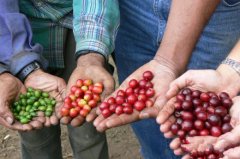
Basic knowledge of Fine Coffee the harvesting method of coffee beans
The harvest time and method of coffee vary from place to place, generally speaking, once or twice a year (sometimes up to three or four times). The harvest time is mostly in the dry season. In Brazil, for example, around June, it starts in the north-eastern state of Bahia and ends in October in the southern state of Parana. The harvest period of Central American countries is from September to next year.
Coffee utensils choose the coffee cup that suits you
When buying coffee cups, you can choose the right coffee cups in different coffee cups according to your personal preferences, types of coffee and how to drink them. Due to the variety of personal preferences and places, there are several bases for choosing the type and drinking method of coffee. Small coffee cups of less than 100ml are mostly used to hold strong Italian coffee or individual coffee, for example, only 5.

Knowledge of coffee beans: challenge the tongue buds on the tip of your tongue by taste
[introduction] Coffee beans with sour taste, especially high-quality new beans, are best roasted shallower, while those with bitter taste are lighter, and then sweet details are mostly selected beans from high-level water washing. baking often constitutes the key to whether it can be integrated into the soft bitterness and be picked out by the character. Neutral flavor, even if it is not a highland coffee bean, it must have a stable quality.

Introduction to the grinding treatment method for the flavor and taste characteristics of coffee brands in Ethiopia
Ethiopian Coffee Flavor treatment Variety characteristics growing in Western Ethiopia 4900-5900 feet (Wollega province) plateau, north of Jima, mostly wild, annual output is about 500000bags/60kg, export to G5/G4, bean body is larger and longer than Longberry, a little brown in green, taste similar to less jasmine tea, more bitter, lack of rising Hara, slightly sour

Classification and purchase method of Coffee filter Paper
The use of coffee filter paper in follicular coffee can evenly soak and extract coffee essence, thus getting a purer coffee flavor. How to buy coffee filter paper? Bleached filter paper vs unbleached filter paper Coffee filter paper is mostly made of wood, the pulp color after wood cooking is mostly brown, and it takes several stages of bleaching process to turn white. The difference between coffee filter paper bleaching and non-bleaching

The selection of coffee cups that suit you.
When buying coffee cups, you can choose the right coffee cups in different coffee cups according to your personal preferences, types of coffee and how to drink them. Due to the variety of personal preferences and places, there are several bases for choosing the type and drinking method of coffee. Small coffee cups of less than 100ml are mostly used to hold strong Italian coffee or individual coffee, for example, only 5.

How to brew Yunnan small-grain coffee the characteristic brand ranks 2016 in price.
How to brew Yunnan small-grain coffee ranks 2016 in price. Mainlanders call Yunnan coffee "small-grain coffee". Local people think that Yunnan coffee varieties are excellent, but some people in the industry also point out that although most of today's Yunnan coffee is Arabica, it mostly belongs to Catimor in Arabica, which was gardened by Portugal in 1969.

How does Kenyan PB taste and how Kenyan coffee is brewed?
Professional baristas Please follow Coffee Workshop (Wechat official account cafe_style) located in East Africa, Kenya is one of the major coffee producing countries. More than 6 million people in the country are engaged in the coffee industry, mostly in the form of a combination of small farmers and cooperatives. Coffee trees in Kenya are mostly planted at 1400 m-2000 m above sea level, and the growth areas include Ruiri, Thika, Kirinyaga and Mt. K

Introduction to the characteristics, Analysis and quality of Ethiopian Coffee
Ethiopian beans are easily recognizable, mostly small and pointed long beans, known as longberry, and often mixed with small oval-shaped short beans, called shortberry, which look uneven in size and appearance. The commercial bulk beans of Grade4 or Grade5 are mostly mixed with hundreds of different crystal seeds in different producing areas, so the phenomenon of uneven bean phase is the most obvious.

Burundian Coffee introduces Burundian Coffee appreciates the taste and flavor of Burundian coffee
Professional coffee knowledge exchange more coffee bean information please follow coffee workshop (Wechat official account cafe_style) Bloomberg began to grow coffee in 1930, varieties and neighboring Luanda generally are bourbon series varieties, coffee grows in the mountains of 1750 to 2000 meters above sea level. The first Arabica coffee tree in Burundi was introduced by Belgium in the 1930s.

Stories and allusions of semi-sunbathing bourbon coffee beans in South Minas, Brazil
For the exchange of professional baristas, please follow the coffee workshop (official Wechat account cafe_style) but the Serrado Mesa and South Minas in the west of Minas are mostly above 1100 meters above sea level, with rich landforms, obvious dry and wet seasons, great temperature difference between day and night, and rich microclimate, suitable for cultivating elegant bourbon and yellow bourbon, which naturally become the main producing areas of Brazilian boutique coffee. In addition, St. Paul