
"Native"
9513 article(s) found
How much is Arabica coffee per jin? Characteristics of Arabica coffee bean, a native tree species of coffee
Professional coffee knowledge exchange more coffee bean information Please note that the coffee workshop (Wechat official account cafe_style) is also a member of Arabica, why are some coffee beans so expensive? There are tens of thousands of coffee tree species in the world, and many varieties are gradually emerging to say hello to everyone. I also hope that while tasting coffee, we can understand where coffee comes from and enter.

What are the common types of individual coffee? The difference of the taste of boutique coffee machine in coffee shop
Professional coffee knowledge exchange more coffee bean information Please follow the coffee workshop (official Wechat account cafe_style) those friends who like to go to restaurants usually like to drink individual coffee, because single coffee not only represents the regional flavor characteristics of the producing area, but also has a strong personal preference of the owner of the cafe.

The three native species of coffee, the main varieties of Colombian coffee.
Varieties resistant to leaf rust found in Congo, Africa, teach Arabica species to be more resistant to the disease. People like to compare the robusta species to the Arabica species of coffee. In fact, the robusta species was originally a mutant of the Congolese species (scientific name Cofffea canephora), so it is the Congolese species that should be compared with the Arabica species. To this day, however, Robusta species

Where does the mocha name come from? what are the seeds of coffee beans?
1. With regard to mocha, there is indeed coffee from the port of Mocha, which is generally a native variety from Ethiopia. At this time, mocha can be understood as a native variety of coffee beans that grew in Ethiopia and then exported in the port of Mocha! PS: there are many native species here, mainly Ethiopian coffee beans, although many coffee beans have been found.

Ninetyplus coffee90+ Coffee introduction Ninety plus90+ Coffee grading
Professional coffee knowledge exchange more coffee bean information please follow the coffee workshop (Wechat official account cafe_style) what is NINETY PLUS (90 +)? Ninety plus is an internationally renowned coffee bean production and sales company, and is famous for providing rare and unique raw coffee beans. In addition to working directly with coffee farmers, it has 134 hectares in Panama.

Three native species of coffee compare the common sense of coffee
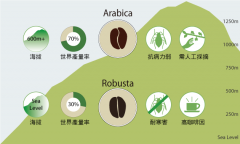
There are three main varieties of coffee: Arabica Arabica, Robusta Robusta, and Liberia Liberica. The first two are relatively long-term, while the latter is hardly in circulation on the market and is only traded within parts of West African countries. Arabica is mainly produced in Brazil, Colombia, Guatemala, Jamaica, Mexico and other American countries, and Costa Rica in the Caribbean.

Learn about the three native species of coffee
Coffee belongs to the evergreen shrub of the genus Coffea of Rubiaceae, which is centered in the tropics. There are about 6000 species of Rubiaceae plants in this area. Coffee has always been considered to have certain effects, such as invigorating the stomach, waking up the brain, stopping bleeding, dissipating heat, strengthening the body and so on. The more famous Rubiaceae plant is Gardenia jasminoides, whose fruit was dried and used as medicinal material a long time ago.

Suggestion on hand-flushing parameters of Essex plus Chevy washing Wokayega native boutique coffee beans
For the exchange of professional baristas, please pay attention to the hand-washed woca in the coffee workshop (Wechat official account cafe_style). 15g powder, medium fineness grinding (small Fuji ghost tooth cutter 3.5 grinding), v60 filter cup, 90-92 degrees water temperature, the first water injection 30g water, 27 seconds of steaming, injection to 105g water cut off, wait for the powder bed water to half and then water injection, slow water injection until 225g water, tail

Three native species of coffee, Arabica, Robusta.
Coffee, we generally refer to the finished product: the coffee we drink, also refers to coffee beans. Coffee belongs to the evergreen shrub of the genus Coffee of Rubiaceae. Coffee has some medicinal effects, such as waking up the brain, strengthening the stomach, stopping bleeding, dissipating heat, strengthening the body, etc., hee hee, if anyone is blinded by love, have a cup of coffee to wake up! There are about 40 species of coffee plants, but they can produce commercially valuable

Lim producing area | Lima Lemma Nicholas NegusieG3 | Heirloom solarization local native species wind
Professional coffee knowledge exchange more coffee bean information please follow the coffee workshop (Wechat official account cafe_style) Ethiopia Lim production area | Nicholas G3 | Heirloom sun local native flavor? Crops produced in Ethiopia in 2008, including wheat, corn, sesame and coffee, were fully introduced into E.C.X 's trading system (Ethiopian Commodity Exch

Fresh citrus flavor with honey treatment of horticultural brothel in New Glenda Village of Guatemala
Professional coffee knowledge exchange more coffee bean information please follow the coffee workshop (Wechat official account cafe_style) Guatemala New Glanda Ethiopia native geisha, the world is flat, yes, as long as you step out, the world is flat. Yes, this is a map of Ethiopian coffee. Yes, coffee comes from a native Ethiopian geisha in the San Marcos mountains of Guatemala.

How much is a kilo of coffee beans? how to buy coffee beans? Ethiopian native species sun-dried coffee raw bean price
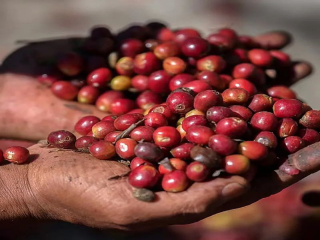
Coffee seeds cannot be grown directly with coffee fruits picked from coffee trees. Peeling coffee fruits is like planting peanuts. If you plant a peanut with a shell in the soil, it cannot sprout. You must plant peanuts. It is the same with medium coffee. If you have coffee fruit in your hand, you can first bask it in the sun and shake it until it is shaken inside.

Coffee Bean selection course Coffee Bean Brand species Guide washing local native species Yejia Ethiopia
With the deepening of people's contact with coffee, ordinary taste can no longer meet people's needs. As a result, more and more coffee lovers will buy their own beans and go home from the beginning of grinding, blending their favorite coffee flavor step by step. The size of coffee beans

Unique flavor of Ethiopian native species Ninety plus Ethiopian honey litchi black tea
1. Fine coffee is made from boutique coffee beans. If the beans that make coffee are not boutique coffee beans, the coffee liquid produced cannot be called fine coffee. two。 Boutique coffee is fresh coffee. Whether it's food or drink, of course, the fresh the better, and so is boutique coffee. Fine coffee should be kept fresh before making, including the preservation of roasted beans, and should be kept before making.
What is the Ethiopian local species? What does it have to do with Heirloom native species?
When we buy Ethiopian coffee beans, the name "Heirloom" is very common. It translates to "native species" or "family heirloom" in Chinese, which generally refers to mixed coffee varieties. But in the past two or three years, another term "Landr" has been marked on the packaging of some Essex beans.

Coffee bean varieties and differences Introduction to the characteristics of the three native species of coffee See this simple and easy to understand
Professional coffee knowledge exchange More coffee bean information Please pay attention to coffee workshop (Weixin Official Accounts cafe_style) Front Street-Introduction of three major coffee varieties 1. Arabica Arabica beans, world-famous Blue Mountain coffee, mocha coffee, etc., almost all Arabica varieties. Appearance: small bean shape, long oval shape on the front, narrow and tortuous crack in the middle, circular arc shape on the back of bean
Fine Coffee Science explains in detail the three native species of coffee
Coffee, we generally refer to the finished product: the coffee we drink, also refers to coffee beans. Coffee belongs to the evergreen shrub of the genus Coffee of Rubiaceae. Coffee has some medicinal effects, such as waking up the brain, strengthening the stomach, stopping bleeding, dissipating heat, strengthening the body, etc., hee hee, if anyone is blinded by love, have a cup of coffee to wake up! There are about 40 species of coffee plants, but they can produce commercially valuable

Differences between native species G1meme G4 washed with kochere in Yega Fischer, Ethiopia
In Ethiopia, in addition to being wild in the woods, coffee trees can also grow directly in vegetable gardens and are grown in a fairly simple way. To put it funnily, for Ethiopians, picking and drinking coffee in the backyard is like a Chinese grandmother who goes to the water channel tonight and pulls out her own sweet potato leaves.

What is the original species of coffee beans from Ethiopia? introduction to the characteristics of coffee beans
Professional coffee knowledge exchange more coffee bean information please follow the coffee workshop (Wechat official account cafe_style) Qianjie-Ethiopian native species introduction people who often drink Ethiopian coffee should have heard of the [Heirloom native species] this variety, most Ethiopian varieties will be named after this, in fact, because Ethiopia has so many varieties, it is like Arabica

The difference between Chinese black tea and Indian black tea what is the difference in the taste of Indian black tea Assam Darjeeling
The history of Indian black tea is native to northern and eastern India and has been planted on a small scale for hundreds of years. Camellia (Camelliasinensisvar.assamica) is a tea variety native to India, which usually brews stronger black tea. Camellia (Camellia)