
"Peru"
2506 article(s) found
Do you know what kind of Peruvian coffee beans are? | which Peruvian coffee brands are better?
Professional coffee knowledge exchange more coffee bean information please follow the coffee workshop (Wechat official account cafe_style) Peru is located in western South America, bordering the South Pacific, between Chile and Ecuador. Peru has a very diverse climate, from the tropics in the east to the dry deserts in the west, and from the temperate zone to the cold of the Andes. Different climates are tight with the main geographical areas of Peru

Organic Coffee growing Environment in Peru
Peru: organic coffee flavor and taste characteristics: high quality and balanced, palatable acidity, can be used for mixed drinks. Peruvian coffee cultivation history is not long, but as a rising star, Peruvian coffee is gradually opening up its popularity and entering the international market. Peru is located in western South America, with a coastline of 2254 kilometers. The Andes runs from north to south, and the mountains account for 1% of the total area of the country, which belongs to tropical sand.

Taste smooth Peruvian Coffee Flavor Manor characteristics of Organic Coffee Fine Coffee
The country is divided into 24 provinces and one directly affiliated region (Kaya). The names of the provinces are as follows: Amazon

Peruvian Coffee Bean Growing Areas Elevation Climate Flavor Description
Follow Coffee Review (Weixin Official Accounts vdailycom ) and find a beautiful cafe to open its own shop Peru, fully known as the Republic of Peru (Spanish: Repblica del Per), is a country in western South America, bordered by Ecuador and Colombia in the north, Brazil and Bolivia in the east, Chile in the south and the Pacific Ocean in the west. It is a member of the Union of South American Nations. to
Rich and Sweet Peruvian Coffee Flavor description of the characteristics of producing areas introduction to the methods of taste treatment of fine coffee
Independence was declared on July 28, 1821, and the Republic of Peru was established. On October 28, 1835, Bolivia and Peru formally merged, known as the Confederacy of Peru and Bolivia. On February 20, 1839, the Confederacy completely disintegrated. Slavery was abolished in 1854. From 1879 to 1883, Peru joined Bolivia and Chile in the South American Pacific War for saltpeter production. After Peru's defeat, Chile captured the world.

Introduction to high-quality and balanced Peruvian coffee flavor and taste of boutique coffee beans in manor production area
Peru is also a big coffee producer. Up to 98% of Peruvian coffee is grown in forest areas, and most producers are small farmers. Coffee is high-quality and balanced and can be used for mixed drinks. Peru has good economic conditions and a stable political situation, thus ensuring the good quality of coffee. In the mid-1970s, Peru produced about 900000 bags of coffee a year, and then continued.
Brief introduction of San Ignacio Coffee Bean in San Ignacio, Peru
Following Cafe Review (official Wechat account vdailycom) found that the Beautiful Cafe opened its own shop in San Ignacio San Ignacio, Peru. According to Gardelli, this is the best Peruvian he has ever tasted. Rony Gurrero founded Lima Coffee Coffee in Jaen in 2016. Ronnie was the largest coffee in Peru.

Introduction of Organic Coffee in EL GUABO Guawu Community of Peru
Professional coffee knowledge exchange more coffee bean information follow coffee workshop (Wechat official account cafe_style) Peru began to export coffee in 1887 and is now the eighth largest producer and the world's largest exporter of organic coffee, with an annual volume of 2 million bags, accounting for 5 per cent of total exports. More than 1/3 of the country's coffee is grown in the Cajamarca region in the north and in the south.
What is Peruvian raccoon shit coffee?
Following Cafe Review (Wechat official account vdailycom) found that Peruvian Coffee has opened its own small shop Peruvian Coffee has been very popular in the international market in recent years, frequently won the International Coffee Gold Award, Peruvian coffee is very popular for its mellow taste and soft sour taste. Now Peru has become the world's third largest exporter of coffee, especially a kind of coffee derived from raccoon feces.

Introduction of Peruvian Coffee Bean Flavor description and Grinding scale
Peru is also a big coffee producer. Up to 98% of Peruvian coffee is grown in forest areas, and most producers are small farmers. Coffee is high-quality and balanced and can be used for mixed drinks. Peru has good economic conditions and a stable political situation, thus ensuring the good quality of coffee. In the mid-1970s, Peru produced about 900000 bags of coffee a year, and then continued.
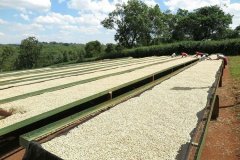
Peru Villa Rica (Villarica Manor) SHG Organic Coffee Bean planting introduction Flavor description
Peru Villa Rica (Vilarika Manor) SHG Organic Coffee beans the coffee growing area in Peru is mainly located in the central Chanchamayo region, the two most famous planting areas in this area are Villa Rica and La Merced, respectively, and the main varieties are Typica Arabica. The history of Peruvian coffee cultivation dates back to about 1930 when a group of Germans emigrated to Villa Rica District to open coffee.

Peruvian Coffee Flavor and Taste Organic Coffee is introduced in Manor production area
Peru's finest coffee is produced in Chaximayo, Cusco, Note and Puno. Most Peruvian coffee is grown under natural conditions, but it is also difficult to confirm the cultivation of all coffee trees. Coffee grown under natural conditions costs 10% more than others and is exported to the United States and Japan. The quality of Peruvian coffee is comparable to that of any kind of coffee in Central or South America. Peru

Brief introduction of planting Market Price of Peruvian Fine Coffee Bean varieties with palatable acidity
Peru is also a big coffee producer. Up to 98% of Peruvian coffee is grown in forest areas, and most producers are small farmers. Coffee is high-quality and balanced and can be used for mixed drinks. Peru has good economic conditions and a stable political situation, thus ensuring the good quality of coffee. In the mid-1970s, Peru produced about 900000 bags of coffee a year, and later

A brief introduction to the treatment method of grinding degree and baking degree of Peruvian boutique coffee beans with medium texture
Peruvian coffee beans are best known for their coffee beans from Chimacha Mayou in the middle and Cusco in the south. In addition, some areas in northern Peru also produce characteristic organic coffee. Organic coffee is made of beans grown in the shade of trees. Although the yield of coffee beans is not high because of the method of planting in the shade, its quality can reach the level of gourmet coffee. This is due to

Peruvian Andes Gold Organic Coffee
Professional coffee knowledge exchange More coffee bean information Please pay attention to coffee workshop (Weixin Official Accounts cafe_style) Peru is located in the west of South America, with a coastline of 2254 kilometers. The Andes runs through the north and south, and the mountains account for one third of Peru's total area. The climate is dry and mild. Ninety-eight percent of Peruvian coffee is grown in the jungle at the foot of the Andes. Chassimayo in central Peru
Introduction of Micro-batch Peruvian Fine Coffee made by Geisha in Vera Rika Manor, Peru
For more information on coffee beans, please follow the Coffee Workshop (official Wechat account cafe_style). In Peru, the geisha washing microbatches are mainly small farmers, each with a land area of less than two hectares, producing about 3000 pounds of coffee per hectare. Organic cultivation has a very long history and is quite common in Peru. But in recent years,
Most of the producers are small farmers, Peruvian coffee.
Coffee is high-quality and balanced and can be used for mixed drinks. Peru (Peru) is also a big coffee producer. Up to 98% of Peruvian coffee is grown in forest areas, and most producers are small farmers. Peru has good economic conditions and a stable political situation, thus ensuring the good quality of coffee. However, there are many local problems, in addition to guerrilla warfare and drug trafficking, in the 20th century
There is a long way to go to renew coffee seedlings in Peru.
The National Coffee Council of Peru announced that as many as 15000 hectares of coffee plantations in the central, northern and eastern parts of the secret rainforest have been replaced with new coffee trees, the Peruvian Andean News Agency reported recently.
Coffee producing areas in Peru
Peruvian coffee producing areas: up to 98% of Peruvian coffee is grown in forest areas, and most of the producers are small farmers. Peru's finest coffee is produced in Chanchmayo, Cuzco, Norte and Puno. Most Peruvian coffee is grown under natural conditions, but it is also difficult to confirm the cultivation of all coffee trees. Under natural conditions
Basic knowledge of boutique coffee Peruvian coffee
Peru (Peru) is also a big coffee producer. Peruvian coffee producing areas: up to 98% of Peruvian coffee is grown in forest areas, and most of the producers are small farmers. Peru's finest coffee is produced in Chanchmayo, Cuzco, Norte and Puno. Most Peruvian coffee is grown under natural conditions, but it is difficult to confirm