
"Russia"
928 article(s) found

The Coffee Culture Festival is held in Mangshi, Yunnan Province. Businessmen at home and abroad go to the meeting to seek business opportunities.
On the 24th, the 4th China Mangshi Coffee Culture Festival kicked off in Mangshi, Yunnan Province. More than 300 coffee industry people from more than 20 countries and regions and more than 10 provinces and cities in China have gathered in Mangshi to promote the development of coffee in China. The Coffee Culture Festival attracted people from the coffee industry from more than 20 countries, including Germany, Russia, Japan, Turkey and so on.

Global Coffee Production in 2017-Latest News on Coffee Production
According to current market data, emerging countries represented by China, Brazil, Russia, India and South Africa currently consume 20% of the global total coffee, and this proportion will reach 35% by 2020. China is one of the world's largest emerging coffee consumers, with sustained economic growth, increasing people's living standards and poor living standards.

How about Indian coffee with sea flavor? What Indian coffee brands can be recommended?
Professional coffee knowledge exchange More coffee bean information Please pay attention to coffee workshop (Weixin Official Accounts cafe_style) Qianjie-Indian monsoon coffee introduction I believe most people have not heard of Indian coffee, indeed, Indian coffee is not very famous brand, more than half of the coffee is Robusta coffee, Arabica coffee production is very small, most coffee exports to Russia, Germany and Italy

Into the "Soviet Cafe" coffee basics
In Moscow and many other Russian cities I have seen red signs for Soviet cafes. That piqued my curiosity. What I wanted to know was the word Soviet Union. In Alexandrov, I walked into a Soviet cafe. The room was not very well lit, and on the right was a map of the Soviet state, on the left was a banner of how we lived, and below it were several Soviet banners.

Boutique coffee culture "Soviet Cafe" reflects nostalgia
I have seen red Soviet cafe signs in Moscow and many other Russian cities. This arouses my curiosity. What I want to know is the word Soviet Union. In Alexandrov, I walked into a Soviet cafe. The light in the room is not very bright. On the right is a map of the Soviet country, on the left is the banner we used to live like this, and under the banner are several Soviet Union.

Coffee Culture Coffee City walks into the "Soviet Cafe"
I have seen red Soviet cafe signs in Moscow and many other Russian cities. This arouses my curiosity. What I want to know is the word Soviet Union. In Alexandrov, I walked into a Soviet cafe. The light in the room is not very bright. On the right is a map of the Soviet country, on the left is the banner we used to live like this, and under the banner are several Soviet Union.

Coffee Culture Story: Paris Cafe
There are probably more cafes in Paris than any other city in the world. Walking in the streets of Paris, three steps a shop, five steps a pavilion, it is amazing. On a sunny day, people like to drink coffee under the Arbor and parasol along the street. At first glance, it is almost person-to-person, person-to-person, such as seen from a distance, more like a picture dotted on both sides of the street

The coffee shop recommends walking into the "Soviet Cafe".
I have seen red Soviet cafe signs in Moscow and many other Russian cities. This arouses my curiosity. What I want to know is the word Soviet Union. In Alexandrov, I walked into a Soviet cafe. The light in the room is not very bright. On the right is a map of the Soviet country, on the left is the banner we used to live like this, and under the banner are several Soviet Union.
World boutique Cafe recommends Paris Cafe
There are probably more cafes in Paris than any other city in the world. Walking in the streets of Paris, three steps a shop, five steps a pavilion, it is amazing. On a sunny day, people like to drink coffee under the Arbor and parasol along the street. At first glance, it is almost person-to-person, person-to-person, such as seen from a distance, more like a picture dotted on both sides of the street

What are the types of mocha coffee the difference between Yemeni mocha and Ethiopian Harald mocha
Professional coffee knowledge exchange more coffee bean information please pay attention to the coffee workshop (Wechat official account cafe_style) Yemen is located in the southwestern tip of the Arabian Peninsula, exports coffee every year, coffee planting area is also mocha coffee producing area. Mocha is located in a port city on the Red Sea coast of Yemen, hence the name Mocha Coffee. Coffee is one of Yemen's trade exports.
The Common sense of Fine Coffee Culture walks into the "Soviet Cafe"
I have seen red Soviet cafe signs in Moscow and many other Russian cities. This arouses my curiosity. What I want to know is the word Soviet Union. In Alexandrov, I walked into a Soviet cafe. The light in the room is not very bright. On the right is a map of the Soviet country, on the left is the banner we used to live like this, and under the banner are several Soviet Union.

The toilet themed Cafe of the fighting Nation-A menu that makes you feel surprised and disgusting
A new coffee shop called Crazy toilet has opened in Moscow, the capital of Russia. The idea of this toilet-themed coffee shop first came from South Korea. The strange thing about this coffee shop is that all the dishes and staples are designed in the style of poop, and all the cutlery is modelled on toilet utensils, which provides highly realistic stool dishes and drinks.
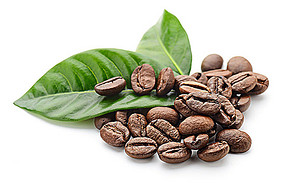
Yemeni mocha coffee: distinctive quality or taste
Follow the caf é (Wechat official account vdailycom) found that the world needs more than 6 billion kilograms of coffee a year, the coffee income is more than 12 billion US dollars, Arabica coffee looks like small coffee, mocha coffee is exported to European market or other markets through ports, coffee export has also become one of the Arab sources of income, Yemeni coffee

With the rapid development of coffee in China, there has been a qualitative breakthrough in the planting area and total output.
According to current market data, emerging countries represented by China, Brazil, Russia, India and South Africa currently consume 20% of the world's coffee, which will reach 35% by 2020. Domestic consumers have a growing demand for coffee. In recent years, the world coffee giants have seized the Chinese market, and domestic coffee companies have also begun to build local coffee brands.

The Paris Cafe is second to none among the cities in the world.
There are probably more cafes in Paris than any other city in the world. Walking in the streets of Paris, three steps a shop, five steps a pavilion, it is amazing. On a sunny day, people like to drink coffee under the Arbor and parasol along the street. At first glance, it is almost person-to-person, person-to-person, such as seen from a distance, more like a picture dotted on both sides of the street

The estimated output of Yunnan coffee is 150000 tons in the harvest season.
Kong Zanlong revealed that of the more than 10,000 tons of coffee Nestl é purchased in Pu'er, 85 percent were exported to Nestle factories in Switzerland, Spain, Russia, Australia, France, Britain and other countries, and only 15 percent were sold in China. Yunnan is very suitable for growing coffee. Compared with other areas, coffee planting has fewer diseases and insect pests. And Chinese farmers are very good, with the highest yield in the world. Now, Nestle is

Four kinds of Kung Fu Coffee drinking Guide Coffee Control you drink it right?
Con panna espresso Herbalife is an ordinary espresso with thick whipped cream, which is a more retro kung fu coffee, much like the aristocracy of tsarist Russia or the Austrian royal family, probably because fresh cream was relatively rare at that time. Most cafes are filled with glasses so that guests can enjoy whipped cream and coffee.

Same Earth, different Coffee habits
01. People in the Middle East are obsessed with the basic way of drinking, roasting coffee beans deep to near dark (DarkRoast), usually ground into a very fine powder, and then boil several times and then add sugar to form a small cup of coffee that is extremely thick, bitter, sweet and precipitated. This is also the difference of coffee culture in different countries, to understand the coffee culture of these different countries, for coffee chain brands.
The Myth of Fine Coffee (1)
I have a friend who makes tea who is now committed to promoting Taiwan tea to Asia and Russia. I met this friend in 1993 when I went with some colleagues in the coffee industry to the Kaijimoto Restaurant and Restaurant Exhibition in Japan. I called him Dawei. Dahu was the last disciple of Professor Takashi, the father of Taiwan Tea. The great cause of that year was that for many years

Yemeni mocha coffee is the first country to mass-produce coffee as a crop.
Professional coffee knowledge exchange more coffee bean information please follow Coffee Workshop (Wechat official account cafe_style) the world's three major coffee growing areas: Africa, Indonesia and Central and South America. Yemen was the first country in the world to produce coffee as a crop on a large scale. The cultivation and treatment of mocha coffee in Yemen today is the same as that of hundreds of years ago.