
"Shelling"
2139 article(s) found

Colombian coffee flavor characteristics of giant round beans in Bolton Manor, Colombia
For more information on coffee beans, please follow the coffee workshop (Wechat official account cafe_style) El Boton estate (Bolton Manor) is located in the mountains of La Carmina in the southwest of Antioquia province, Colombia, which is located in the northwest of Colombia and belongs to the province facing the Pacific Ocean. If you remember, Osher bought it in 2004.

What is the sun treatment? what are the advantages and disadvantages of the sun treatment of coffee?
Professional coffee knowledge exchange more coffee bean information Please follow the coffee workshop (Wechat official account cafe_style) the coffee beans picked must immediately enter the processing process, otherwise they will begin to ferment, making coffee beans have a bad smell. There are two methods of treatment: solarization and water washing, which will cause different flavors. Sun-cured beans have a complete natural mellow taste and tenderness.

The characteristics between semi-washing and Sumatra wet planing in the treatment of coffee
Professional coffee knowledge exchange more coffee bean information please pay attention to the coffee workshop (Wechat official account cafe_style) semi-washing: transfer the red fruit into the pulp screening machine to remove the pulp, then move the red fruit into the sink for fermentation, move the pectin coffee beans to the outdoor bean drying farm to dry. When the water content reaches 10.5% Mel 12%, the coffee fruit is stored in a special container to ripen. Regrinding

The effect of sun washing on coffee beans what is the difference in flavor?
Coffee washing is also a semi-washing method for the treatment of coffee berries. This method is developed on the basis of washing. The first step is the same as washing. When the fruit turns red, it is picked and put into the pool. The immature fruit floats and the ripe coffee fruit sinks. Remove immature coffee berries in this way. Then use the ripe coffee berries specially

Coffee washing method Solarization and processing method Taste variety Production area introduction
Sunlight is also known as natural drying because it uses natural sunlight to dry coffee fruits and green beans. Due to the use of artificial and natural processing methods in the process, sun-dried beans look less neat in appearance and sell less well. 1. Bean selection: Put the harvested fruit into a tank filled with water, and the ripe fruit will sink, while the immature and overripe fruits will sink.

What is the difference between washing coffee and tanning coffee? what is the difference in the taste of washed sun-cured coffee beans?
Professional coffee knowledge exchange more coffee bean information please follow the coffee workshop (Wechat official account cafe_style) sun drying this is a relatively ancient method of treatment. Sun treatment is a kind of low-cost and simple treatment. Sun treatment is to reduce the water content of coffee through a large amount of drying. First, sift out the floating beans and pour the harvested coffee fruit into large ones.

Explanation on the compilation of inspection and quarantine regulations for import and export small coffee beans
1 Overview of small Coffee beans Chinese name: small seed coffee beans, English name: Arabica coffee, scientific name is coffee Arabica Linnaeus. It is the fruit of Arabian species and their varieties. Product character small seed coffee bean is a semi-finished product of coffee fruit after shelling and processing, which can be directly used for drinking after roasting and grinding. 3 the production method will make the coffee fresh with pulp.

Introduction to the characteristics of producing areas of varieties described by coffee bean red honey treatment
Coffee beans introduce another method for the treatment of coffee berries is semi-washing. This method is developed on the basis of washing. The first step is the same as washing. When the fruit turns red, it is picked and put into the pool. The immature fruit floats and the ripe coffee fruit sinks. Remove immature coffee berries in this way. Then use the ripe coffee berries

Drinking coffee can also love the earth! An environmentally friendly coffee cup made from coffee residue
Communication of professional baristas pay attention to the coffee workshop (Wechat official account cafe_style) you should know that the world produces about 1.35 million tons of coffee bean shelling residue every year, and Australian startup Huskee has decided to turn these residues into environmentally friendly coffee cups, which can not only reduce the waste produced after shelling coffee beans, but also reduce the use of disposable coffee cups.

Panama Mamakata Manor Story Estate Mama Cata boutique coffee beans
Mamakata Manor Estate Mama Cata is located in Boquete, a famous coffee producing area in western Panama. They have their own dry processing plant Dry Mill in Bochidi, which carries out shelling, grading, packaging and transportation. Mamakata Manor is a young manor, and owner Gerardo Jose David Garrido, relying on his enthusiasm for coffee and his persistence in quality, was in 1997.

How should coffee beans be treated? coffee washing and tanning?
Coffee beans harvested in the sun must immediately enter the treatment process, otherwise they will begin to ferment and produce a peculiar smell. There are two methods of treatment, the sun method and the water washing method. The beans of the sun method have a complete natural mellow taste, and the coffee beans with gentle aroma and more glue must enter the treatment program immediately, otherwise they will begin to ferment and make the coffee beans smell peculiar.

The story of the characteristics of coffee beans treated with wet planing in Indonesia
Why does old Mantenin use wet planing? What are the beans treated by wet planing? The most famous producing areas of coffee in Asia are the islands of Malaysia: Sumatra, Java and Kaliman. Among them, Sumatra manning coffee is the most famous on the Indonesian island of Sumatra. It has two famous names, Sumatra manning DP I

Kenyan coffee bean grading standard| Kenya coffee packaging elephant logo and main growing areas
Kenya, like its neighbor Ethiopia, is a very important coffee-producing country. It is located in the middle of the equator at low latitudes, multi-plateau territory, an average altitude of 1500 meters, coffee is mainly planted in the capital Nairobi to Kenya mountains around the volcano at an altitude of 1600-2100 meters. This height is suitable for coffee beans to develop flavor, because mountain temperatures are lower and coffee grows
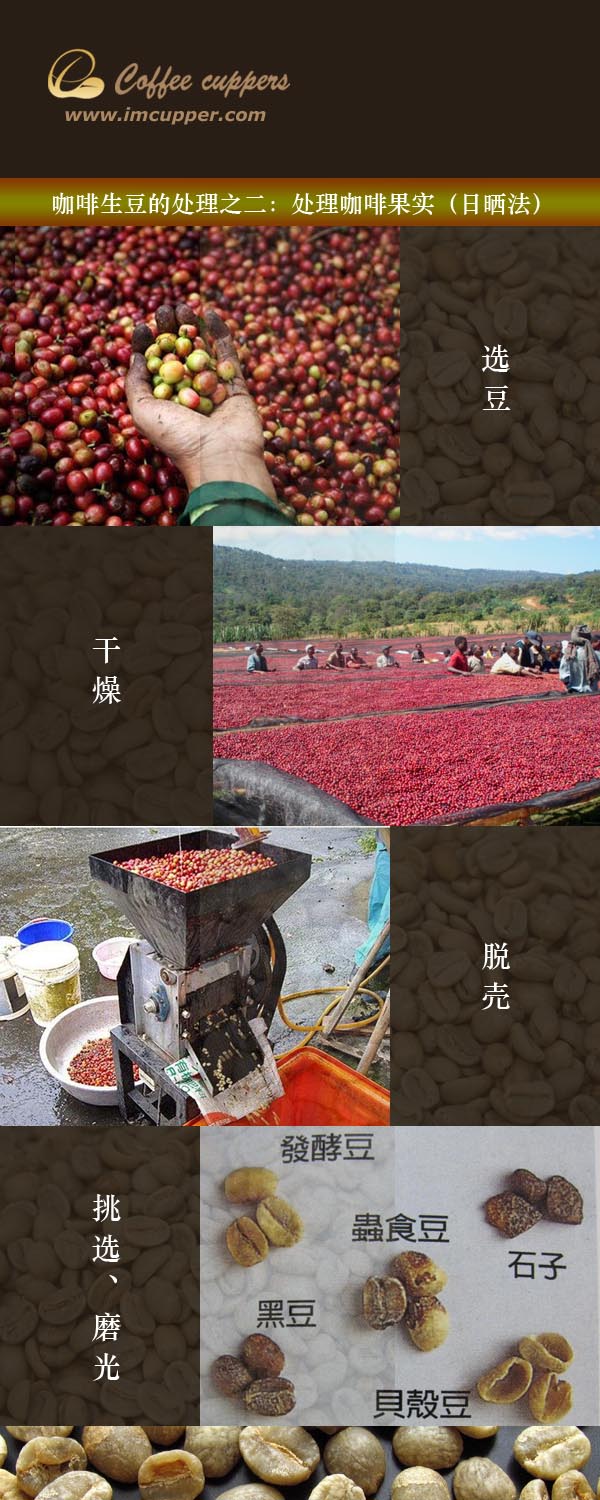
Processing of green coffee beans: processing coffee fruits (solarization method)
The coffee variety determines the natural flavor, but the treatment of the green beans can determine the acquired quality. Coffee selection attaches the most importance to flavor and quality, so special attention is paid to the technique and detail of processing. Harvested fruit must be processed immediately, otherwise it will begin to ferment and produce off-flavor coffee beans. There are two methods of treatment: sun drying (San-Dry) and washing (Washing).

Introduction to the quality and taste of half-sun washing honey treatment of coffee beans
Coffee beans introduce the sun drying method because of the use of natural sunlight to dry coffee fruits and raw beans, so it is also called natural drying method. Due to the use of artificial and natural treatment methods in the process, the sun-cured beans look irregular and unflattering in appearance. 1. Choose beans: put the harvested fruit in the water tank, and the ripe fruit will sink, unripe and overripe.

Honey-treated coffee beans sun-washed Arabica coffee beans characteristics of grinding scale production area
Honey-treated coffee beans sun-washed Arabica coffee beans grinding scale production areas introduce the coffee fruits picked from the coffee field, must not be mistaken, must be sent to the treatment plant on the same day, to the place underdeveloped. Immature. Ripe fruit retains ripe red fruit. The most simple and effective method is to pour all the fruit into a large trough. Ripe fruit and half-green and half-red fruit are heavier.

A brief introduction to the flavor description of how many coffee varieties are grown in Yunnan
A brief introduction to the flavor description of how many coffee varieties are grown in Yunnan A series of lip peeling technology promoted by Dehong Hougu Coffee Co., Ltd. (hereinafter referred to as Hougu Coffee) is a way of peeling many coffees. a customized shelling method based on the fine screening of manual shelling higher than machine shelling. The main process of lip peeling is to remove the outer skin and gelatinous fruit of coffee cherry.

Sumatran Coffee production area G1Coffee beans in Gayo Mountains _ Sumatran Coffee Wet planing process
Professional coffee knowledge exchange more coffee bean information please follow the coffee workshop (Wechat official account cafe_style) Indonesia Sumatra GAYO Mountains G1 TP Indonesia Sumatra GAYO Mountain G1 TP product information: Sumatra coffee GAYO Mountains G1 TP harvest period January March, October December classification G1 varieties Heirloo

Professional terms for coffee farms-the meaning of various words for coffee farms
For professional baristas, please follow the coffee workshop (Wechat official account qianjiecoffee) to remove foreign bodies in raw beans, broken beans, and defective beans. Coffee beans: business term used to refer to sun-dried coffee seeds. Coffee cherry: the fruit on the coffee tree. Defect: the damaged part of the coffee bean will seriously reduce the quality of the coffee. Dry fermentation: after the coffee is peeled, after no

Panamanian Flower Butterfly Coffee Bean Flavor description introduction to the characteristics of manor varieties
Panamanian Flower Butterfly Coffee Bean Flavor description the characteristics of the manor introduce there are many ways of washing, but generally speaking, the floating beans are removed after the coffee fruit is picked, then the pulp is removed, and then the coffee beans are soaked in a fermentation trough. The enzymes in the water will soften the mucus attached to the peel of the coffee beans, and the natural yeast will decompose the sugar in the mucus, a process called fermentation.