
"Subspecies"
526 article(s) found

Introduction to the planting environment of small grain coffee flavor and taste of Arabica coffee in Yunnan
Arabica is deeply loved by Chinese people with a short history of coffee contact because of its strong fruity aroma. it was introduced to China by missionaries in the 19th century and was widely planted in Panzhihua, Sichuan, and the dry-hot valley of the Jinsha River in western Yunnan, where the sunshine was long and there was a big temperature difference between day and night. The local people solved the problem of insufficient seasonal rainfall by diverting water up the mountain.

How much is Tibica coffee? how much is a cup of Yunnan Tibica coffee? how much is a kilogram of Tibika coffee?
Professional coffee knowledge exchange more coffee bean information Please follow the coffee workshop (Wechat official account cafe_style) there are countless branches of coffee varieties, such as the Arabica Tibica among the three native species. The three earliest subspecies in the Arabica species (Coffea arabica) series are: blue Mountain subspecies (varietal Blue Mountain), Tibika subspecies (
Arabica Coffee beans Coffee cultivation in China
Arabica coffee accounts for 70% of all coffee production, and its excellent flavor and aroma make it a direct drinkable coffee with only eight Arabica beans (8). But its resistance to dryness, frost, diseases and insect pests is too low, especially the natural enemy of coffee-leaf rust, so all producing countries are committed to

Coffee bean variety Arabica coffee beans Aceh, Sumatra, Indonesia
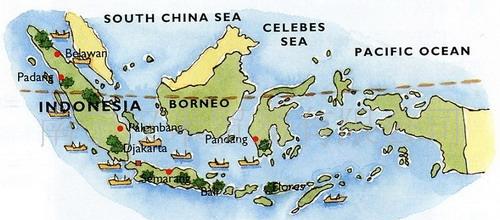
Arabica beans are an important kind of commercial coffee with a period of less than three years and have high-quality aroma and sour taste. Arabica coffee beans are mainly produced in South America (except parts of Argentina and Brazil), Central America, Africa (Kenya, Ethiopia, mainly East African countries), Asia (Indonesia, Yemen, India, Papua New Guinea).

Arabica coffee with rich aroma Taste Manor Introduction Arabica coffee bean characteristics
Bourbon was introduced to the Americas by French immigrants from the Island of Bourbon (today's French Island of Reunion, located in the Indian Ocean east of Madagascar) in the 18th century, and is now widely cultivated in Brazil and other Western Hemisphere regions, and a small amount is also cultivated in Yunnan, China. Caffeine content of subspecies Bobang is 20%~30% higher than that of subspecies Tibika, but it is higher than that of subspecies Tibika.
The difference between Arabica and Robusta the price of Arabica coffee beans
Arabica beans are an important kind of commercial coffee with a period of less than three years and have high-quality aroma and sour taste. Arabica coffee beans are mainly produced in South America (except parts of Argentina and Brazil), Central America, Africa (Kenya, Ethiopia, mainly East African countries), Asia (Indonesia, Yemen, India, Papua New Guinea).

Introduction of Arabica Coffee Origin introduction of Arabica Coffee Manor
Arabica coffee accounts for 70% of all coffee production, and Arabica coffee accounts for 70% of all coffee products. its excellent flavor and aroma make it a direct drinkable coffee with only 8 Arabica beans (8). But its resistance to dryness, frost, diseases and insect pests is too low, especially the natural enemy of coffee-leaf rust, so all producing countries are in

Recommend several well-known coffee bean varieties Arabica coffee beans Aceh, Sumatra, Indonesia
Arabica beans are an important kind of commercial coffee with a period of less than three years and have high-quality aroma and sour taste. Arabica coffee beans are mainly produced in South America (except parts of Argentina and Brazil), Central America, Africa (Kenya, Ethiopia, mainly East African countries), Asia (Indonesia, Yemen, India, Papua New Guinea).

What is the difference between Arabica coffee beans and other coffee beans? Aceh 19 mesh, Sumatra, Indonesia
Arabica beans are an important kind of commercial coffee with a period of less than three years and have high-quality aroma and sour taste. Arabica coffee beans are mainly produced in South America (except parts of Argentina and Brazil), Central America, Africa (Kenya, Ethiopia, mainly East African countries), Asia (Indonesia, Yemen, India, Papua New Guinea).

Characteristics of caffeine content in Arabica coffee beans introduction to the manor of family members in the producing area
With the closure of the garden, growers began to look for other disease-resistant varieties. Small-grain coffee is still the most important coffee variety, accounting for about 3% of the world's total coffee production. It is mainly grown in Latin American countries, but also partly in Indonesia and the Pacific islands. The geographical and climatic conditions of Brazil, the world's largest coffee producer, are very suitable for the growth of small-grain coffee and the main coffee products grown.

Arabica Coffee Flavor description introduction to the characteristics of High-quality Coffee Bean varieties
Arabica coffee accounts for 70% of all coffee production, and its excellent flavor and aroma make it the only coffee that Arabica beans can drink directly. However, its resistance to dryness, frost, diseases and insect pests is too low, especially the natural enemy of coffee-leaf rust, so all producing countries are committed to varieties.

Arabica Coffee Bean and Coffee Manor A brief introduction to Arabica Coffee Manor
Arabica coffee accounts for 70% of all coffee production, and its excellent flavor and aroma make it the only coffee that can be drunk directly. However, its resistance to dryness, frost, diseases and insect pests is too low, especially the natural enemy of coffee-leaf rust, so all producing countries are committed to variety improvement. Arabica species (Coffea

A brief introduction to the planting situation of Arabica Coffee Variety and Market Price
Arabica coffee accounts for 70% of all coffee production, and Arabica coffee accounts for 70% of all coffee products. its excellent flavor and aroma make it a direct drinkable coffee with only 8 Arabica beans (8). But its resistance to dryness, frost, diseases and insect pests is too low, especially the natural enemy of coffee-leaf rust, so all producing countries are in

The species of Arabica beans, the classification of Arabica beans, coffee beans, Arabica.
Variety editor native species in all coffee production, Arabica coffee accounts for 70% of the coffee 80%, its excellent flavor and aroma make it the only coffee that can be drunk directly. However, its resistance to dryness, frost, diseases and insect pests is too low, especially the natural enemy of coffee-leaf rust, so all producing countries are committed to variety improvement.

Introduction to the characteristics of Arabica Coffee Flavor description, Grinding degree treatment, Price and planting Environment
Arabica coffee accounts for 70% of all coffee production, and its excellent flavor and aroma make it a direct drinkable coffee with only eight Arabica beans (8). However, its resistance to dryness, frost, diseases and insect pests is too low, especially the natural enemy of coffee-leaf rust, so all producing countries are committed to products.
History of Arabica beans Arabica bean varieties derived from Arabica beans
The origin of the historical Arabica species (Coffea arabica) is the Abyssini Arabica sub-plateau (Abyssinia, now known as the Ethiopian plateau) in Ethiopia. In the early days, it was mainly eaten as medicine (Islamic monks used as a secret medicine to cure the body and mind or to awaken the brain), developed the habit of baking and drinking in the 13th century, and passed through the Arab region in the 16th century.

Arabica Coffee Bean Coffee Manor introduction Arabica Coffee Manor
The origin of the Arabica species (Coffea arabica) is the Abyssini Arabica subplateau (Abyssinia, now known as the Ethiopian plateau) in Ethiopia. In the early days, it was mainly eaten as medicine (Islamic monks used as a secret medicine for physical and mental therapy or for awakening the brain), developed the habit of baking and drinking in the 13th century, and passed through Allah in the 16th century.

How about Arabica coffee? Arabica coffee flavor
Following Cafe Review (Wechat official account vdailycom) found that Arabica beans, which opened a small shop in Beautiful Cafe, was an important kind of commercial coffee, resulting in a period of less than three years, with a high-quality aroma and sour taste. Arabica coffee beans are mainly produced in South America (except parts of Argentina and Brazil), Central America, Africa (Kenya, Ethiopia and other places), mainly in the east.

Characteristics of Arabica Coffee Flavor description method introduction to the characteristics of high-quality coffee beans in producing areas
Arabica coffee accounts for 70% of all coffee production, and its excellent flavor and aroma make it a direct drinkable coffee with only eight Arabica beans (8). However, its resistance to dryness, frost, diseases and insect pests is too low, especially the natural enemy of coffee-leaf rust, so all producing countries are committed to products.

What are the varieties of Arabica coffee beans? what's the difference between bourbon and tin pickup subspecies?
Professional coffee knowledge exchange more coffee bean information please follow the coffee workshop (Wechat official account cafe_style) front street-tin card, bourbon variety introduction coffee varieties according to biology, can be divided into Arabica (Arabica), Robusta (Robusta) and Liberia card (Liberica). The main drinking varieties in the world are Arabica and Robbins.