
"Sucking"
287 article(s) found

Six steps to identify coffee
1. Fragrance: the first step in cup evaluation is to evaluate the aroma of coffee beans. Grind 10 grams of coffee, put it in 3-5 sample cups, and then breathe hard at the gas released by the freshly crushed coffee cells. The characteristics of the aroma indicate the essence of the taste of coffee beans: the sweet smell indicates that its taste is sour; the pungent smell indicates that its taste is irritating. The power of aroma
Coffee made in Yunnan, China, from planting to picking cycle
Coffee planting method introduces coffee drying method (1) drying method: also known as natural drying method, the fruit is spread out in the open-air sun field and dried in the sun. To avoid uneven drying or fermentation, it must be stirred at the right time. The bright red fruit like a log cherry will turn black after a week in the sun, and the skin and flesh will become hard and easy to take off. At night, cover with a tarp to block the night dew and dry it smoothly.
What does Chinese coffee trees look like? where are coffee trees planted in Yunnan? environmental production areas manor treatment plants.
What does the Chinese coffee tree look like? where do the coffee trees grow in Yunnan? the manor processing plant introduced that the coffee fruit should be harvested immediately, and because the fruit of different ripening periods will appear on the same tree, it is not easy to harvest. Generally speaking, it takes as long as 4-5 months to receive a full harvest from the initial harvest. If ripe and immature fruits are harvested at the same time, the coffee will be reduced.

How to use the plug wind kettle the steps of using the siphon pot
Syphon, commonly known as "glass ball" or "siphon", is a simple and easy-to-use method of coffee brewing, and it is also one of the most popular coffee brewing methods in cafes. Although the Saifeng kettle has the alias of "siphon", it has nothing to do with the siphon principle, but uses water heating to produce water vapor, resulting in the principle of hot expansion and cold contraction, pushing the hot water from the lower sphere to the upper pot and waiting for the lower pot to cool.

What's so particular about how to taste coffee? Four-step flavor description of the correct drinking method of hand-brewed coffee
Smell a cup of fragrant coffee in front of you, please do not rush to drink, but smell it first. Cover the coffee cup or test cup with your hand, take a deep breath and let the fragrance naturally pour into your nose. Do you smell the smell that fascinates you? It will directly affect your feeling of tasting coffee. The color of color-watching coffee is always subtle.
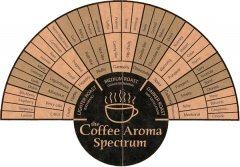
SCAA coffee cup testing process
1. Fragrance: the first step in cup evaluation is to evaluate the aroma of coffee beans. Grind 10 grams of coffee, put it in 3-5 sample cups, and then breathe hard at the gas released by the freshly crushed coffee cells. The characteristics of the aroma indicate the essence of the taste of coffee beans: the sweet smell indicates that its taste is sour; the pungent smell indicates that its taste is irritating. The power of aroma
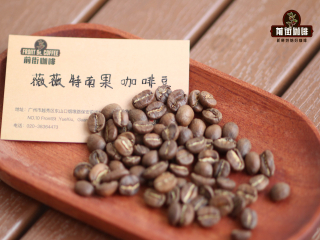
Flavor characteristics of Guatemalan Vivette Nan Fruit Coffee beans suggestion on Food rations and Bean Cooking in Front Street of Guatemala
01 | introduction byChrisKornmanSanPedroNecta is a city in the Vivette Nanguo region of Guatemala. Sometimes Vivette Nanguo is also referred to as Vivi, abbreviated as HHT. Vivette Nanguo region can be said to be one of the most famous coffee producing areas in Guatemala. The sea in this area

What's the difference between Vietnamese coffee and other coffee? Which is the best way to drink Vietnamese coffee or Vietnamese coffee?
For information, please pay attention to Coffee Workshop (Wechat official account cafe_style) Coffee was brought to Vietnam by French Jesuit missionaries around 1860. in the past 150 years, Vietnam has gradually developed its own unique coffee culture. today, walking along the street from Ho Chi Minh City, the largest city in the south, to the mountain city Sapa on the border between China and Vietnam, you can often see piles or clusters by the side of the road.
Six steps of coffee cup evaluation
The six steps of coffee cup evaluation describe the aroma, aroma, taste, smell, aftertaste and mellowness of coffee. 1. Fragrance: the first step in cup evaluation is to evaluate the aroma of coffee beans. Grind 8.25 grams of coffee, put it in 3-5 sample cups, and then breathe hard at the gas released by the freshly crushed coffee cells. The characteristics of the aroma indicate the taste of coffee beans.
Six steps to taste coffee
There are six steps in coffee cup evaluation, describing the aroma, aroma, taste, smell, aftertaste and mellowness of coffee. 1. Fragrance: the first step in cup evaluation is to evaluate the aroma of coffee beans. Grind 10 grams of coffee, put it in 3-5 sample cups, and then breathe hard at the gas released by the freshly crushed coffee cells. The characteristics of the aroma indicate the essence of the taste of coffee beans:
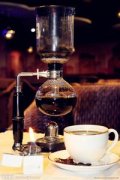
Analysis of homemade coffee: siphon pot
Siphon pot (Syphon), commonly known as "glass ball" or "siphon", is a simple and easy-to-use method of coffee brewing, and it is also one of the most popular coffee brewing methods in cafes. Although the siphon pot has the nickname of "plug wind type", it has nothing to do with the siphon principle, but uses water heating to produce water vapor, resulting in thermal expansion and cold contraction principle, push the hot water from the lower sphere to the upper pot, and then wait for the lower pot to cool.

Homemade coffee analytical siphon pot
Siphon pot (Syphon), commonly known as "glass ball" or "siphon", is a simple and easy-to-use method of coffee brewing, and it is also one of the most popular coffee brewing methods in cafes. Although the siphon pot has the nickname of "plug wind type", it has nothing to do with the siphon principle, but uses water heating to produce water vapor, resulting in thermal expansion and cold contraction principle, push the hot water from the lower sphere to the upper pot, and then wait for the lower pot to cool.

Coffee mixing taste new choice for men
Professional barista communication, please pay attention to coffee workshop (Weixin Official Accounts cafe_style)[Special Report] Pay attention to Lifestyle taste life, which is the ultimate life that GQ men want to create. While having an uncompromising attitude towards small details of life, taste is also moving towards male style! For dietary requirements, of course, high standards will be put into strict selection, such as drinking coffee is one
Production of siphon Coffee
In the cozy weekend afternoon, invite three or five friends to taste the self-made tile cookies, cliff is a happy thing. But it is a pity that there is only food and no drink. In this issue of the West Point Legion, the host Xiaoding will recommend the production of siphon coffee to netizens. Siphon pot, commonly known as air stopper or siphon, is a simple and easy-to-use method of brewing coffee.

What kinds of coffee pots are there?
Introduction to American dripping pot: dripping coffee machine is a classic dripping filter. After the power is turned on, the high heat element in the coffee pot quickly heats a small part of the water flowing from the water storage tank to boiling, and the steam pressure pushes the water out of the water delivery pipe in turn, drips evenly into the filter containing coffee powder through the distribution plate, and then flows into the coffee bottle to become drinking coffee.

How to use the Saifeng pot in the basic knowledge of making individual coffee?
Syphon, commonly known as "glass ball" or "siphon", is a simple and easy-to-use method of coffee brewing, and it is also one of the most popular coffee brewing methods in cafes. Although the Saifeng kettle has the alias of "siphon", it has nothing to do with the siphon principle, but uses water heating to produce water vapor, resulting in the principle of hot expansion and cold contraction, pushing the hot water from the lower sphere to the upper pot and waiting for the lower pot to cool.
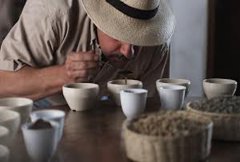
Coffee common sense SCAA coffee cup testing process
1. Fragrance: the first step in cup evaluation is to evaluate the aroma of coffee beans. Grind 10 grams of coffee, put it in 3-5 sample cups, and then breathe hard at the gas released by the freshly crushed coffee cells. The characteristics of the aroma indicate the essence of the taste of coffee beans: the sweet smell indicates that its taste is sour; the pungent smell indicates that its taste is irritating. The power of aroma

Six steps of coffee cup evaluation
There are six steps in coffee cup evaluation, describing the aroma, aroma, taste, smell, aftertaste and mellowness of coffee. 1. Fragrance: the first step in cup evaluation is to evaluate the aroma of coffee beans. Grind 10 grams of coffee, put it in 3-5 sample cups, and then breathe hard at the gas released by the freshly crushed coffee cells. The characteristics of the aroma indicate the essence of the taste of coffee beans:
Six Steps to Coffee Cup Evaluation
Coffee cup evaluation has six steps, describing coffee aroma, aroma, taste, smell, aftertaste and alcohol. Image: ab3a6c70gw1e5uo4ma2xzj20gj0a9gnf.jpg 1. Fragrance: The first step in cup evaluation is to evaluate the aroma of coffee beans. Grind 10 grams of coffee, place in 3 to 5 sample cups, and sniff vigorously the coffee released by the freshly ground coffee cells
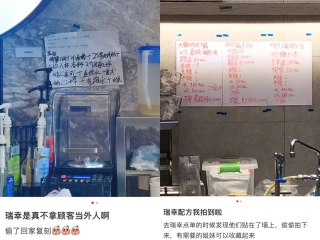
The recipe is posted directly on the wall! Ruixing really doesn't treat customers as outsiders.
▲ Click to follow | Daily boutique Coffee Culture Magazine Coffee Workshop recently, on the social platform, many netizens found that many lucky stores actually posted the drink formula directly on the wall of the store. The "big copy" was impressively marked with detailed recipes for signature drinks such as blue diamond Renabing, pomelo c American style and Chilled Mango Sago Cream with Pomelo Coconut Jelly.