
"Te"
552 article(s) found

The basic knowledge of coffee beans the origin of the species of coffee beans
West Africa, the origin of coffee grown in Liberia, has a strong adaptability to all kinds of environments, such as high or low temperature, humidity or dryness, except that it is not resistant to leaf rust and its flavor is worse than that of Arabica, so it is only traded or planted in some West African countries (Libya, C ô te d'Ivoire, etc.). Among the coffee in circulation in the world market, about

Global coffee producing area-Ivorian coffee market
Ivory Coast (CotedIvoire) has never produced the best quality coffee and rarely produces coffee from Arabian coffee trees. In the early 1980s, it was the third largest coffee producer in the world and is still the fifth largest coffee producer even today. In terms of coffee production, C ô te d'Ivoire is second only to Indonesia. Coffee production in C ô te d'Ivoire: Kurt
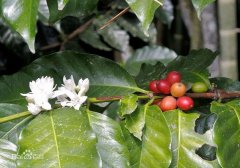
African Ivorian coffee beans what are the fine coffee beans in Africa?
Some people in C ô te d'Ivoire say it is the third largest coffee producer in the world after Brazil and Colombia, but others say it is Indonesia. But what is certain is that its original Robusta production is the first in the world. The main producing area is in the south, producing Robusta original medium-sized coffee beans.
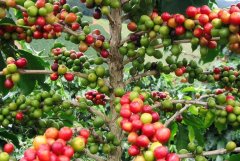
One of the original varieties of Libyan coffee beans
The Liberian species (scientific name Coffea liberica) West Africa is the origin of Liberian coffee. It has a strong adaptability to high or low temperature, humidity or dry environment, but it is not resistant to leaf rust and its flavor is worse than that of Arabica, so it is only traded or planted in some West African countries (Libya, C ô te d'Ivoire, etc.).

Introduction of 53 varieties of coffee beans in the world
Venezuela Venezuela Angola Angola Burundi Burundi Cameroon Emulon Ethiopia Ethiopia CotedIvoire C ô te d'Ivoire Kenya Kenya Madagascar Madagascar Mozambique Mozambique Rwanda Rwanda St.Helena Saint Helena Sao Tome and Principe Sao Tome and Principe South a

Ivory Coast coffee production is expected to increase by 1.67 million tons per year.
Xinhua News Agency, Dakar, reporter Huang Yanguang reported: the Ivorian government recently said that this year, Ivorian coffee cocoa is generally growing well, with an estimated output of 1.67 million tons, an increase of 120000 tons over last year, and revenue is expected to reach 308 billion West African francs (470 million euros). Ivory Coast has a bumper harvest of coffee and cocoa, mainly due to the favorable climate this year. In 2013, C ô te d'Ivoire exported coffee cocoa 130
What are the Icelandic cafes famous for Icelandic coffee culture?
I read a lot of travel notes before going to Iceland, saying that compared with nature, Icelandic cities are very boring. Perhaps it is this preconceived prejudice that surprises me everywhere in Reykjavik, the capital, and Akureyri, the northern capital. As a severe coffee addict, he usually drinks at least one or two cups of coffee a day in Paris.
Introduction of three Coffee varieties
Arabica variety (Arabica) is suitable for plateau cultivation, Robesta variety (Robusta) is suitable for lowland cultivation, and Liberian variety (Liberica) is suitable for minimum cultivation.
External Morning Review: Arabica Coffee fell with the Real
New YORK / London (Reuters)-ICE raw sugar futures fell to a two-and-a-half-month low on Tuesday, falling for a fourth day as oil prices continued to fall while Arabica coffee futures fell as the Brazilian real fell, attracting investors to close their positions and producers to sell. Cocoa futures prices rose as fewer cocoa beans arrived at ports in C ô te d'Ivoire (Ivory Coast). ICE- March original

Ivorian coffee is one of the largest producers in the world.
In terms of quantity, it is one of the largest producers in the world. C ô te d'Ivoire te dlvoire has never produced the best quality coffee, and it rarely comes from Arabian coffee trees. In the early 1980s, it was the world's third-largest coffee producer, with an annual output of 5 million bags. Even today, it is still the fifth largest coffee producer in the world, with an annual output of 4.4 million bags. That's it.
Basic information on coffee varieties
Suitable cultivation conditions: Arabica variety (Arabica) is suitable for plateau cultivation, Robesta variety (Robusta) is suitable for lowland cultivation, and Liberian variety (Liberica) is suitable for minimum cultivation. Production: the Arabica variety (Arabica) accounts for about 70-80% of the world's total output; the Robesta variety (Robusta) accounts for about 20-30% of the world's total output of Liberian varieties (Liberica)
Comparison of basic data of Coffee varieties
Suitable cultivation conditions: Arabica variety (Arabica) is suitable for plateau cultivation, Robesta variety (Robusta) is suitable for lowland cultivation, and Liberian variety (Liberica) is suitable for minimum cultivation. Production: the Arabica variety (Arabica) accounts for about 70-80% of the world's total output; the Robesta variety (Robusta) accounts for about 20-30% of the world's total output of Liberian varieties (Liberica)

Introduction of coffee beans introduction to the taste of boutique coffee
、. The Robusta species (scientific name Coffea robusta Linden) is a leaf rust-resistant variety found in the African Congo, which teaches the Arabica species to be more resistant to the disease. People like to compare robusta with Arabica coffee. In fact, robusta is a mutant of Congo (scientific name Cofffea canephora), so it should be compared with Arabica.

Comparison of basic Information of Coffee varieties
Suitable cultivation conditions: Arabica variety (Arabica) is suitable for plateau cultivation, Robesta variety (Robusta) is suitable for lowland cultivation, and Liberian variety (Liberica) is suitable for minimum cultivation. Production: the Arabica variety (Arabica) accounts for about 70-80% of the world's total output; the Robesta variety (Robusta) accounts for about 20-30% of the world's total output of Liberian varieties (Liberica)
Comparison of basic data of Fine Coffee varieties
Suitable cultivation conditions: Arabica variety (Arabica) is suitable for plateau cultivation, Robesta variety (Robusta) is suitable for lowland cultivation, and Liberian variety (Liberica) is suitable for minimum cultivation. Production: the Arabica variety (Arabica) accounts for about 70-80% of the world's total output; the Robesta variety (Robusta) accounts for about 20-30% of the world's total output of Liberian varieties (Liberica)

Comparison of basic data of Coffee varieties
Suitable cultivation conditions: Arabica variety (Arabica) is suitable for plateau cultivation, Robesta variety (Robusta) is suitable for lowland cultivation, and Liberian variety (Liberica) is suitable for minimum cultivation. Production: the Arabica variety (Arabica) accounts for about 70-80% of the world's total output; the Robesta variety (Robusta) accounts for about 20-30% of the world's total output of Liberian varieties (Liberica)

Where is the main distribution of coffee in Africa, the birthplace of coffee?
Professional coffee knowledge exchange more coffee bean information please follow coffee workshop (Wechat official account cafe_style) Coffee producing area in Africa the first coffee tree in the world was found in the Horn of Africa. Local tribes often grind the fruit of coffee and knead it with animal fat to make many ball-shaped balls. These aboriginal tribes put these coffee balls
Java Coffee java Jawa
Java Coffee, whose English name is java coffee, is also translated as Java Coffee. Java coffee (java Java coffee) planting distribution Java coffee beans (coffee powder) belong to: Robasda (Robusta) varieties, mainly distributed in African countries such as C ô te d'Ivoire, Angola, Madagascar and the Philippines, Vietnam and Indonesia (Java) and other places. Java coffee growing environment

Basic knowledge of coffee beans comparison of basic data of coffee bean varieties
Suitable cultivation conditions: Arabica variety (Arabica) is suitable for plateau cultivation, Robesta variety (Robusta) is suitable for lowland cultivation, and Liberian variety (Liberica) is suitable for minimum cultivation. Production: the Arabica variety (Arabica) accounts for about 70-80% of the world's total output; the Robesta variety (Robusta) accounts for about 20-30% of the world's total output of Liberian varieties (Liberica)

Three Coffee categories and Seven Coffee producing areas-how many Coffee producing countries in the World
Robusta: a leaf rust-resistant variety found in Congo, Africa, that is more resistant than Arabica. In fact, the Robusta species was originally a mutant of the Congolese species. Arabica coffee beans grow in the cold tropical high-sea areas, and the high-temperature and humid zone that is not suitable for Arabica coffee is where Robsta coffee grows. The Robusta species is generally used