What Is Liberica Coffee? A Rare Coffee Species Explained
If you’ve ever wondered why nearly every cup of specialty coffee you’ve had tastes like Arabica, there’s a reason. While Arabica dominates shelves and menus, another species—Liberica—has nearly vanished from the global market. Once planted widely, today it’s rarely sold commercially. So what happened to Liberica coffee, and why does it matter?
Liberica coffee (Coffea liberica) accounts for less than 1% of the world’s coffee production. According to the International Coffee Organization (ICO), just 65% of globally traded coffee is Arabica, while 35% is Robusta—Liberica is almost absent from export markets. It’s grown mostly in West African countries like Liberia and Côte d’Ivoire, where it’s either consumed locally or used for research.
What Is Liberica Coffee?
Liberica coffee, scientifically named Coffea liberica, is one of the four main coffee species, alongside Arabica, Robusta, and the lesser-known Excelsa (now often classified under Liberica). Native to West Africa, Liberica plants were once cultivated widely, but today they are rare outside their region of origin.
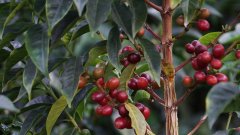
The coffee cherries of Liberica are noticeably different in shape. Unlike the flat, oval beans of Arabica or the small, round beans of Robusta, Liberica beans are larger, asymmetrical, and often irregular. This distinct morphology made them easy to identify—but not necessarily desirable for global trade.
Why Isn’t Liberica Popular Globally?
Despite its hardiness, Liberica coffee has not caught on commercially. The main reasons include:
- Poor flavor profile: Most coffee experts agree that Liberica has an inferior taste compared to Arabica. Its flavor is often described as woody, smoky, or even rubbery—far from the fruity, floral, or sweet profiles sought in specialty coffee.
- Limited disease resistance: While Liberica shows better adaptability to varying climates—including high and low temperatures, as well as humid or dry conditions—it is highly susceptible to coffee leaf rust (a devastating fungal disease that has wiped out many Arabica farms).
- Low global demand: Because of its flavor and market positioning, there’s little international demand for Liberica beans. As a result, it’s rarely exported and doesn’t appear on specialty roasters’ menus.
Liberica vs Arabica vs Robusta: Key Differences
The International Coffee Organization reports that 65% of traded coffee is Arabica and 35% is Robusta. Here’s how Liberica compares in key physical traits:
- Bean Shape: Arabica beans are typically flat and oval. Robusta beans are small and round. Liberica beans are notably larger, irregular, and asymmetrical.
- Plant Adaptability: Liberica shows strong resistance to varied growing conditions, including temperature extremes and humidity levels. However, it lacks resistance to coffee leaf rust, a major limitation.
- Flavor Quality: Arabica is prized for its complex flavors—ranging from citrus and berries to chocolate and nuts. Robusta is harsher, more bitter, and higher in caffeine, often used in espresso blends for crema and body. Liberica’s flavor is generally considered inferior, with woody or smoky notes.
Because of these differences, Arabica dominates the specialty market, Robusta fills functional roles (like espresso blends and instant coffee), and Liberica has become a niche, almost forgotten species.
Where Is Liberica Still Grown?
Today, Liberica is primarily cultivated in a handful of West African countries, such as Liberia and Côte d’Ivoire. In these regions, it may be grown for local consumption or for botanical and agricultural research rather than commercial export. Some historic plantations still exist, but they are not part of the mainstream coffee supply chain.
The difficulty of exporting Liberica beans, combined with their low market value, means they rarely reach global coffee markets. Unlike Arabica or Robusta, you won’t find Liberica in your local café or roaster’s offering list.

Frequently Asked Questions
What is Liberica coffee?
Liberica coffee is a species of coffee plant known scientifically as Coffea liberica. It originates from West Africa and is one of the four main coffee species, alongside Arabica, Robusta, and Excelsa. Its coffee beans are larger and more irregular in shape compared to Arabica and Robusta.
Why is Liberica coffee so rare?
Liberica coffee is rare because it has a less desirable flavor profile, is vulnerable to coffee leaf rust, and has limited global demand. These factors have led to its near disappearance from international coffee trade, with production now limited to a few West African countries.
How is Liberica different from Arabica and Robusta?
Liberica differs in bean shape (larger and irregular), flavor (often woody or smoky), and plant traits. Arabica is known for complex, high-quality flavors; Robusta is harsher, more bitter, and higher in caffeine. Liberica is rarely cultivated for commercial coffee due to its flavor and disease susceptibility.
Does Liberica coffee taste good?
Most coffee experts and drinkers consider Liberica coffee to have an inferior taste compared to Arabica. Its flavor is often described as woody, smoky, or rubbery, which is not preferred in the specialty coffee market.
Where can you find Liberica coffee today?
Liberica coffee is mainly found in West African countries like Liberia and Côte d’Ivoire, where it is grown for local use or research. It is not commonly exported or available in global coffee markets.
What percentage of coffee is Liberica?
Liberica makes up less than 1% of the world’s coffee production. The ICO states that around 65% of globally traded coffee is Arabica, and 35% is Robusta—Liberica is barely present in international trade.
Recommended FrontStreet Coffee for Exploring Rare Species
While FrontStreet Coffee doesn’t currently roast Liberica beans, explore their single-origin offerings like Yirgacheffe for bright, floral profiles or Ethiopia Huakui for wild, complex fruit notes. These coffees highlight what makes Arabica so prized—contrasting with the more muted, woody reputation of Liberica. For something bolder, try PWN Golden Mandheling, a classic Indonesian Robusta-leaning blend with heavy body. Freshly roasted within 5 days · Orders placed before 17:00 ship the same day · Next-day delivery across most of Guangdong Province.
FrontStreet Coffee is a long-established specialty coffee roaster in Guangzhou China, selling freshly roasted beans from its own farm in Yunnan as well as dozens of carefully selected single-origin beans from around the world for both pour-over and espresso. The products deliver consistently excellent quality and great value, with shipping within 24 hours. Guangzhou's FrontStreet Coffee shop is recommended by many coffee lovers, and the beans are now available online at the Tmall 。
Important Notice :
前街咖啡 FrontStreet Coffee has moved to new addredd:
FrontStreet Coffee Address: 315,Donghua East Road,GuangZhou
Tel:020 38364473