
"Trim"
101 article(s) found

How to grow coffee beans _ how to grow coffee technical experience sharing _ can you make money by growing coffee beans
Professional coffee knowledge exchange more information on coffee beans Please follow the coffee workshop (Wechat official account cafe_style) Coffee lovers will study how to roast and brew coffee beans, but seldom delve into how coffee beans are grown. Today, Qianjie Coffee would like to share some knowledge of coffee bean cultivation with you. Shade planting (Shade-grown) and all-day planting (sun-g)

How coffee is sown and harvested
Seeds, not beans. In fact, coffee beans are the seeds of red-skinned coffee fruits that look like ripe cherries. Each fruit usually contains two seeds, which must be taken out and dried to produce two raw coffee beans to be roasted later. The coffee wrapped in endocarp will be planted to the seedbed and will germinate in 40-60 days and grow to about 50 cm in about 6 months after germination. In

Introduction to the flavor of El Salvador black honey coffee A brief introduction to the characteristics of El Salvador coffee
Professional coffee knowledge exchange more coffee bean information please follow the coffee workshop (Wechat official account cafe_style) front street coffee introduction-Salvadoran coffee El Salvador land area: 21000 square kilometers population: about 6.1 million climate: the whole year is divided into May to October rainy season and November to the following April dry season, the climate is clear. In the 1840s, coffee seeds came from Galle.

Introduction of flavor and characteristics of Honduran coffee beans recommended by Honduran coffee beans brand
For more information about coffee beans, please follow the Coffee Workshop (Wechat official account cafe_style) Honduras Coffee beans: special Highland Coffee Honduras is located in the north of Central America, facing the Caribbean Sea to the north, the Gulf of Fonseca in the Pacific Ocean to the south, Nicaragua and El Salvador to the east and south, and Guatemala to the west, mostly mountains and plateaus. It belongs to tropical atmosphere.

What are the suggestions for the baking of Honduran single beans in Honduras?
For professional baristas, please follow the Coffee Workshop (official Wechat account cafe_style). The OPALACA Opalaca production area is located in the southern Santa Barbara area, as well as Intibuka and Intibuca and Lempira. Named after the Opalaca Mountains that stretch through the area. Altitude: 1100-1500m harvest: November February varieties: bourbon, Catuai,Typica

Vivetta Nango Polsa Manor double-flow micro-batch European rules to wash Guatemala boutique coffee beans
For the exchange of professional baristas, please follow the coffee workshop (Wechat official account cafe_style) Guatemala Huehuetenango Finca La Bolsa Dos Rios EP Guatemala Vivette Nango Polsa Manor double-flow micro-batch European country Guatemala (Guatemala) Vivette Nango (Huehuetenango) Manor Porsa Manor (Finca La)

Is the single bean delicious in Honduras? the planting and processing of single bean in Honduras
The exchange of professional baristas please follow the coffee workshop (Wechat official account cafe_style) two kinds of very good quality coffee produced in Honduras, which are highly respected by coffee lovers. One is Highland Coffee, which is grown at 10001500 Michael above sea level, and the other is selected Highland Coffee, which represents the highest level in Honduras, growing at 15002000 Michael. Hongdu

The production area of single bean in Honduras introduces how to brew single bean in Honduras
Professional barista communication please pay attention to the coffee workshop (Wechat official account cafe_style) Honduran coffee has a rich and mellow taste, taste is not astringent but not sour, mellow and aroma are very high, quite individual. Honduran coffee can lead to multiple levels of flavor depending on the degree of roasting. Medium baking can maximize the sweetness of beans, while deep baking makes it bitter.

How to deal with the processing of Honduras single bean? how to divide the grade of Honduras single bean?
For professional baristas, please follow the coffee workshop (Wechat official account cafe_style) Honduras Honduran population: 8250000 although it is not described by HCAFE as a coffee growing area, many roasters label coffee from the Santa Barbara region of Honduras, and several coffee areas cross the border into Santa Barbara (the government of a country).

Ethiopian pastoral coffee cultivation system coffee bean cultivation system distributed in Ethiopia
(photo from: national Geographic Chinese website Photo: Amivitale,Panos) according to Qianjie Coffee Consulting, 90% of coffee in Ethiopia comes from pastoral, forest and semi-forest, but large-scale corporate cultivation is rare in Ethiopia. According to the scale and model, the cultivation of Ethiopian coffee can be divided into four types: 1, forest coffee Forest C

How is the planting of single bean in Honduras? introduction to the award of single bean in Honduras
Professional baristas please follow the coffee workshop (Wechat official account cafe_style) COPAN Copan production area is located in the city of Copan in western Honduras, of which the most famous is the local Mayan site. The region is adjacent to Guatemala and regions like this remind me to attach importance to the actual origin of coffee rather than to producing countries. In fact, the division of countries is somewhat arbitrary, because consumers have to distinguish between coffee and coffee.

Characteristics of Santa Barbara Coffee producing area in Honduras
Professional coffee knowledge exchange more coffee bean information please follow the coffee workshop (Wechat official account cafe_style) Honduran coffee beans Saca Stoume Parainema species Honduras Familia Sagastume Parainema [country] Honduras [production area] Santa Barbara [cooperative] San Vincent treatment plant [producer] Saca Stoume family [treatment] water
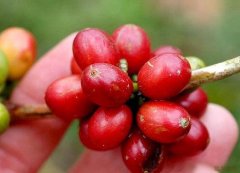
The method of cultivating coffee trees how to grow coffee trees at home?
"Coffee Coffee for you"-oblique planting method: when planting, the seedlings are oblique, usually at an angle of 30 degrees to 60 degrees from the ground (preferably 45 degrees). Oblique planting can inhibit the growth of the top of the trunk and promote the germination of basal straight branches. Attention should be paid to the selection of 3 or 4 sturdy and spaced direct branches for new stem culture. Cut off the old stem after the new stem grows (figure 2)-curved dry method: straight when planting, waiting for

Cultivation techniques of small-grain coffee: multi-dry shaping and cultivation
Multi-dry shaping is a method that uses the first-order branch as the main fruiting branch. The purpose of plastic surgery is to cultivate multiple trunks and grow a large number of robust primary branches, and the multi-trunk trees will not be topped. As a result, when the yield decreases after 3-5 years, the new trunk will be replaced. ① culture multi-stem method oblique planting method: when planting, the seedlings are oblique, generally at an angle of 30-60 degrees with the ground. Oblique planting can be suppressed

Arabica coffee cultivation techniques Multi-stem shaping and cultivation of coffee trees
Multi-stem integer Multi-stem integer is an integer method that uses the first branch as the main result branch. The purpose of integer is to cultivate multiple trunks and grow a large number of robust first-order branches. Multi-trunk trees do not pick the top. As a result, when the yield decreases after 3 to 5 years, new trunks are replaced.① Cultivation of multi-stem method oblique planting method: When planting, the seedlings are obliquely planted, generally at an angle of 30~60 degrees with the ground. oblique planting can inhibit

How about Honduran coffee beans? how about sweet orange manor coffee?
For more information on coffee beans, please follow the Coffee Workshop (official Wechat account cafe_style) Honduras is located in central Central America, bordered by the Caribbean Sea to the north, the Pacific Ocean to the south, Guatemala to the west, El Salvador to the southwest and Nicaragua to the southeast. It covers an area of 112492 square kilometers and the coastline is about 1033 kilometers long. The whole territory, except the coastal plain, is

Does the lion king in Sidamo, Ethiopia have lions? What's the difference between sunbathing and washing raw beans?
Does the lion king in Sidamo, Ethiopia have lions? What's the difference between sunbathing and washing raw beans? Origin: name: Ethiopia location: East African Capital: Adis Abba Addis Ababa Religion: Christian main language: Amharic time Zone: GMT+3 Metrology: metric (Metric) currency: bill Birr (1 $20 birr) Agricultural products (Export): coffee, flowers,

Mixed coffee made by hand in autumn | coffee beans made by hand [Ethiopian washing Cochel]
Professional coffee knowledge exchange more coffee bean information please follow the coffee workshop (Wechat official account cafe_style) autumn hand-mixed coffee | hand-made coffee beans [Ethiopian washing Kocher] brief introduction? What are the flavor characteristics? Cochel producing area is located in Yega Sheffield, Ethiopia. The grades of washed raw beans are G1 and G2, sun-dried raw beans, etc.

The traditional way of drinking coffee in Ethiopia Ethiopia, the world's most diverse coffee producer.
Ethiopia is the Garden of Coffee Eden, the hometown of Coffee. Genesis in the Bible says that the beautiful space where Adam and Eve first lived was the Garden of Eden. God placed the created man there so that all kinds of trees could grow out of the ground, pleasing to the eyes, and some fruit could be used as food. A river flows out of the garden of Eden and moistens the garden, and there is life in the garden.
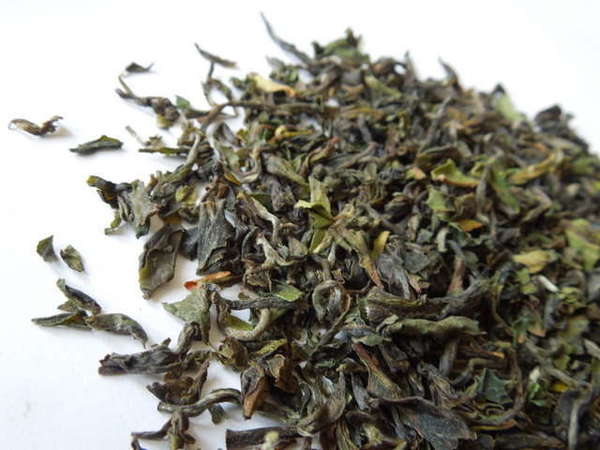
Why does black tea have honey aroma? What is the reason why black tea smells so good? The effect of what substances black tea contains on its taste
As we mentioned, the taste begins in the field. Scientists have identified more than 600 flavors and flavors in tea, many of which have vague and beautiful names, such as "linalool" and "hexanol". Miraculously, tea makers can make hundreds of flavors using only six compounds in tea trees: pigments, sugar.