
"Tropics"
2088 article(s) found

How long does it take for coffee trees to blossom to mature coffee berries?
How long does it take for coffee trees to bloom to mature coffee berries? coffee trees can only grow in the tropics and subtropics, and coffee trees can grow in different climates, soils, elevations and rainfall in the middle of the coffee belt. Coffee trees thrive in Africa's hot and humid canyons and forest rainforests, and it still produces high-quality coffee in cold, foggy, windy Central America.

Brazilian coffee Brazilian bourbon Santos Bowbon coffee beans.
Professional coffee knowledge exchange more coffee bean information please follow the coffee workshop (Wechat official account cafe_style) Arabica and Robusta are grown in Brazil, but mainly Arabica, most of them are dried. Both the equator and the southern line of regression cross Brazil, so the Brazilian landmass is located in the tropics, with about 8 million hectares of land used to grow coffee. Facing north, climate

Description of the Flavor of Ethiopian Cochel Coffee Sun washing
Ethiopia-this is the oldest birthplace of coffee, the cradle of Arabica, the Great Rift Valley of East Africa runs through the north, although it is located in the tropics, but at a higher altitude and cooler climate than African countries, the Cafa primeval forest (Kaffa Forest) in southwestern Ethiopia is still the gene pool of Arabica (Arabica). The coffee taste spectrum produced by Ethiopia has a great amplitude, almost containing

The Kingdom of Fine Coffee Brazilian Coffee
Brazil is famous for its coffee quality and strong taste. It is the largest coffee producer and exporter in the world. It is known as the coffee kingdom. Coffee originated in Ethiopia and was introduced to Brazil in 1727. Brazil is located in the southeast of South America, located in the tropics and subtropics, unique geographical and climatic conditions are very suitable for coffee cultivation, coupled with cheap labor, coffee cultivation industry rapidly emerged.

What are the conditions for growing coffee trees? is there tannin in the coffee?
The planting conditions of coffee trees the origin of coffee trees is in Ethiopia, Africa. In botany, coffee trees belong to the evergreen trees of the subgenus Rubiaceae, and coffee beans, commonly known as coffee beans, are the seeds of the fruit of coffee trees, just because they are shaped like beans, so they are called coffee beans. Climate is the decisive factor for coffee cultivation, and coffee trees are only suitable for growing in the tropics or subtropics.

Coffee producing areas what are the coffee producing areas in China?
Professional coffee knowledge exchange more coffee bean information Please pay attention to the coffee workshop (Wechat official account cafe_style) with the equator as the center, in the tropics and subtropics between latitudes of about 25 degrees north and south, it is the most suitable area for growing coffee. However, good forests can not be cultivated anywhere in the region. The three major coffee growing areas in this section are as follows:

Honduras Coffee-Honduras Coffee-Honduras Coffee
Generally speaking, Honduran coffee has a good reputation and is suitable for blended coffee. Coffee in Honduras was imported from El Salvador. Honduras produces high-acid, high-quality coffee. As elsewhere, coffee grades in Honduras depend on altitude: coffee grown at 700 to 1,000 meters above sea level is medium, and coffee grown at 1,000 to 1,500 meters above sea level is medium.

Is Katim the truth hidden by Arabica or Robusta Katim and Arabica?
Professional coffee knowledge exchange more coffee bean information please follow the coffee workshop (Wechat official account cafe_style) Qianjie-Yunnan Coffee introduction Coffee Tree is a flowering plant of the coffee genus Rubiaceae, with a figure ranging from small shrubs to 18-meter-tall trees. Wild coffee species grow irregularly in the tropics, and new species are still being discovered.

Relationship between altitude of Fine Coffee Bean planting and Coffee Flavor
The influence of geographical location on the flavor of coffee beans is profound. All coffee grows in the tropics, and the altitude at which it grows has a profound effect on the taste of coffee. The tropical belt extends from 30 degrees north latitude to the equatorial regions of the southern mountains that produce the world's truly high-quality Arabica coffee. Central and South America, South Asia and some Pacific islands, south-central Africa is also the most important in the world.
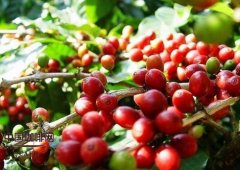
The news about coffee the planting conditions of coffee trees the origin of coffee beans
The origin of the coffee tree is Ethiopia in Africa. In botany, coffee trees belong to the evergreen trees of the subgenus Rubiaceae, and coffee beans, commonly known as coffee beans, are the seeds of the fruit of coffee trees, just because they are shaped like beans, so they are called coffee beans. Climate is the decisive factor for coffee cultivation. Coffee trees are only suitable for growing in the tropics or subtropics, so latitude 25 is south and north.

History of coffee tree cultivation Importance of bean grinder
In fact, Arabs began growing coffee in 525 BC, and chewing roasted coffee beans became popular in Arabia. In 890 AD, Arab merchants sold coffee beans to Yemen, and Yemen made coffee beans into a beverage for the first time. In the 15th century, coffee was introduced into Europe, Asia, and soon into America. By the 18th century, the tropics and subtropics of the globe were widespread.

Talk about the influence of altitude on the flavor of coffee
The influence of geographical location on the flavor of coffee beans is profound. All coffee grows in the tropics, and the altitude at which it grows has a profound effect on the taste of coffee. The tropical belt extends from 30 degrees north latitude to the equatorial regions of the southern mountains that produce the world's truly high-quality Arabica coffee. Central and South America, South Asia and some Pacific islands, and south-central Africa are also the most important in the world.

Introduction to cultivation techniques of Coffee Fruit
Cultivation techniques require that the origin of coffee trees [4] is in Ethiopia in Africa. In botany, coffee trees belong to the evergreen trees of the subgenus Rubiaceae, and coffee beans, commonly known as coffee beans, are actually the seeds of the fruit of coffee trees. They are called coffee beans only because they are shaped like beans. Climate is the decisive factor for coffee cultivation, and coffee trees are only suitable for growing in the tropics or subheat.

Guatemala Fine Coffee Bean Flavor Taste Introduction Antigua Coffee Estate
Guatemala is located in the tropics. The northern and eastern coastal plains have a tropical rain forest climate, while the southern mountains have a subtropical climate. There are two dry and wet seasons in a year. May to October is the wet season, and November to April of the following year is the dry season. The central plateau is also the cultural center of Guatemala, where temperatures are mild all year round at 1300 to 1800 meters, with daily temperatures ranging from 18 to 28 degrees Celsius, and higher in January

High-quality coffee Honduran coffee treatment method washing
Overall, Honduran coffee has a good reputation and is suitable for mixed coffee. Coffee in Honduras is imported from El Salvador. Honduras produces high-acid high-quality coffee. Like other places, the coffee grade in Honduras depends on altitude: coffee grown at 700 to 1000 meters above sea level is medium, and grown at 1000 to 1500 meters above sea level
Understand the coffee growing belt
Most of the coffee producing areas in the world are located in the tropics between the Tropic of Cancer and the Tropic of Cancer, which we call the coffee belt and Coffee Belt or Coffee Zone in English. As a tropical cash crop, coffee trees grow in coffee belts with excellent climatic conditions, where the sun shines all the year round, is rich in calories and Rain Water, and the annual average temperature is above 20 ℃. But the high temperature

Introduction to coffee tree knowledge
The coffee tree is native to Ethiopia in Africa. Coffee tree in botany, belongs to the Rubiaceae coffee subgenus evergreen tree, and generally known as coffee beans, in fact, coffee tree fruit seeds, only because of the shape like beans, so called coffee beans. Climate is the decisive factor for coffee cultivation. Coffee trees are only suitable for growing in the tropics or subtropics, so latitude 25 degrees north and south.

Introduction to the velvet-like mellow Guatemala boutique coffee bean manor.
Antigua coffee is popular with most coffee lovers only because of its distinctive aroma. Because it is planted in the hills of volcanoes, it can retain its own characteristics more than Costa Rica, the main reason is that it has more geographical and climatic advantages than Costa Rica. Guatemala is located in the tropics, but because of its high altitude, the climate

Introduction to the characteristics of Coffee Flavor varieties in Saint Roman Manor, Costa Rica
The topography of Costa Rica is that the coast is surrounded by plains, while the middle is cut off by rugged mountains. The country declared 200 nautical miles in its exclusive economic zone and 12 nautical miles in its territorial sea. The climate belongs to the tropics and subtropics, and part of it is the neo-tropics. The climatic conditions of Costa Rica are completely different, completely subverting the classification of the four seasons of the year. There are only two seasons. April to December is the rainy season.
About the coffee growing belt
Most of the coffee producing areas in the world are located in the tropics between the Tropic of Cancer and the Tropic of Cancer, which we call the coffee belt and Coffee Belt or Coffee Zone in English. As a tropical cash crop, coffee trees grow in coffee belts with excellent climatic conditions, where the sun shines all the year round, is rich in calories and Rain Water, and the annual average temperature is above 20 ℃. But the high temperature