
"Tropics"
2088 article(s) found

Effect of Coffee Bean planting altitude on Coffee Flavor
The influence of geographical location on the flavor of coffee beans is profound. All coffee grows in the tropics, and the altitude at which it grows has a profound effect on the taste of coffee. The tropical belt extends from 30 degrees north latitude to the equatorial regions of the southern mountains that produce the world's truly high-quality Arabica coffee. Central and South America, South Asia and some Pacific islands, south-central Africa is also the most important in the world.

Coffee planting conditions and natural factors of coffee tree planting
Professional coffee knowledge exchange more coffee bean information Please pay attention to the coffee workshop (Wechat official account cafe_style) Coffee trees grow in the tropics between the Tropic of Cancer and the Tropic of Cancer and near the equator, also known as the world coffee growth belt, caffeine varieties and regional factors, there are also great differences in appearance. Evergreen leaves from yellowish green to dark green or even

The origin of Guatemalan coffee
Guatemala is located in the tropics, but because of its high altitude and mild climate, the flowering and fruiting stages of coffee trees are later than those in other parts of the world. This suitable climate and fertile soil create an excellent growing environment for coffee and produce the best coffee beans in the world.

Introduction to the flavor and taste characteristics of Costa Rican goddess manor coffee with mild acidity and good sweetness
The topography of Costa Rica is that the coast is surrounded by plains, while the middle is cut off by rugged mountains. The country declared 200 nautical miles in its exclusive economic zone and 12 nautical miles in its territorial sea. The climate belongs to the tropics and subtropics, and part of it is the neo-tropics. The climatic conditions of Costa Rica are completely different, completely subverting the classification of the four seasons of the year. There are only two seasons. April to December is the rainy season.
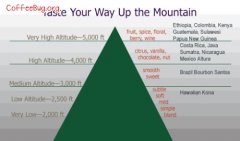
The relationship between altitude and Coffee Flavor
The influence of geographical location on the flavor of coffee beans is profound. All coffee grows in the tropics, and the altitude at which it grows has a profound effect on the taste of coffee. The tropical belt extends from 30 degrees north latitude to the equatorial regions of the southern mountains that produce the world's truly high-quality Arabica coffee. Central and South America, South Asia and some Pacific islands, south-central Africa is also the most important in the world.

Effect of altitude on Coffee Flavor
The influence of geographical location on the flavor of coffee beans is profound. All coffee grows in the tropics, and the altitude at which it grows has a profound effect on the taste of coffee. The tropical belt extends from 30 degrees north latitude to the equatorial regions of the southern mountains that produce the world's truly high-quality Arabica coffee. Central and South America, South Asia and some Pacific islands, south-central Africa is also the most important in the world.
About Coffee History Origin Culture and Spread
Coffee tree, is a tropical plant, evergreen shrubs, growing in the equator, north and south latitude 25 degrees each, that is, within the Tropic of Cancer region. The tropical tropics and the equator are the world coffee growing belt. The growing conditions require abundant rainfall and humid climate. The suitable altitude is about 600~1500 meters. The annual rainfall is 1500~2000 mm. Mild days alternate with cool nights.
Introduction to Flavor treatment of Brazilian Coffee Variety producing area
Brazilian coffee, as a major coffee producer in the world, I believe everyone has heard of this country's coffee, even if they don't know much about coffee. Brazil is located in the tropics, with a warm and humid climate and plenty of sunshine and moisture. It is more suitable for coffee growth, which makes the Brazilian manufacturing industry more suitable than other places.
The influence of altitude on the flavor of coffee
The influence of geographical location on the flavor of coffee beans is profound. All coffee grows in the tropics, and the altitude at which it grows has a profound effect on the taste of coffee. The tropical belt extends from 30 degrees north latitude to the equatorial regions of the southern mountains that produce the world's truly high-quality Arabica coffee. Central and South America, South Asia and some Pacific islands, and south-central Africa are also the most important in the world.

What are the cultivation techniques of coffee trees? what is the reason for the astringency of coffee?
It is required that the origin of coffee tree [4] is in Ethiopia in Africa. In botany, coffee trees belong to the evergreen trees of the subgenus Rubiaceae, and coffee beans, commonly known as coffee beans, are actually the seeds of the fruit of coffee trees. They are called coffee beans only because they are shaped like beans. Climate is the decisive factor for coffee cultivation. Coffee trees are only suitable for growing in the tropics or subtropics, so the south

Honduras Coffee Plantation Honduras Coffee Region
Generally speaking, Honduran coffee has a good reputation and is suitable for blended coffee. Coffee in Honduras was imported from El Salvador. Honduras produces high-acid, high-quality coffee. As elsewhere, coffee grades in Honduras depend on altitude: coffee grown at 700 to 1,000 meters above sea level is medium, and coffee grown at 1,000 to 1,500 meters above sea level is medium.
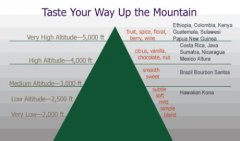
Effect of altitude on Coffee Flavor basic knowledge of Coffee
The influence of geographical location on the flavor of coffee beans is profound. All coffee grows in the tropics, and the altitude at which it grows has a profound effect on the taste of coffee. The tropical belt extends from 30 degrees north latitude to the equatorial regions of the southern mountains that produce the world's truly high-quality Arabica coffee. Central and South America, South Asia and some Pacific islands, south-central Africa is also the most important in the world.
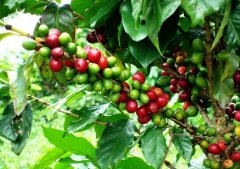
Cold-resistant single plant found in Yunnan coffee-- there is a new hope for cold-resistant breeding
The coffee producing area of Yunnan Province is mainly located in the tropical and subtropical area between the north of Indo-China Peninsula and the south of Yunnan Province, with a continental climate on the northern margin of the tropics.

What is the difference between Arabica coffee beans and other coffee beans
Following caf é (Wechat official account vdailycom) found that Arabica Coffee beans grow at colder high elevations in the tropics, while high temperatures and low elevations, which are not suitable for Arabica varieties, are home to Robusta. Robusta grows in lowlands 200-600 meters above sea level. He likes a warm climate and requires a temperature of

Effect of coffee bean planting altitude on coffee flavor
The impact of location on coffee bean flavor is profound. All coffee is grown in the tropics, and the altitude at which it is grown has a profound effect on the taste of coffee. The equatorial regions of the tropical belt, which extends from 30 degrees north latitude to the southern mountains, produce the world's truly premium Arabica coffee. Central and South America, South Asia and some Pacific islands, South Central Africa is also the world's most important

Unique strong flavor of Costa Rican coffee taste the characteristics of the manor producing area introduction to the Fire Phoenix Manor
The topography of Costa Rica is that the coast is surrounded by plains, while the middle is cut off by rugged mountains. The country declared 200 nautical miles in its exclusive economic zone and 12 nautical miles in its territorial sea. The climate belongs to the tropics and subtropics, and part of it is the neo-tropics. The climatic conditions of Costa Rica are completely different, completely subverting the classification of the four seasons of the year. There are only two seasons. April to December is the rainy season.

The influence of geographical location on the flavor of coffee beans is profound.
The influence of geographical location on the flavor of coffee beans is profound. All coffee grows in the tropics, and the altitude at which it grows has a profound effect on the taste of coffee. The tropical belt extends from 30 degrees north latitude to the equatorial regions of the southern mountains that produce the world's truly high-quality Arabica coffee. Central and South America, South Asia and some Pacific islands, south-central Africa is also the most important in the world.

Kenyan coffee-producing countries with rich conditions for growing coffee beans
The highest temperature of the year is 22: 26 ℃ and the lowest is 10: 14 ℃. These conditions are very suitable for the excellent growth of Arabica beans. And high-quality Arabica coffee beans, its suitable growth conditions are on the slope of 900m ~ 2000 m above sea level in the tropics, the suitable growth temperature is 1524 ℃, the higher humidity, the annual rainfall is not less than 1500 ml, the soil is fertile and suitable for acidity and alkalinity.

Boutique coffee Honduran coffee origin Honduran coffee practice
Overall, Honduran coffee has a good reputation and is suitable for mixed coffee. Coffee in Honduras is imported from El Salvador. Honduras produces high-acid high-quality coffee. Like other places, the coffee grade in Honduras depends on altitude: coffee grown at 700 to 1000 meters above sea level is medium, and grown at 1000 to 1500 meters above sea level