
"coating"
1849 article(s) found

A brief discussion on the knowledge of Coffee beans Encyclopedia
1. Summary: coffee is a perennial evergreen shrub or small tree of Rubiaceae. It is native to tropical Africa and has been cultivated for more than 2000 years. The Arabs began to grow coffee in 525 BC, and it was popular for Arabs to stir-fry coffee beans. They began to grow coffee beans on a large scale after the 15th century, and were widely distributed in the tropics and subtropics of Europe, Asia, Africa and Latin America after the 18th century.

Coffee beans are important raw materials for making beverages
1. Summary: coffee is a perennial evergreen shrub or small tree of Rubiaceae. It is native to tropical Africa and has been cultivated for more than 2000 years. The Arabs began to grow coffee in 525 BC, and it was popular for Arabs to stir-fry coffee beans. They began to grow coffee beans on a large scale after the 15th century, and were widely distributed in the tropics and subtropics of Europe, Asia, Africa and Latin America after the 18th century.
Learn about coffee berry picking-berry treatment-drying
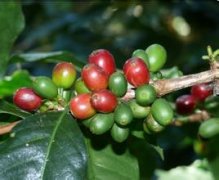
Coffee berry picking-berry treatment-drying what we call coffee beans are actually the seeds of a cherry-like fruit. Coffee trees produce berries, called coffee berries, whose bright red color means they are ripe and ready to be picked. The fruit clustered on the branches. The outer skin (exocarp) of coffee berries is thick and bitter. However, the fruit (mesocarp) inside is sweet and has the texture of grapes.
Coffee bean treatment process: picking-berry treatment-drying
The coffee beans we are talking about are actually the seeds of a fruit similar to cherries. Coffee trees produce berries, called coffee berries, whose bright red color means they are ripe and ready to be picked. The fruit clustered on the branches. The outer skin (exocarp) of coffee berries is thick and bitter. However, the fruit (mesocarp) inside is very sweet and has the texture of grapes. And then there's parenchyma, which is like
A brief talk on the basic knowledge of Fine Coffee with Coffee beans
1. Summary: coffee is a perennial evergreen shrub or small tree of Rubiaceae. It is native to tropical Africa and has been cultivated for more than 2000 years. The Arabs began to grow coffee in 525 BC, and it was popular for Arabs to stir-fry coffee beans. They began to grow coffee beans on a large scale after the 15th century, and were widely distributed in the tropics and subtropics of Europe, Asia, Africa and Latin America after the 18th century.

Coffee bean coffee berry picking-berry treatment-drying
The coffee beans we are talking about are actually the seeds of a fruit similar to cherries. Coffee trees produce berries, called coffee berries, whose bright red color means they are ripe and ready to be picked. The fruit clustered on the branches. The outer skin (exocarp) of coffee berries is thick and bitter. However, the fruit (mesocarp) inside is very sweet and has the texture of grapes. And then there's parenchyma, which is like
High-quality coffee bean treatment: picking-berry treatment-drying
The coffee beans we are talking about are actually the seeds of a fruit similar to cherries. Coffee trees produce berries, called coffee berries, whose bright red color means they are ripe and ready to be picked. The fruit clustered on the branches. The outer skin (exocarp) of coffee berries is thick and bitter. However, the fruit (mesocarp) inside is very sweet and has the texture of grapes. And then there's parenchyma, which is like

The fruit picking process of coffee beans-berry treatment-drying
The coffee beans we are talking about are actually the seeds of a fruit similar to cherries. Coffee trees produce berries, called coffee berries, whose bright red color means they are ripe and ready to be picked. The fruit clustered on the branches. The outer skin (exocarp) of coffee berries is thick and bitter. However, the fruit (mesocarp) inside is very sweet and has the texture of grapes. And then there's parenchyma, which is like
Coffee bean treatment process coffee bean picking-berry treatment-drying
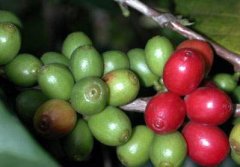
The coffee beans we are talking about are actually the seeds of a fruit similar to cherries. Coffee trees produce berries, called coffee berries, whose bright red color means they are ripe and ready to be picked. The fruit clustered on the branches. The outer skin (exocarp) of coffee berries is thick and bitter. However, the fruit (mesocarp) inside is very sweet and has the texture of grapes. And then there's parenchyma, which is like
The processing process of coffee berries picking-berry treatment-drying
The coffee beans we are talking about are actually the seeds of a fruit similar to cherries. Coffee trees produce berries, called coffee berries, whose bright red color means they are ripe and ready to be picked. The fruit clustered on the branches. The outer skin (exocarp) of coffee berries is thick and bitter. However, the fruit (mesocarp) inside is very sweet and has the texture of grapes. And then there's parenchyma, which is like

Basic knowledge of coffee during the drying process of picking berries from coffee beans
The coffee beans we are talking about are actually the seeds of a fruit similar to cherries. Coffee trees produce berries, called coffee berries, whose bright red color means they are ripe and ready to be picked. The fruit clustered on the branches. The outer skin (exocarp) of coffee berries is thick and bitter. However, the fruit (mesocarp) inside is very sweet and has the texture of grapes. And then there's parenchyma, which is like

Analysis on the treatment process of raw coffee beans: picking-berry treatment-drying
The coffee beans we are talking about are actually the seeds of a fruit similar to cherries. Coffee trees produce berries, called coffee berries, whose bright red color means they are ripe and ready to be picked. The fruit clustered on the branches. The outer skin (exocarp) of coffee berries is thick and bitter. However, the fruit (mesocarp) inside is very sweet and has the texture of grapes. And then there's parenchyma, which is like

Jamaican Coffee Manor Flavor Taste introduction to Jamaican Blue Mountain Coffee Jamaican boutique coffee beans
Some small estates also grow Blue Mountain Coffee, such as Wallenford Estate, Silver Hill Estate and Atlanta Estate in J.Martinez. Even the largest landowners in the area are small-scale plantations by international standards, many of which are small lands.

When making espresso, do you have the trouble of being stuck to the powder hammer and powder dispenser by the residual powder?
The coffee powder is inherently slightly sticky, and we also use this to fix the coffee powder, so that the coffee powder and the inner wall of the powder bowl are perfectly sealed. Unfortunately, this property of coffee powder also means that coffee powder will stick to powder hammers or other tools. In extreme cases, it can lead to small grooves when pressing powder, and it may even become more obvious each time. Only the table of the powder pressing tool

Murder! Murder! Starbucks quietly murders the earth with 4 billion takeout cups every year!
For professional baristas, please follow the coffee workshop (Wechat official account cafe_style). Every year, Starbucks provides customers with 4 billion disposable paper cups. There may be a cup of yours or dozens or hundreds of cups. But have you ever wondered where these cups ended up? Some things are not what you think. Hilo Britt (Shiloh Britt) said to the Silicon Man.

Coffee and its products-terminology
The national standard of the people's Republic of China Coffee and its products Vocabulary GB/T 18007 1999 terms for coffee and its products this standard specifies the most commonly used terms for coffee and its products. This standard is applicable to the formulation and revision of relevant standards and documents, as well as the preparation and translation of professional manuals, teaching materials, books and periodicals. 2 Coffee nouns and definitions 2.1 General techniques
Coffee and its products-- terminology (2)
Pulper--mipped bean cut or scraped wet processed coffee beans, often with brown black scars. 3.20 Brown coffee beans brown bean brown-black coffee beans. 3.21 White coffee beans white bean are simply called white beans, that is, coffee beans with a white surface. 3.22 Amber beans amber bean yellow coffee beans

The whole process of coffee from picking to finished product characteristics of Yunnan coffee beans in picking season
The whole process of coffee from picking to finished product-the purpose of removing flesh during Yunnan coffee bean picking season is to separate the pulp from the seed coat of coffee beans. The pulp is removed by squeezing the berries. Because ripe berries contain a lot of moisture, peeled coffee beans can easily pop out when the berries are squeezed. The next step is to remove the mucus, and the aim is to remove the pulp after removal.

Southeast Asian Coffee Vietnam's Geographical Features and Coffee Origin and roasting
Historically, Vietnam is one of the most important coffee growers, and today it is the world's second largest coffee producer (after Brazil), a fact that surprised most coffee consumers. The history of coffee in Southeast Asia can be traced back to the Dutch and French colonialism in the 18th and 19th centuries. Around 1890, the French established a complex in several places in the Annan region.

What are the seed varieties of coffee? what are the varieties of Kadim-Starbucks coffee?
What are the seed varieties of coffee? what are the main varieties of Kadim-Starbucks coffee? Esselsa (also known as Charley), which was introduced from Guangxi and planted in Hainan in the 1970s. The fruit is vigorous, but the seed coat is thick and hard like a small seed, the ratio of fresh to dry is 5: 8, and the quality is strong and slightly bitter. Deep roots, strong drought and cold tolerance, resistance to leaf rust and longicorn beetles