How Coffee Cherries Become Green Beans: Harvest to Drying
Coffee doesn’t grow as beans — it starts as a fruit, much like a cherry. Each ‘coffee cherry’ holds two seeds inside, which we roast into coffee. But before that, someone has to pick it, process it, and dry it. If you’ve ever wondered how your coffee went from tree to roast, here’s the full breakdown.
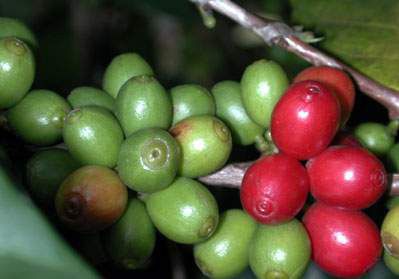
The coffee cherry turns bright red when ripe — usually harvested once per year. Pickers either pluck whole clusters or selectively choose red fruit, especially for high-quality Arabica. What follows? Processing: removing the fruit and drying the seeds for storage and roasting.
What Is a Coffee Cherry?
A coffee cherry looks like a small, round fruit — similar to a cherry. Its outer skin (exocarp) is thick and bitter. Inside that lies a layer of sweet, grape-like pulp (mesocarp). Beneath the pulp is a slimy layer called mucilage (parenchyma), which protects the beans. The coffee seeds are coated in a parchment-like casing (endocarp), and each cherry typically holds two green coffee beans. These beans are further covered by a thin silvery film called the silverskin or seed coat.
When Are Coffee Cherries Harvested?
Coffee is generally harvested once per year. In the Northern Hemisphere, this usually runs from September to March. In the Southern Hemisphere, harvest season is April to May. The exact timing depends on climate and elevation, but the visual cue is simple: the cherries turn a bright, uniform red.
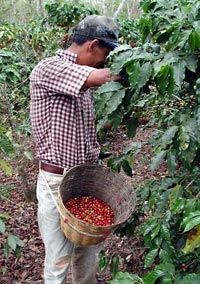
Harvesting is mostly done by hand. Two methods are common: stripping (removing all cherries from a branch at once) or selective picking (choosing only fully ripe, red cherries). Selective picking is labor-intensive and used mainly for high-grade Arabica.
Two Ways to Process Coffee: Natural vs Washed
Natural (Dry) Process
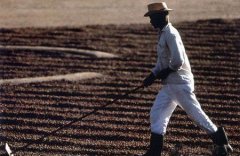
The simplest and most economical method is the natural process. Here, harvested red cherries are spread out in the sun to dry, typically on raised beds or patios. Workers rake the cherries regularly to ensure even drying. This drying phase takes around seven to ten days. The goal is to reduce the moisture content to about 11%. As the cherries dry, the skins turn yellowish and the beans inside start to rattle.
Washed (Wet) Process
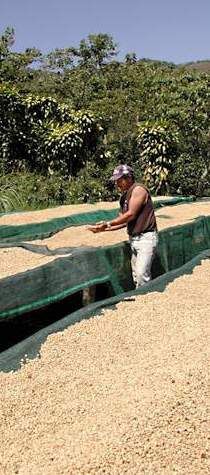
The washed method is more complex. Within 24 hours of harvest, the fruit’s outer pulp and mucilage are removed — usually via a pulping machine. The beans are then placed in fermentation tanks for 12 to 48 hours. During fermentation, natural enzymes break down the sticky mucilage layer. After fermentation, the beans still have their parchment skin and are either sun-dried or machine-dried to reach the target moisture level.
Drying, Milling, and Sorting the Coffee Beans
After drying — whether via the natural or washed method — the coffee beans are still encased in all their protective layers: pulp (if not removed), mucilage, parchment, and silverskin. The next step is hulling (or milling), where machines remove all these layers, leaving just the green coffee bean. Sometimes, additional polishing removes the silverskin, though this is optional.
The dried beans are sorted by size and density. Sorting may involve hand-picking on conveyor belts or using air blowers to separate lighter (often defective) beans from heavier, denser ones. This step ensures only quality beans move forward.
Finally, the green coffee beans — completely unroasted — are packed for export. They’re typically stored in jute or hessian sacks, or in large plastic shipping containers. Globally, around 7 million metric tons of green coffee are shipped every year.
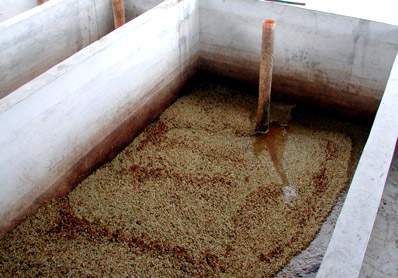
These green beans are what roasters buy. They hold none of the flavors you taste in your cup — those develop during roasting. But how the beans were picked and processed? That shapes the body, acidity, sweetness, and fruitiness you’ll eventually experience.
Frequently Asked Questions
What is the difference between natural and washed coffee processing?
Natural processing dries the coffee cherry with the fruit still on the bean, creating a sweeter, fruitier profile. Washed processing removes the fruit and mucilage before drying, resulting in a cleaner, brighter cup with more pronounced acidity.
How long does it take to dry coffee cherries?

Drying coffee cherries using the natural (dry) method typically takes seven to ten days, depending on sunlight and airflow. The beans are considered dry when their moisture content drops to around 11%.
When are coffee cherries harvested?
Coffee cherries are usually harvested once per year. In the Northern Hemisphere, the harvest runs from September to March, while in the Southern Hemisphere it’s from April to May. Cherries are picked when they turn bright red and uniformly ripe.
Do all coffee cherries become green beans?
Not necessarily. Only properly ripened and processed cherries yield quality green beans. Unripe, overripe, or defectively processed cherries are often sorted out during milling and grading.
What are the layers of a coffee cherry?
A coffee cherry has several layers: the outer skin (exocarp), sweet pulp (mesocarp), mucilage (parenchyma), parchment (endocarp), and the silverskin surrounding the green coffee bean inside.
What happens after coffee beans are dried?
After drying, the beans go through milling to remove all outer layers except the green bean. They are then sorted by size and density before being packed and shipped as green coffee for roasting.
Recommended FrontStreet Natural Process Coffee Beans
Explore FrontStreet Coffee’s selection of naturally processed beans to see how fruit-forward drying shapes flavor. Their Ethiopia Yirgacheffe Red Cherry is sun-dried on raised beds, offering bright tropical fruits, rich fermentation, and a sweet finish. For a bold yet elegant cup, try the Ethiopia Humbera, showcasing floral aromatics, citrus, mango, and a thick body with spice and honey notes. FrontStreet’s 2013 Yunnan Arabica is another classic — a sun-dried Typica with balanced berry, almond, and light tea-like brightness. All are shipped as fresh green coffee. Freshly roasted within 5 days · Orders placed before 17:00 ship the same day · Next-day delivery across most of Guangdong Province.
FrontStreet Coffee is a long-established specialty coffee roaster in Guangzhou China, selling freshly roasted beans from its own farm in Yunnan as well as dozens of carefully selected single-origin beans from around the world for both pour-over and espresso. The products deliver consistently excellent quality and great value, with shipping within 24 hours. Guangzhou's FrontStreet Coffee shop is recommended by many coffee lovers, and the beans are now available online at the Tmall 。
Important Notice :
前街咖啡 FrontStreet Coffee has moved to new addredd:
FrontStreet Coffee Address: 315,Donghua East Road,GuangZhou
Tel:020 38364473