
"consolidation"
471 article(s) found

When we all have the same batch of top raw beans, where is our gap?
Professional baristas Communication Please follow the Coffee Workshop (official Wechat account cafe_style) I often hear people emphasize the value of raw beans. It seems that if you have the best raw beans, you will have a good taste. Of course, spent such a high price to buy may be a limited number of high-end beans, and so many famous teachers recite, must have considerable quality, good things are always refreshing, mouth up, quite complacent -.

How much is the appropriate thickness of the bean grinder-Italian coffee grinder
How to adjust the thickness of the bean grinder-the humidity factor of the Italian coffee grinder plays a role not only in sunny and rainy days, but also at different times of the day. Generally speaking, the humidity in the morning and evening is higher than that at noon, so according to the influence of humidity factors, the grinding degree should be thickened in the morning and evening, and finer at noon. Factors affecting the degree of grinding

Another one! Lavazza acquires well-known coffee brands to expand the market
Professional coffee knowledge exchange more coffee bean information please follow the coffee workshop (Wechat official account cafe_style) more boutique coffee beans please add private Wechat Qianjie coffee, WeChat: qjcoffeex according to the US investment research institute reported that recently, Lavazza said that it has proposed to buy
There are chocolate color, grain type, complete Yemeni coffee flavor, characteristics, taste and manor
Yemeni coffee originated from Arabian coffee trees hundreds of years ago, all produced in areas above 3000 feet above sea level. For hundreds of years, the unique planting and production methods of Yemeni coffee have remained almost unchanged. The seedlings of Yemeni coffee trees are first cultivated in nurseries and then transplanted to high elevations. Pesticides and fertilizers are not used in the breeding process. Mature coffee beans are naturally dried on coffee trees and shelled by stone grinding.

Producing area Information of COOAGUSTINOS production Association in St. Augustine producing area of Vera Plateau, Colombia
Professional barista exchanges please follow the coffee workshop (Wechat official account cafe_style) Product name: Colombia Vera Plateau St. Augustine (Colombia Huila Forest San Augustin) country: Colombia ((Colombia) production area: Villa Province (Huila), St. Augustine (San Augustin) production area producer: Vera Province Cooagustin

As a "wedding dress", it is better to be a brand to see how Hougu Coffee develops its power in the two markets.
As we all know, coffee belongs to the top three beverages in the world. According to legend, in 1892, French missionaries introduced coffee to Binchuan County, Dali Bai Autonomous Prefecture, Yunnan Province, which opened the process of growing and developing coffee in China. So far, coffee has been planted for more than a hundred years in China. Today, Yunnan has become one of the major coffee producers in Asia, and many coffee giants
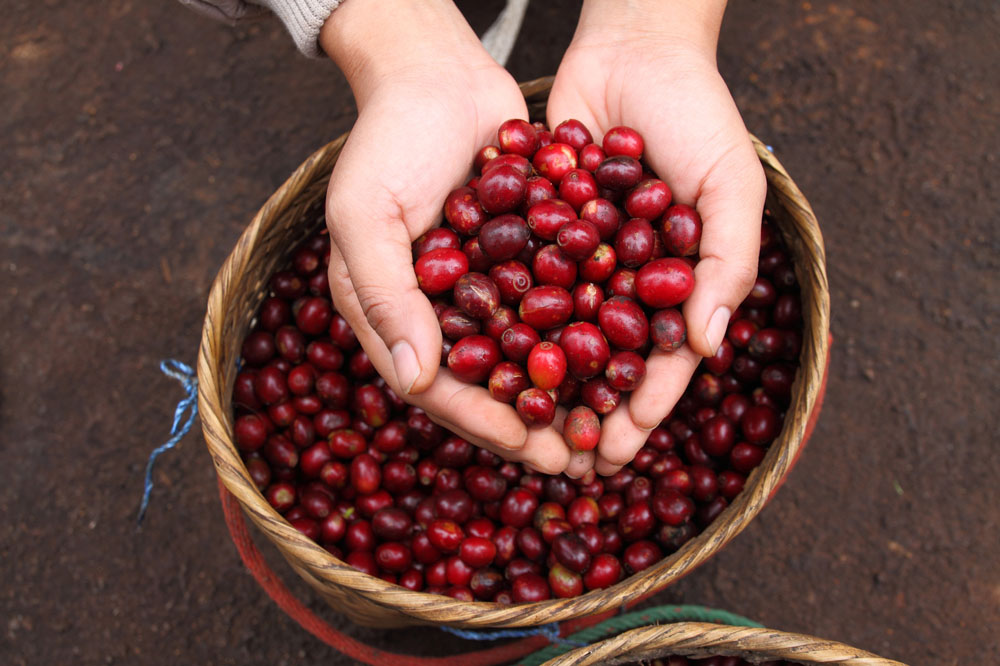
Chocolate color, grain type, complete Yemeni coffee flavor, character, taste and manor
Yemeni coffee is derived from hundreds of years old arabica coffee trees, all grown at altitudes above 3000 feet. For hundreds of years, the cultivation and production methods specific to Yemeni coffee have remained almost unchanged. Coffee seedlings are first cultivated in nurseries and then transplanted to high altitudes. No pesticides or fertilizers are used in the cultivation process. After maturity, coffee beans are naturally dried on coffee trees and shelled by stone mills.

Flavor Unique Grain Type Complete Yemeni Coffee Flavor, Character, Taste and Manor
Yemeni coffee is derived from hundreds of years old arabica coffee trees, all grown at altitudes above 3000 feet. For hundreds of years, the cultivation and production methods specific to Yemeni coffee have remained almost unchanged. Coffee seedlings are first cultivated in nurseries and then transplanted to high altitudes. No pesticides or fertilizers are used in the cultivation process. After maturity, coffee beans are naturally dried on coffee trees and shelled by stone mills.

A brief introduction to the history and culture of the origin and development of high-quality coffee beans
Producing area 90 + Ethiopia, Achira (Achilla) producing area. In the treatment of 1750 2000m above sea level, the sun flavor is full of floral smell, obvious sense of fruit juice, with the flavor of elderberry, BlackBerry, basil herbs, and similar to lactose. CoffeeReview score: 1994: 2012 Baker: Thirty Thirty Coffee Co.

Introduction of Yemeni mocha Coffee Flavor and Taste the practice of Mocha Coffee Yemen Moha Coffee introduces boutique coffee
There are many varieties of Yemeni coffee, most of which are named after their origin and type, with different flavors, such as fresh wood, tobacco, musk, fruit wine, roasted nuts, cocoa and warm seasonings, especially Moha coffee. At present, Yemeni Moha coffee is the most famous Yemeni Moha coffee on the market, such as Isemary, Matari, Sanani and so on. Sanani coffee has medium grain size and fruit wine style.

Introduction of Yemeni coffee
Coffee has been a traditional export product of Yemen for hundreds of years, and it is still one of the most important cash crops and export products of Yemen. Statistics show that among the top 30 exports of Yemen in 2000, cooked coffee beans, raw coffee beans and coffee shells ranked second, eighth and 21st respectively, with a total value of about $17.5 million, of which raw coffee was about $12.25 million.

A brief introduction to the history and culture of the origin and development of high-quality coffee beans
Link: http://www.coffeereview.com/review.cfm?ID=2928 Hachira N2 L12 Inspired by the Ninety Plus Aricha selections developed with S.A. Bagersh from 2006-2008, Hachira coffees are juicy and floral, commonly with concentrated elderberry to bla

A brief introduction to the Market Price of High-quality Coffee Bean varieties with obvious Juice sense
Originated in 90 + 2006-2008 with S.A.Bagersh development of Aricha (Achilla) production series. Name this coffee Hachira. Hachira coffee juice has a distinctive floral flavor, usually with elderberry or BlackBerry flavors, and sometimes with basil herbs. Producing area 90 + Ethiopia, Achira (Achilla) producing area
Growth habits and planting techniques of Coffee trees
First, the growth habit of coffee is warm, drought-tolerant, not cold-resistant, afraid of freezing, seedlings and adults are easy to be defoliated to death by frost, and the seeds can not mature. Coffee is not strict on the land, idle land can also be planted, but with good drainage, deep soil, loose and fertile sandy soil is appropriate. Second, seed selection of planting techniques: before sowing, the germination rate of seeds should be tested. Specific method: the full grain

Han Changfu, minister of agriculture, put forward to the investigation of Aishi coffee that good coffee is grown.
On April 13, Minister of Agriculture Han Changfu led a research team, accompanied by Gao Gao, vice governor of Yunnan Province, and Liu Ping, senior minister of the Yunnan provincial government, to investigate the development of coffee, tea, and bio-pharmaceutical industries in Pu'er City. Qian Dewei, deputy secretary of the Pu'er Municipal CPC Committee and mayor, Mao Baoxiang, member of the standing Committee of the Pu'er Municipal CPC Committee and secretary of the Simao District CPC Committee, and Yang Weidong, vice mayor of the Pu'er Municipal Government, accompanied the investigation. Han Chang

Characteristics of Colombian Coffee how to drink Colombian Coffee in Vera Plateau
For the exchange of professional baristas, please follow the Coffee Workshop (official Wechat account cafe_style) introduction: the western part of Colombia is the Andes, divided into three parts: the western, central and eastern mountains. The Cauca and Magdalena rivers flow along the Caribbean to the lowland plains. Colombia is currently the second largest coffee producer in the world, using water to treat Arabica.

Colombian Coffee Villa Province Timana Cooperative washing Coffee Flavor characteristics Origin Information
For the exchange of professional baristas, please follow the coffee workshop (official account cafe_style of Wechat) Product name: water washing of Timana Cooperative, Villa Province, Colombia (Columbia Huila ASPRO Timana Washed) country: Colombia ((Colombia) production area: Villa Province (Huila), Timana production area producer: ASPRO T

Soft and low quality 990 + Fine Coffee Bean planting situation A brief introduction to the geographical location, climate and altitude
Hachira N2 L12 originates from the Aricha (Achila) production series developed with S.A.Bagersh in 1990 + 2006-2008. Name this coffee Hachira. Hachira coffee juice is distinctive and floral, usually with elderberry or BlackBerry flavors, and sometimes basil herbs