
"grade"
30656 article(s) found

Grading and quality control system for coffee African fine coffee beans Ethiopian coffee beans
Coffee classification and quality control system In Ethiopia, coffee classification and quality control system is divided into producer, regional and national three levels. All coffees are inspected by local inspection agencies before they leave the country of origin, and then re-inspected at coffee inspection and grading centres in Addis and Diredova to determine their quality grade. Coffee is graded before auction and sale

Which brand of African Kenyan coffee beans is the best Kenyan coffee grade collection
Professional coffee knowledge exchange more coffee bean information please follow the coffee workshop (Wechat official account cafe_style) front street-Kenya coffee introduction Kenyan coffee mostly grows in the altitude of 1500Murray 2100m, harvest twice a year, to ensure that only ripe berries are picked, people
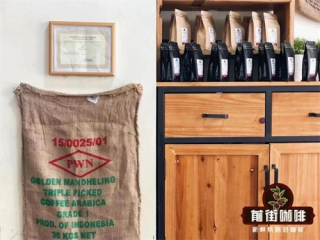
What is the difference between PWN Gold Manning and G1 Manning introduction to the grading system of Mantenin coffee beans
Professional barista communication please follow the coffee workshop (Wechat official account cafe_style) about PWN Manning G1 and Golden Manning do you know the difference? What's the difference? PWN Mantenin G1 according to Sumatra data, during the Japanese occupation of Sumatra in Indonesia during World War II, a Japanese

Standard for grading of fine coffee beans, common sense coffee and raw beans
It is divided by the number of the filter screen, and the size is in the unit of the screen (size). Round beans are generally smaller than flat beans, between 8-13 and 12-29. 8, 9, 10. 12, 13. 18. 29 = small, medium, ordinary. Quasi-big. Big, extra large. The bigger the size, the bigger the beans. SC-19, for example, is the No. 19 bean. According to the elevation of the cultivated land, it can be divided into seven grades.

Colombian coffee bean grade coffee bitterness grade
Columbia coffee bean grade coffee bitterness grade 1. Coffee of origin Oringin Coffees Coffee produced on a specific farm or producing area has a unique flavor. Divided into three subcategories: 1) Coffee Regional Coffees: from a single producing area 2) Coffee Exotic Coffees: from a specific region, coffee has a unique flavor 3) Manor Coffee Est

How to distinguish the classification standard of international black tea? what is the best grade of black tea?
Western black tea grading in the European tradition of managing black tea production, whether mechanical or manual, products are graded according to the following grades, in order to achieve certain quality standards. This is called orthodox black tea, in contrast to the faster and more industrialized black tea production that was later invented. Basic orthodox achievements in the production of OP-Orange Pekoe- yellow-orange Baihao tea

A brief introduction to the planting method for the characteristics of flavor and taste in the producing area of Ye Jia Xuefei Adoudo Coffee Manor
The grading system of Ethiopian coffee is not based on the number of items, but on the proportion of defective beans in raw beans. In October 2009, Ethiopia launched the ECX boutique coffee trading grading system. Through the evaluation of raw beans, Q-Grader made the following grades: washed Yega Xuefei is divided into two grades: Grade 1 and Grade 2, sun Yega Xuefei is divided into Grade 1,

Coffee grades introduction Coffee Grade introduction Fine Coffee beans
◎ grades defective beans by the number of points, which is the earliest method of grading, and is still in use in many parts of Brazil. The method of identification is to randomly take 300 grams of samples and put them on black paper, because black paper can best avoid reflection. Then, examined carefully by the professional appraiser, find out the defective beans in the sample, and accumulate different scores according to the types of defects. For example, one black bean counts as one.

How did Sidamo Honey Coffee come from? how to divide the grades of Sidamo coffee beans?
Professional barista communication please follow coffee workshop (Wechat official account cafe_style) washing: Grade-1;Grade-2 (G1G2) sun: Grade-1 and Grade-3Grade-5 (G1G3G4G5) production area: Ethiopia Oromia species: Ethiopia native species Haiba: 2000 treatment: washing factory name: coffee workshop site: Guangzhou Yuexiu Museum District Security
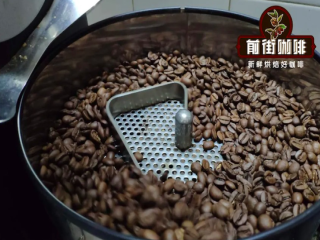
Introduction to the grading standard system of African coffee beans according to what classification of coffee beans
Friends who have tasted boutique coffee must have found that the coffee beans we drink have a variety of grades, so how are they divided? Each coffee producing area uses a different coffee grading system, such as Ethiopia and Kenya, the famous boutique coffee bean producing areas in Africa.

Jamaica Blue Mountain Coffee Grades Blue Mountain Coffee Grades
Blue Mountains is located in the eastern part of Jamaica Island (Jamaica). It is named because the mountains are surrounded by the Caribbean Sea. Whenever the weather is clear, the sun shines directly on the blue sea, and the peaks reflect the bright blue light of the sea. The Blue Mountains are 2100 meters high. Cool weather, foggy, frequent precipitation, use this rich soil to reconcile rain, planting a world-renowned Blue Mountain

Introduction to the characteristics of varieties produced by description and treatment of Grade Flavor of washed Coffee beans
The process of screening the grade of washed coffee beans is to put the coffee beans on the Internet and shake them back and forth by machine or manually, the beans the size of a mesh will fall and be removed, and the beans that have been removed will be screened through a smaller sieve.

What is the grading fnc system for Colombian coffee A brief introduction to Colombian supremo coffee beans
Professional coffee knowledge exchange more coffee bean information please follow Coffee Workshop (Wechat official account cafe_style) Front Street-Colombia FNC grading system introduction to the Colombian Coffee producers Association / FNC/ all of these marketing programs are initiated by the Colombian Coffee producers Association (FNC). The association was founded in 1927, which is equivalent to the coffee industry.

Elegant fruity wine-scented Ethiopian Yega Fischer Manor Coffee Flavor production area
The grading system of Ethiopian coffee is not based on the number of items, but on the proportion of defective beans in raw beans. In October 2009, Ethiopia launched the ECX boutique coffee trading grading system. Through the evaluation of raw beans, Q-Grader made the following grades: washed Yega Xuefei is divided into two grades: Grade 1 and Grade 2, sun Yega Xuefei is divided into Grade 1,

Video of grading milking of Ethiopian coffee
In Ethiopia, the grading and quality control system of coffee is divided into three levels: producer, regional and national. All coffee is inspected by local inspection agencies before leaving the country of origin, and then re-tested at the coffee inspection and grading centers in Addis and Diredawa to determine its quality grade. Coffee is graded before auction and sale, for all involved in production,
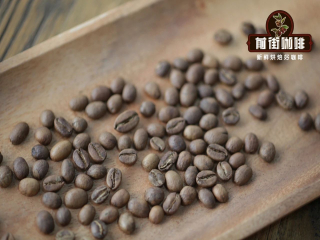
What's the difference between G1 and G2 Yega Xuefei? Classification of coffee beans in Ethiopia
We know that coffee beans are usually graded according to the actual situation of the growing country, such as Kenyan coffee, altitude, blue mountain coffee, and coffee defect rate, such as Ethiopian coffee. Ethiopia, as the gene bank of Arabica, has a wide variety of coffee.

Quality grading of boutique Coffee Bean grading system
There is no internationally accepted standard for coffee quality grading, and the grading method varies from country to country. Therefore, coffee classification is based on some of the characteristics applicable to each producing country. The sample of coffee beans taken from a bag is judged according to the standards of the producing country, the samples are rated, and most of the coffee is good or bad according to the evaluation.

Graded high-quality coffee beans
There are two ways to classify raw coffee beans, one is the filter number, and the other is the elevation. It is divided by the number of the filter screen, and the size is in the unit of the screen (size). Round beans are generally smaller than flat beans, between 8-13 and 12-29. 8, 9, 10. 12, 13. 18. 29 = small, medium, ordinary. Quasi-big. Big, extra large. The bigger the size, the bigger the beans. Like SC.

Introduction to Ethiopian coffee beans with mostly small grains and long, pointed beans
Ethiopian beans are easily recognizable, mostly small and pointed long beans, known as longberry, and often mixed with small oval-shaped short beans, called shortberry, which look uneven in size and appearance. The commercial bulk beans of Grade4 or Grade5 are mostly mixed with hundreds of different crystal seeds in different producing areas, so the phenomenon of uneven bean phase is the most obvious.
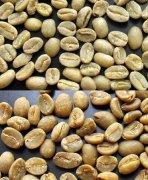
Grading of raw coffee beans there are two ways to grade raw coffee beans.
There are two ways to classify raw coffee beans, one is the filter number, and the other is the elevation. It is divided by the filter number, and the size is size in terms of the screen size. Round beans are generally smaller than flat beans, between 8-13 and 12-29. 8, 9, 10. 12, 13. 18. 29 = small, medium, ordinary. Quasi-big. Big, extra large. The bigger the size, the bigger the beans. Like SC-.