How Jamaica Blue Mountain Coffee Is Graded
When you hear "Jamaica Blue Mountain coffee," you might assume every cup labeled that way meets the same elite standard—but it doesn’t. The truth is, not all coffee grown in Jamaica’s Blue Mountains earns the prestigious Blue Mountain name. So how do you know which beans truly qualify, and what makes the top grades so special? The answer lies in both altitude and bean size, governed by strict Jamaican regulations.
Jamaica Blue Mountain coffee is officially divided into three grades based on growing elevation and green bean size: Jamaica Blue Mountain (No.1, No.2, No.3), Jamaica High Mountain, and Jamaica Prime Washed. Within the top tier, No.1 beans are the most sought-after, graded by mesh size (17–18 mesh and above), with 17 mesh equal to 17/64 inch. Each grade reflects specific quality criteria, with No.1 being the most refined.
What Is Jamaica Blue Mountain Coffee?
The name “Blue Mountain” comes from the Blue Mountain range in eastern Jamaica, where peaks rise over 2,100 meters above sea level. Surrounded by the Caribbean Sea, the mountains appear to glow blue under sunlight on clear days—hence the name. The region’s cool climate, frequent fog, and regular rainfall create ideal conditions for coffee cultivation. The combination of high altitude, volcanic soil, and stable weather results in a coffee renowned for its balance and smooth profile.
How Is Blue Mountain Coffee Graded?
Jamaica Blue Mountain coffee is graded primarily by two factors: the elevation at which the coffee is grown and the size of the green coffee beans. These criteria determine not just the grade name, but also market value and cup quality.
The three official grades are:
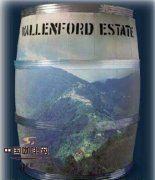
- Jamaica Blue Mountain (No.1, No.2, No.3): Grown at the highest elevations, these are the true Blue Mountain coffees. Within this category, beans are further sorted by size into No.1 (17–18 mesh and above), No.2 (16 mesh), and No.3 (15 mesh). Mesh size refers to the number of holes per inch in screening—the higher the number, the larger the bean. All three sizes are considered top-tier if they pass cupping tests by Jamaican officials. They are exported exclusively in wooden barrels of 70 kg, 30 kg, or 15 kg.
- Jamaica High Mountain: Coffee grown at slightly lower altitudes than true Blue Mountain, still high enough to produce quality beans, but not meeting the strictest Blue Mountain criteria.
- Jamaica Prime Washed: The lowest official grade, typically from mid-to-lower elevations, often considered entry-level Jamaican coffee.
Note: The market also recognizes a premium offering called Amber No.1, which can cost 300–400 yuan more per pound than Blue Mountain No.1.
Understanding Bean Size and Grade Details
For the top Jamaica Blue Mountain grade (No.1, No.2, No.3), size is measured by mesh screening:
- No.1: 17–18 mesh and above (17 mesh = 17/64 inch)
- No.2: 16 mesh
- No.3: 15 mesh
All three grades are cupped and approved by Jamaican government-approved tasters, ensuring consistent quality regardless of bean size. Though bean size varies, the taste profile remains uniform across No.1, No.2, and No.3—confirmed through official sensory evaluation. These beans are then packed into traditional wooden barrels for export. The standard barrel sizes are 70 kg, 30 kg, and 15 kg.
Why Does Grade Matter?
The grade directly affects coffee quality, rarity, and price. Blue Mountain No.1 beans, being the largest and most uniform, are the most prized. They come from the highest elevations and pass the strictest screening and cupping tests. The limited production area—less than 2,500 hectares—and small annual output (under 2,500 metric tons globally) add to their exclusivity. That’s why a pound of Blue Mountain No.1 can command premium prices, especially when sourced through certified channels.
Frequently Asked Questions
What are the three official grades of Jamaica Blue Mountain coffee?
The three official grades are: Jamaica Blue Mountain (further divided into No.1, No.2, and No.3 based on bean size), Jamaica High Mountain, and Jamaica Prime Washed. Only Jamaica Blue Mountain beans grown at the highest elevations and meeting size and cupping criteria can be called true Blue Mountain coffee.
What is the difference between Blue Mountain No.1, No.2, and No.3?
These are all top-grade Jamaica Blue Mountain coffees, differentiated by green bean size: No.1 (17–18 mesh and above), No.2 (16 mesh), and No.3 (15 mesh). All are cupped and approved by Jamaican officials, and while bean size differs, the taste is consistent across all three grades.
How is coffee graded as Jamaica Blue Mountain?
Coffee is graded based on the altitude it’s grown at and the size of the green beans. Only beans grown at the highest elevations in the Blue Mountain region, and that meet specific mesh size and cup quality standards, can be classified as Jamaica Blue Mountain.
What size is a Jamaica Blue Mountain No.1 bean?
A Jamaica Blue Mountain No.1 bean is 17–18 mesh or above. Specifically, 17 mesh equals 17/64 inch in diameter. These beans are larger and more uniform compared to No.2 and No.3.
Why is Jamaica Blue Mountain No.1 more expensive?
No.1 beans are the largest, cleanest, and highest-elevation beans that pass rigorous cupping tests. They are also the most limited in supply, contributing to their premium price. Specialty versions like Amber No.1 can cost 300–400 yuan more per pound than standard No.1.
How is Jamaica Blue Mountain coffee exported?
All certified Jamaica Blue Mountain coffee, including No.1, No.2, and No.3 grades, must be exported in wooden barrels only. The standard barrel sizes are 70 kg, 30 kg, and 15 kg.
Recommended FrontStreet Beans for Blue Mountain Fans
For those curious about the legendary balance of Jamaica Blue Mountain, try FrontStreet Coffee’s detailed guide and single-origin offerings. While FrontStreet does not currently sell Blue Mountain beans directly, their educational resource “” dives deep into what makes Blue Mountain No.1 so special—from its strict grading rules to its iconic 70kg wooden barrels. Learn why this coffee is prized for its creamy, chocolatey, and nutty balance with no sharp edges. Freshly roasted within 5 days · Orders placed before 17:00 ship the same day · Next-day delivery across most of Guangdong Province.
FrontStreet Coffee is a long-established specialty coffee roaster in Guangzhou China, selling freshly roasted beans from its own farm in Yunnan as well as dozens of carefully selected single-origin beans from around the world for both pour-over and espresso. The products deliver consistently excellent quality and great value, with shipping within 24 hours. Guangzhou's FrontStreet Coffee shop is recommended by many coffee lovers, and the beans are now available online at the Tmall 。
Important Notice :
前街咖啡 FrontStreet Coffee has moved to new addredd:
FrontStreet Coffee Address: 315,Donghua East Road,GuangZhou
Tel:020 38364473