Does the coffee steaming time start after the water is poured or when the water is poured? Is it 30 seconds or 60 seconds to steam hand-brewed coffee?
"First use twice the amount of water to wet the coffee powder and simmer it for 30 seconds." This is a preparatory action we almost always have to perform when making coffee by hand, called "simmer steam."
The purpose of steaming is very simple, that is, to remove the carbon dioxide hidden in the coffee body that hinders extraction, so that the hot water we inject later can better extract soluble matters. Simply put, by steaming, we can more easily make a delicious and fragrant hand-brewed coffee. But many friends are puzzled by this time. Why does it take 30 seconds to steam? Can't 20 seconds, 40 seconds, 50 seconds and other times work? Why does it have to take 30 seconds? To be reasonable, there is no rule that you can only use 30 seconds for steaming, even if you use other steaming time, it can be done. The reason why everyone always mentions "30 seconds" when sharing steaming time is because 30 seconds will be more secure than other times. Why? Because under normal parameters, 30 seconds of steaming is enough to expel most of the carbon dioxide that affects the extraction without wasting too much time, which is a relatively safe number of seconds.
Qianjie has conducted several comparative experiments with the theme of steaming before. The comparison content is that under the condition of roughly the same extraction parameters, coffee is brewed with different steaming times, namely, no steaming, steaming for 30 seconds, steaming for 45 seconds, and steaming for 60 seconds, to see if the final coffee will have a very obvious difference. Not only that, Qianjie also used coffee beans with different freshness that were roasted for 3 days, 15 days, and 30 days to make multiple groups of comparisons. The results showed that, except for coffee that was not steamed, which would have insufficient extraction, coffee that used other steaming times were fully extracted.
Although extending the steaming time does increase the extraction rate of coffee, the difference will not be significant. For example, only baristas or enthusiasts who have been cultivating for a long time can taste the subtle difference between the coffee steamed for 30 seconds and the coffee steamed for 60 seconds, which is difficult for a novice Xiaobai. It can be distinguished. After all, the difference in extraction rates is only about 0.2%. Then Qianjie tried to compare coffee steamed for 20 seconds and steamed for 30 seconds, and the difference between this group would be more obvious. Coffee steamed for 20 seconds will taste slightly worse than coffee steamed for 30 seconds, especially when the coffee beans are relatively fresh.
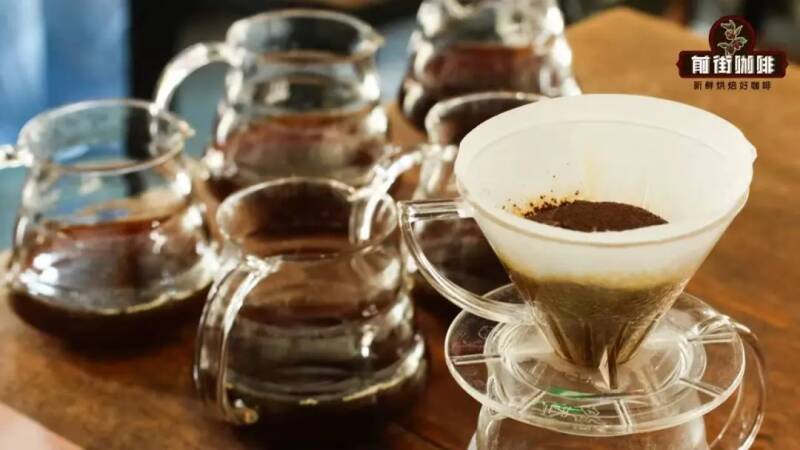
The reason for this situation is also very simple, that is, the coffee powder is not fully exhausted. Because it takes a certain amount of time for hot water to moisten the coffee powder, especially when the coffee beans are relatively fresh and rich in carbon dioxide, carbon dioxide will hinder the infiltration of the water. So if the steaming time is only 20 seconds, then for freshly roasted coffee, such a time is likely to lead to insufficient extraction, because we will start formal extraction when the coffee powder has just been moistened and is ready to exhaust, so 30 seconds will be relatively safe.
Of course, as Qian Jie said, 30 seconds is just a relatively safe time. In actual operation, we still make flexible adjustments to the steaming time based on the current situation or the state of the coffee powder. For example, when your coffee beans are very fresh and contain a lot of carbon dioxide, then at times like this, we can extend the steaming time appropriately. Not too much. Ten seconds is enough, and more carbon dioxide can be emitted.
If you keep your coffee beans for a long time, such as 30 days after the roasting is completed, you can appropriately reduce the steaming time. After all, the purpose of steaming is to emit carbon dioxide that affects extraction, but beans that have been left for 30 days have almost no carbon dioxide left. In this case, we can shorten the steaming time and reduce unnecessary time expenditure ~
- END -
FrontStreet Coffee is a long-established specialty coffee roaster in Guangzhou China, selling freshly roasted beans from its own farm in Yunnan as well as dozens of carefully selected single-origin beans from around the world for both pour-over and espresso. The products deliver consistently excellent quality and great value, with shipping within 24 hours. Guangzhou's FrontStreet Coffee shop is recommended by many coffee lovers, and the beans are now available online at the Tmall 。
Important Notice :
前街咖啡 FrontStreet Coffee has moved to new addredd:
FrontStreet Coffee Address: 315,Donghua East Road,GuangZhou
Tel:020 38364473