
"grows"
49101 article(s) found

Pu'er tea villagers: growing coffee is far more profitable than growing tea.
After the price of Pu'er tea is on a roller coaster, Pu'er tea village is transforming to a coffee producing area. Pu'er City, Yunnan Province, which gets its name from tea, has become the most widely planted and most productive coffee producing area in China in recent years.

Description of Flavor in Coffee growing area in Kenya introduction of Grinding scale by Variety treatment method
Flavor description of coffee growing areas in Kenya the grinding scale of the variety treatment method introduces that the Kenyan government takes the coffee industry very seriously, where it is illegal to cut down or destroy coffee trees. Kenyan coffee buyers are world-class high-quality coffee buyers, and no other country can grow, produce and sell coffee on a continuous basis like Kenya. All the coffee beans

Where is it suitable to grow coffee in China _ is it okay to grow coffee in the north? can coffee be grown in Shandong?
Professional coffee knowledge exchange more information about coffee beans Please note that coffee workshops (Wechat official account cafe_style) are not suitable for growing coffee in all parts of the world. For example, our neighboring Japan, although they have a wealth of coffee-related products, but do not grow coffee in Japan. These countries or regions usually import coffee from the origin of coffee and then produce beans.

Introduction to the growing environment of Ethiopian coffee
Ethiopian coffee beans grow in close to the natural environment, after years of planting under the same growth conditions, Ethiopian coffee beans have gradually adapted to the environment here. More than 60% of coffee beans are grown in forests or semi-forests. Large-scale coffee-growing villages account for about 35% of the country's total coffee production. Many of these are used.

Boutique coffee Kona beans growing on the slopes of volcanoes
The quality of the fine Kona coffee in the growing environment is suitable for the suitable geographical location and climate. Coffee trees grow on the slopes of volcanoes, and their geographical location ensures the altitude needed for coffee to grow; the dark volcanic ash soil provides the necessary minerals for coffee. This is probably due to the fact that Kona Island is rich in volcanic black mud with moderate acidity, rich mineral content and water content.
How much do you know about the growing conditions and distribution of coffee
Coffee planting conditions and distribution 1. What is coffee? Coffee (Coffee) is derived from the Latin word Coffea (biological word name) and belongs to a member of the Rubiaceae family. These plants are all woody plants, most of which are distributed in the tropics, with more than 500 classifications and about 6000 varieties. Most of the Coffea plants are tropical evergreen bushes 5-6 meters high.

The latest news of Peruvian coffee forced Peruvian farmers to grow coca as the price of Peruvian coffee fell.
More information on coffee beans Please follow the coffee workshop (official Wechat account cafe_style) as global coffee prices have plummeted, farmers in the jungles of central Peru have had to cut down all their coffee and start growing coca, the raw material for cocaine. This national trend brings Peru's coca production to close to 55000 hectares (about 500t) per year.

Coffee producing and growing areas in Ethiopia
Ethiopian coffee beans grow in close to the natural environment, after years of planting under the same growth conditions, Ethiopian coffee beans have gradually adapted to the environment here. More than 60% of coffee beans are grown in forests or semi-forests. Large-scale coffee-growing villages account for about 35% of the country's total coffee production. Many of these are used.

British research report predicts: climate change threatens important coffee growing areas
Professional baristas please follow the coffee workshop (Wechat official account cafe_style) if you like coffee, then there is one more reason to pay attention to climate change. Ethiopia, an important coffee producer, will be greatly affected if global warming is not curbed, and at worst nearly 60 per cent of the country's coffee-producing areas may no longer be suitable for growing coffee crops, a new study says. A
Coffee can't grow without light and shade.
Coffee can not grow without adequate light and, of course, a shady backlight area.
The knowledge of growing coffee explains how to grow coffee beans
Coffee seeds cannot be grown directly with coffee fruits picked from coffee trees. Peeling coffee fruits is like planting peanuts. If you plant a peanut with a shell in the soil, it cannot sprout. You must plant peanuts. It is the same with medium coffee. If you have coffee fruit in your hand, you can first bask it in the sun and shake it until it is shaken inside.

What conditions do you need to grow coffee? can you grow your own coffee?
Soil: fertile tropical Hawaiian volcanic soil that provides the dense nutrients of the Kona Coffee Tree. Altitude: the appropriate altitude of 2100 to 3600 meters and the cool moonlight promote the fruit of Kona Coffee to ripen slowly and create an excellent taste with rich appearance and full moisture. Rizhao: warm tropical sunshine plays an important role in the reproduction of coffee trees.

Where does Brazilian Coffee grow mainly in Brazilian Coffee growing areas? Brazilian La Fruit Manor
Professional coffee knowledge exchange more coffee bean information please follow the coffee workshop (Wechat official account cafe_style) Arta Mogiana this area is located in the northeast of Sao Paulo, bordering Minas Gerais, 900 to 1000 meters above sea level, with an average annual temperature of 21 degrees Celsius. Undulating land, fertile soil, fresh water of large cups of coffee and high altitude make it a very suitable place.

Introduction of Coffee Bean growing Environment in Ethiopia
Ethiopian coffee beans grow in close to the natural environment, after years of planting under the same growth conditions, Ethiopian coffee beans have gradually adapted to the environment here. More than 60% of coffee beans are grown in forests or semi-forests. Large-scale coffee-growing villages account for about 35% of the country's total coffee production. Many of these are used.

Introduction to the species and growing environment of coffee trees
Coffee trees can only grow in the tropics and subtropics. Coffee trees can grow in different climates, soils, elevations and rainfall in the middle of the coffee belt. Coffee trees thrive in the hot and humid canyons and forest rainforests of Africa; it still produces high-quality coffee beans in cold, foggy, windy Central America; and in the changeable climate, drought and torrential rain

Do American coffee beans represent that there are many coffee-growing places in America? evaluation of Central and South American Coffee
Professional Coffee knowledge Exchange more information about coffee beans Please follow the coffee workshop (official Wechat account cafe_style) every morning, millions of people around the world like to have a cup of coffee to start the day. In doing so, they may not know the exact location of the beans used to produce lattes or black coffee. Generally speaking, the top coffee growing and exporting regions in the world

Where is the coffee growing belt located on the earth | what kind of climate is suitable for growing coffee?
Professional coffee knowledge exchange more coffee bean information Please pay attention to coffee workshop (Wechat official account cafe_style) Coffee is a kind of crop, since it is a crop, it must have its suitable planting place and climatic environment requirements. Although coffee is a kind of crop, it is more expensive than other crops, and it can't be planted casually. Good coffee is good for the planting area.
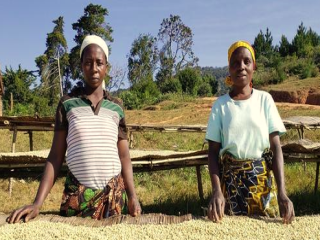
Malawi coffee| Malawi coffee growing history story_Malawi coffee growing area introduction
Coffee was introduced to Malawi in the late 19th century, and folklore tells of a Scottish missionary who brought a small coffee tree in 1878 and planted it in the Blantyre region of southern Malawi. Early Malawi coffee was brilliant when Malawi was a British colony in 1946.

What natural conditions are needed to grow high-quality coffee? How is the coffee fruit grown?
Professional coffee knowledge exchange more coffee bean information Please pay attention to the coffee workshop (Wechat official account cafe_style) what are the natural conditions for growing high-quality coffee fruit? How is the coffee fruit grown? Coffee tree, is a tropical plant, is an evergreen shrub, growing in the equator, latitude 25 degrees north and south, that is, within the Tropic of Cancer. North-South Hui

Global coffee growing regions-coffee growing regions in Peru
Peru is also a major coffee producer. Coffee production in Peru: As much as 98% of Peruvian coffee is grown in forested areas, and most producers are smallholders. The best coffee in Peru is produced in Chanchmayo, Cuzco, Norte and Puno. Most Peruvian coffee is grown under natural conditions, but it is also difficult to confirm