
"hasenda"
124 article(s) found

Medium mellow Hasunda Coffee Garden in Ecuador Flavor description characteristics of Grinding degree introduction of varieties in producing areas
Ecuador is the highest Arabian coffee plantation in the world. Since the coffee tree was first introduced into Ecuador in 1875, the quality of its coffee has remained unchanged for 100 years, especially the coffee harvested in early June every year, which is known as the best coffee in the world. Ecuadorian coffee beans are divided into Galapagos and Segante, both of which have large particles and heavy weight.

Introduction to Hassanda Coffee Garden in Ecuadorian Coffee producing area
Ecuador uses a decimal metric unit of measurement and the temperature is measured in Celsius. But the weight is measured in pounds, and liquids (such as gasoline and diesel) are measured in gallons. Catholicism. Catholicism has been the main traditional religion in Ecuador since colonial times. Many churches have become famous tourist attractions because of their historical, architectural and artistic value. [national flag and national emblem] the national flag is yellow, blue and red.

Introduction to Hasunda Coffee Garden in Ecuador Coffee Flavor Manor
At that time, there were only two days of fresh water left on the ship, and the sailors landed in lifeboats and found a large number of seals, sea turtles, giant tortoises that could carry people, and iguanas that looked like venomous snakes, but they did not find fresh water, so they sailed to another larger island more than 20 kilometers away. As there was still no wind, it took them several days to get there

Introduction to Hasunda Coffee Garden in Ecuador Coffee Flavor Manor
At that time, there were only two days of fresh water left on the ship, and the sailors landed in lifeboats and found a large number of seals, sea turtles, giant tortoises that could carry people, and iguanas that looked like venomous snakes, but they did not find fresh water, so they sailed to another larger island more than 20 kilometers away. As there was still no wind, it took them several days to get there

Ecuadorian Coffee Flavor and Taste Manor introduction to the characteristics of Ecuadorian coffee beans in Hasunda Coffee Garden
In the mid-15th century, there were legends about enchanted mysterious islands among fishermen fishing in the western Pacific Ocean of South America. It is said that the islands can sometimes be seen clearly from a distance, but when the ship approaches, it disappears again; sometimes it looks like a galleon, sometimes it shows the shape of a witch. The fishermen called these islands Magic Island and thought it was there.

Flavor description of Hassanda Coffee Garden in Ecuador introduction to the characteristics of grinding degree and taste
When Thomas and the crew landed on the island, they were frantically looking for water and were so thirsty that they squeezed juice from the fat leaves of the cactus to drink. At last a source of water was found in a rocky gully. Thomas attributed it to the gift of God, because it was good Friday, and they had piously celebrated mass before they set out in search of water. But Thomas will never

Introduction to the characteristics of the coffee producing area of the balanced Hasunda Coffee Garden in Ecuador
Ecuadorian coffee has distinctive South American coffee characteristics. The fragrance is soft, as if you can go back to the ancient and mysterious Inca empire. Coffee is a good history, you need to savor it carefully in order to understand the vicissitudes of life. Balanced with low acidity and rich aroma. The bitter taste is not obvious, the taste is clear, but there is a lingering aftertaste for a long time. Excellent
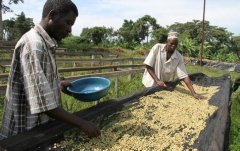
Ecuador Coffee Manor introduction to coffee producing area Hasunda Coffee Garden
Yaocote, a gourmet coffee from Puerto Rico, is grown only on three farms in the southwest of the island. It has a strong flavor and a long aftertaste. This kind of coffee is very expensive and its flavor is comparable to that of any other coffee variety in the world. In the Yauco area, the coffee is owned and operated by local planters. The mountain climate here is mild and the plants are long.
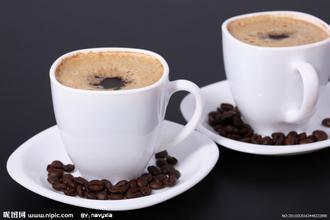
Coffee producing countries of Ecuador introduce San Cristobal Hasunda Coffee Garden
In the mid-15th century, there were legends about enchanted mysterious islands among fishermen fishing in the western Pacific Ocean of South America. It is said that the islands can sometimes be seen clearly from a distance, but when the ship approaches, it disappears again; sometimes it looks like a galleon, sometimes it shows the shape of a witch. The fishermen called these islands Magic Island and thought it was there.

An introduction to the coffee flavor and taste producing area of Hassanda Coffee Garden in Ecuador from the hometown of the tortoise.
As coffee is consumed by people all over the world, the world coffee industry is also moving towards mass production, while St. Cristobal, a small and unreliable coffee industry, is in trouble and is likely to be forced to give up without profit. It wasn't until the early 1990s that the Gonzalez family bought Hasunda Coffee Park. Humboldt current (HumboldtC

Introduction of coffee producing areas and types in Ecuador Galapagos coffee in San Cristobal
In the mid-15th century, there were legends about enchanted mysterious islands among fishermen fishing in the western Pacific Ocean of South America. It is said that the islands can sometimes be seen clearly from a distance, but when the ship approaches, it disappears again; sometimes it looks like a galleon, sometimes it shows the shape of a witch. The fishermen called these islands Magic Island and thought it was there.

Introduction to the flavor and taste of Ecuadorian coffee manor the characteristics of Ecuadorian coffee Hasunda Coffee Garden
The best Ecuadorian coffee is grown on St. Cristobal Island in the Galapagos Islands, which has the unique natural geographical conditions for giving birth to the best quality coffee in the world. A cup of Galapagos coffee, like the beautiful scenery of the Galapagos Islands, is sure to impress you. In the mid-15th century, fishermen fishing in the western Pacific Ocean of South America were in the middle stream.

Introduction to Hasunda Coffee Garden in Ecuador Coffee Flavor Manor
Mr. Veniso, winner of the 2014 Ecuador Coffee Competition, told reporters that some of the Ecuadorian coffee is espresso made from Ecuadorian alpine coffee beans. This coffee comes from a mountain area about 1000 to 2000 meters above sea level and has a mellow taste with aromas and sweetness of fruit, grass and chocolate. Some add thin coffee from the Amazon region to this espresso.

Introduction to the method of flavor description and taste treatment of coffee bean varieties in Ecuador
In 1535, Flatoma de Belanga and others of Spain stumbled upon the Galapagos Islands. Thomas was born in 1487 on the Duro River in the province of Soria, Spain. He was the fourth bishop of Panama at that time. He was ordered to go to Peru. When his ship set sail from Panama on February 23, under the impact of a strong current, they were taken to the unknown surface of the ocean.

Fragrant and fragrant Ecuadorian Fine Coffee Bean Flavor and Taste introduction to the characteristics of the Manor
In the mid-15th century, there were legends about enchanted mysterious islands among fishermen fishing in the western Pacific Ocean of South America. It is said that the islands can sometimes be seen clearly from a distance, but when the ship approaches, it disappears again; sometimes it looks like a galleon, sometimes it shows the shape of a witch. The fishermen called these islands Magic Island and thought it was there.

Introduction to Hasunda Coffee Garden in Ecuador Coffee Flavor and Taste
The best Ecuadorian coffee is grown on St. Cristobal Island in the Galapagos Islands, which has the unique natural geographical conditions for giving birth to the best quality coffee in the world. A cup of Galapagos coffee, like the beautiful scenery of the Galapagos Islands, is sure to impress you. In the mid-15th century, fishermen fishing in the western Pacific Ocean of South America were in the middle stream.

Introduction to Hasunda Coffee Garden in Ecuador
According to Ms. Malena, Consul General of the Consulate General of Ecuador in Guangzhou, Ecuador is located in South America, and the equatorial line runs through the country, so it is also known as the country of the equator. its superior geographical location, fertile soil and special climatic conditions create a superior natural environment for coffee bean cultivation, while most countries in the world are rich in only one kind of coffee beans, while Ecuador is less in the world.

Flavor description of Ecuador Hassanda Coffee Garden with balanced Flavor introduction to the characteristics of taste varieties
Between Colombia and Peru, Ecuador, which passes through the equator, is one of the few countries in South America that produces both Arabica and robastian coffee. In fact, Ecuador means the Spanish equator. Due to the use of old-fashioned traditional harvesting and handling methods, Ecuadorian coffee is not listed as a boutique coffee, so it is generally rarely seen.

Flavor and taste of Ecuadorian boutique coffee beans introduction to Hasunda Coffee Garden
West coast: including coastal plains and foothills, high in the east and low in the west, generally below 200 meters above sea level, with some hills and low mountains at an altitude of 600 to 700 meters. Belongs to the tropical rain forest climate, the southernmost end begins to transition to the savanna climate. The average annual precipitation decreases from more than 3000 mm to about 500mm from north to south. Central Mountains: the Andes enter Ecuador from Colombia

Special aroma coffee flavor description of Ecuador Hasunda Coffee Garden
The national emblem of Ecuador was launched in 1900, which is similar to the national emblem of Colombia. A ferocious American condor vulture spreads its wings above the national emblem. It is the national bird of Ecuador, symbolizing sovereignty and independence. The design of Ecuador's national emblem is unique, which fully shows the amorous feelings of the country: Mount Chimborazo, Ecuador's highest peak, is covered with snow and stands towering against the blue sky.