
"hasenda"
124 article(s) found

Introduction to the characteristics of Flavor Flavor Coffee beans in the Coffee Variety producing area of Hassanda Coffee Garden in Ecuador
Ecuador is divided into the western coast, the central mountains, the eastern Amazon River basin and the four central regions of the Galapagos Islands, with diverse climatic conditions. The western coastal plain belongs to the tropical rain forest climate, with an average temperature of 23-25 ℃. The central Andes. The intermountain basin in this area belongs to the savanna climate, and the mountain belongs to the subtropical forest climate, with perennial snow above 4000 meters above sea level. Annual average decline

Introduction of Coffee Flavor and Taste varieties in Hassanda Coffee Garden, Ecuador
As coffee is consumed by people all over the world, the world coffee industry is also moving towards mass production, while St. Cristobal, a small and unreliable coffee industry, is in trouble and is likely to be forced to give up without profit. It wasn't until the early 1990s that the Gonzalez family bought Hasunda Coffee Park. Humboldt current (HumboldtC

Coffee Flavor and Taste characteristics of Hasunda Coffee Garden in Ecuador
The Galapagos Islands are located in the Pacific Ocean, about 1,000 kilometers off the coast of Ecuador. The archipelago consists of 13 major islands and small islands as well as reefs covering 8000 square kilometers and is one of the noblest national parks in the world. 97% of the territory belongs to Galapagos National Park, a protected area. The United Nations Educational, Scientific and Cultural Organization has declared this place a natural heritage of the world.

Coffee producing areas of the Galapagos Islands introduce San Cristobal Hasunda Coffee Park
The coffee has its own unique characteristics, it was brought to the island around 1870, until now 150 years later, the coffee variety is still the original coffee grown at that time-the ancient bourbon species, has never been any artificial cross breeding. And the coffee on the island is basically grown in the mountains about 500 meters above sea level. Friends who have seen our coffee bean series should all
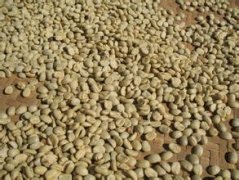
Flavor and taste of Ecuadorian boutique coffee beans A brief introduction to the characteristics of Hassanda Coffee Garden
Central mountain: after entering Ecuador from Colombia, the Andes is divided into the eastern and western Cordillera mountains, with a plateau high in the north and low in the south, averaging between 2500 and 3000 meters above sea level. The Andes run through the middle of the border. The ridges crisscross, dividing the plateau into more than ten intermountain basins. The most important are the Quito basin and the Cuenca basin in the south. Volcanic crowds in the territory

An introduction to the unique flavor of Ecuador's Hassanda Coffee Garden.
Port Guayaquil is the largest seaport in Ecuador. It faces the Pacific Ocean and backs against Mount Santa Ana. The nearby island of Pune serves as a natural barrier to protect the harbour from storms. There is a wharf in the south, which is more than 900 meters long. Ships from different parts of the world flying various flags are moored in the harbor. The port railway leads to the capital Quito, and highways connect Quito with other cities in the country.

Description of Coffee Flavor in Hassanda Coffee Garden in Ecuador introduction of high-quality coffee in producing areas
In 1535, Flatoma de Belanga and others of Spain stumbled upon the Galapagos Islands. Thomas was born in 1487 on the Duro River in the province of Soria, Spain. He was the fourth bishop of Panama at that time. He was ordered to go to Peru. When his ship set sail from Panama on February 23, under the impact of a strong current, they were taken to the unknown surface of the ocean.

Introduction of Ecuadorian Coffee Flavor and Taste Manor production area characteristics of Ecuadorian Coffee Hassanda Coffee Garden
In the mid-15th century, there were legends about enchanted mysterious islands among fishermen fishing in the western Pacific Ocean of South America. It is said that the islands can sometimes be seen clearly from a distance, but when the ship approaches, it disappears again; sometimes it looks like a galleon, sometimes it shows the shape of a witch. The fishermen called these islands Magic Island and thought it was there.

Introduction to the varieties of coffee flavor and taste in Hassanda Coffee Garden of Ecuador
1. I slept in the old city of Quito, went out after ten o'clock and drove to the old city. There are people selling water, fruit and juggling at every intersection. The scenery along the way is very beautiful, and the car touches the city view. I took some street pictures in the car: you can see the distant mountains in the city. This is the central bank of Ecuador, not our style. Taken by mobile phone, the imaging effect is worse, but

Hassanda Coffee Garden, Ecuador Coffee Fine Coffee Bean producing area planting varieties, climate, altitude environment is simple
Bananas, cocoa, coffee, cotton and other products from all over the country are collected and distributed here. Guayaquil has also played an important role in the history of friendly exchanges between the peoples of China and Ecuador. As early as the 18th century, Chinese clothing, textiles and other goods were shipped to Ecuadorian cities through Guayaquil. In August 1978, the Chinese cargo ship Jialing Jiang arrived here for the first time. The two countries
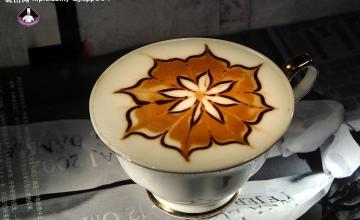
Flavor description of Hasunda Coffee Garden in Ecuador the characteristics of grindness varieties and prices in producing areas
Port Guayaquil is the largest seaport in Ecuador. It faces the Pacific Ocean and backs against Mount Santa Ana. The nearby island of Pune serves as a natural barrier to protect the harbour from storms. There is a wharf in the south, which is more than 900 meters long. Ships from different parts of the world flying various flags are moored in the harbor. The port railway leads to the capital Quito, and highways connect Quito with other cities in the country.

Introduction to the characteristics of coffee flavor and taste in Hasunda Coffee Garden of Ecuador
In 1875, 340 years after Freitoma de Belanga discovered the island, an indigenous man named Kovos came to St. Cristobal Island, where he established the Hasunda Coffee Garden and planted about 100 hectares of Arabian bourbon coffee trees. Since the plantation is located between 140m and 275m above sea level, the climate is equivalent to that of 915m ~ 1830 m in the interior.

Flavor description of Ecuadorian Coffee Variety producing area taste characteristics introduction of high-quality coffee beans
The Republic of Ecuador is located in northwestern South America. It is bordered by Colombia in the northeast, Peru in the southeast and the Pacific Ocean in the west. It covers an area of 256370 square kilometers and the coastline is about 930km long. The equator runs through the north of the border, and Ecuador means the western coast of the Spanish equator: including coastal plains and foothills, high in the east and low in the west, generally below 200 meters above sea level, with some seas

Introduction to the characteristics and taste of high-quality coffee beans in the coffee flavor variety producing area of Hassanda Coffee Garden in Ecuador
The coffee beans produced in Ecuador's Galapagos Islands are organic coffee beans, thanks to the unique ecological environment such as volcanic soil and microclimate, coupled with the fact that they do not use any chemical fertilizers or pesticides, they are recognized as natural green boutique coffee. this naturally grown coffee has a mild taste with a hint of flowers and fruit and caramel. It is understood that the Galapagos Islands are far from Eritrea.

Introduction of high-quality coffee beans in coffee flavor and taste area of Hassanda Coffee Garden in Ecuador
The Republic of Ecuador is located in northwestern South America. It is bordered by Colombia in the northeast, Peru in the southeast and the Pacific Ocean in the west. It covers an area of 256370 square kilometers and the coastline is about 930km long. The equator runs across the northern part of the border. Ecuador means Spanish equator. Minerals are mainly oil, mainly distributed in the Guayaquil Bay, and oil fields are also found in the Amazon plain.

Coffee production area of Ecuador San Cristobal Hasunda Coffee Garden
In the mid-15th century, there were legends about enchanted mysterious islands among fishermen fishing in the western Pacific Ocean of South America. It is said that the islands can sometimes be seen clearly from a distance, but when the ship approaches, it disappears again; sometimes it looks like a galleon, sometimes it shows the shape of a witch. The fishermen called these islands Magic Island and thought it was there.

Coffee flavor and taste characteristics of Hassanda Coffee Garden in Ecuador introduction of boutique coffee beans
Central mountain: after entering Ecuador from Colombia, the Andes is divided into the eastern and western Cordillera mountains, with a plateau high in the north and low in the south, averaging between 2500 and 3000 meters above sea level. The Andes run through the middle of the border. The ridges crisscross, dividing the plateau into more than ten intermountain basins. The most important are the Quito basin and the Cuenca basin in the south. There are many volcanoes in the territory.

Introduction to the treatment methods of the Flavor description and Grinding degree of the aromatic Hassanda Coffee Garden in Ecuador
Located in the middle of the Pacific Ocean, the Cologne Islands (Galapagos Islands) is more than 900km east from the continental coast and covers an area of 7800 square kilometers, including 7 large islands and about 70 small islands, all of which are composed of volcanic cones and volcanic lava, mainly in the Guayaquil Bay. Oil fields are also found in the Amazon plain. Gold and silver are distributed in Machaki and Saluma and other places.

Introduction to Hasunda Coffee Garden in Ecuador
The best Ecuadorian coffee is grown on St. Cristobal Island in the Galapagos Islands, which has the unique natural geographical conditions for giving birth to the best quality coffee in the world. A cup of Galapagos coffee, like the beautiful scenery of the Galapagos Islands, is sure to impress you. In the mid-15th century, fishermen fishing in the western Pacific Ocean of South America were in the middle stream.

The taste of Hassanda Coffee Garden in Ecuador is crisp and the taste of the manor is characterized by the introduction of high-quality coffee.
The earliest steam ocean-going ship in South America, which Ecuadorians are proud of, is moored at the mouth of the sea. Above the snowy peak, the sun shines brightly in May, which symbolizes Mayan culture. The twelve officials of the zodiac marked with the months of March, April, May and June on both sides of the sun represent the difficult years of the Ecuadorian people defending their country against foreign invasions in 1845. The beam at the bottom represents the country of the Republic.