
"identification"
1585 article(s) found

How to distinguish the advantages and disadvantages of instant coffee by senses
Instant coffee is coffee beans roasted and crushed to get pure coffee, and then extracted and vacuum concentrated into powdered coffee, which can be brewed at any time and dissolve in boiling water. The shelf life of instant coffee is usually two years. Now I would like to introduce the sensory identification of the quality of instant coffee, which can be divided into two stages: before brewing and after brewing. (1) pre-brewing identification? Good quality instant caffeine varieties

Coffee FAQ: identification between Italian coffee Espresso and single coffee
First, a brief introduction to the concept of espresso and single coffee. Espresso: if you want to use the data for a general explanation, it means that 7g of powder is extracted by water at 92 degrees at nine atmospheres for 25,30 seconds to get 30ml coffee. The resulting 30ml coffee is called Espresso. Individual coffee: made from only coffee beans from a country or a producing area.

Identification of coffee beans: characteristics of soybeans and adzuki beans
Coffee beans are not necessarily good beans if they are big, but small ones must be bad beans. The size of beans has little to do with the taste of coffee. However, the advantage of appearance is more advantageous when trading, and the size of beans is indeed a standard of grade. For example, in most countries such as Colombia, Brazil, Tanzania and so on, the size of beans determines the size of beans.

Where did the coffee come from? The origin of coffee is explained by isotopes. The origin and history of coffee
Professional coffee knowledge exchange more coffee bean information Please follow the coffee workshop (Wechat official account cafe_style) drink a cup of coffee to wake up the day, is undoubtedly a portrayal of the lives of many modern civilized people. You may not know that people have been drinking coffee for more than ten centuries. Due to the age, the origin of coffee can no longer be examined, and there is a lack of related historical events.

Identification of coffee beans the characteristics of soybeans and adzuki beans
Coffee beans are not necessarily good beans if they are big, but small ones must be bad beans. The size of beans has little to do with the taste of coffee. However, the advantage of appearance is more advantageous when trading, and the size of beans is indeed a standard of grade. For example, in most countries such as Colombia, Brazil, Tanzania and so on, the size of beans determines the size of beans.

Sensory Identification of individual Coffee among the main varieties of Coffee beans
Blue Mountain Coffee (BLUE MOUNTAIN) is produced in the Blue Mountains of Jamaica at an altitude of more than 2500 feet. It is a kind of coffee with slightly sour, supple, sweet and delicate flavor. Pure Blue Mountain Coffee has a mild taste and flavor, but it is very mellow and delicate to drink. It has aristocratic taste and is the best coffee in the world. Mocha coffee (MOCHA) is currently the best coffee produced by Yemen.

Introduction to the identification of espresso content in Italian style
Espresso content identification shows that Macchiato is more feminine and looks like a scaled-down version of cappuccino. The biggest difference between them, except that the weight of macchiato is 1/3 of that of cappuccino, macchiato is espresso with only a layer of milk foam and no milk, so the taste of espresso only stays on the lips, and the taste of espresso will not be eaten by cattle.

Technical Identification of Coffee: how to distinguish Coffee-introduction of Cupping Cup Test
After the coffee bean is roasted, the baker will make a simple and effective evaluation of it. This kind of evaluation is called cupping. Cup test is an important link to evaluate the baking quality and taste performance of coffee beans. It allows us to distinguish the nuances of coffee beans when they are roasted, and allows us to deduce the quality of raw coffee beans. The cup square method moves together.
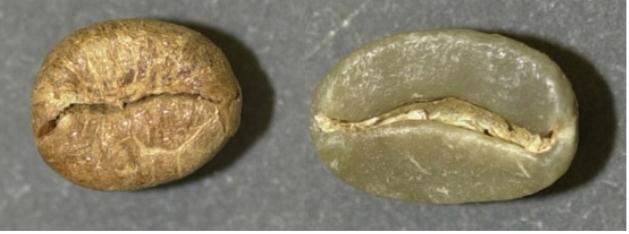
Identification of coffee beans: differences in size, specification, altitude, quality and taste of coffee beans
A, coffee can be divided into washing type and non-washing type according to specifications, and can also be divided into flat beans and round beans. Washing type: in the sink, after rubbing with water and utensils, the pulp and colloid are removed and dried, which is called washing coffee bean with uniform quality. Non-washing type: after the sun is naturally dried, the pulp and peel is removed by a sheller, and its quality is unstable. The fruit of coffee is made up of two oval shapes
There are only two ways to identify coffee.
(1) pre-brewing identification? Good instant caffeine is brown to dark brown due to different varieties and processes; irregular particles with a size of about 2 mm mixed with some fine powder; the unique aroma of coffee is reflected by Maillard reaction during stir-frying. ? The color of inferior instant coffee is dark, some are iron black, and the tissue state is caked or agglomerated due to moisture or other reasons.

Efficacy and function of latte sensory Identification of single Coffee
1. Caffeine in the appetizer latte can stimulate nerves, stimulate the secretion of gastric juice, promote gastrointestinal hormones and peristaltic hormones, and improve people's appetite. 2. Refreshing latte is suitable for drinking in the morning, which can eliminate fatigue, improve mental awakening and stimulate the vitality of the day. 3. Eliminating the caffeine in detumescent latte coffee can increase the excretion of excess water and promote metabolism.
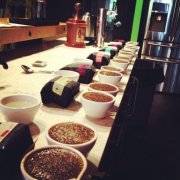
There are two ways to identify coffee before and after brewing.
(1) pre-brewing identification? Good instant caffeine is brown to dark brown due to different varieties and processes; irregular particles with a size of about 2 mm mixed with some fine powder; the unique aroma of coffee is reflected by Maillard reaction during stir-frying. ? The color of inferior instant coffee is dark, some are iron black, and the tissue state is caked or agglomerated due to moisture or other reasons.
Identification of Cat shit Coffee by Chemical Analysis
People who enjoy the most expensive coffee in the world will soon be able to sip coffee without having to worry: researchers have devised a way to tell these people whether the coffee they buy is real or fake.

Coffee Sensory Identification II: What is coffee sensory evaluation?
Professional coffee knowledge exchange More coffee bean information Please pay attention to coffee workshop (Weixin Official Accounts cafe_style) What is sensory? Senses are indispensable skills in human life. We can divide our senses into five parts, according to the skills performed by the different organs of our body: taste, smell, sight, hearing, and touch. Coffee tasting: Everything is about the senses

A survey of baristas' professional standards and occupations
According to the relevant provisions of the Labor Law of the people's Republic of China, combined with the current social and economic situation and the future development trend, in order to further improve the national vocational qualification standard system, in order to provide a scientific and standardized basis for vocational education, vocational training and vocational skill identification, the National baristas Professional Committee of the Business skills Appraisal and Catering Service Development Center

Basic knowledge of coffee professional standards for baristas
According to the relevant provisions of the Labor Law of the people's Republic of China, combined with the current social and economic situation and the future development trend, in order to further improve the national vocational qualification standard system, in order to provide a scientific and standardized basis for vocational education, vocational training and vocational skill identification, the National baristas Professional Committee of the Business skills Appraisal and Catering Service Development Center

Kopi Luwak is only in Indonesia. Do you have Kopi Luwak in Indonesia? authenticity identification and sharing?
Professional coffee knowledge exchange more coffee bean information please follow the coffee workshop (Wechat official account cafe_style) Qianjie Indonesian civet coffee authenticity sharing Kopi Luwak is a general name for coffee, but also an Indonesian specialty. Kopi Luwak is called Kopi Luwak in Indonesian. Among them: Kopi means coffee; Luwak refers to a kind of civet commonly known as civet in Indonesia

Coffee Bean Freshness Identification and Preservation Methods
Smell: Fresh coffee beans smell strong, otherwise tasteless or bad smell. See: Good coffee beans are complete in shape and full in size. Otherwise, the shape is incomplete. Pressed: Fresh coffee beans are crispy when pressed, and the aroma wafts out when cracked. Color: dark with black coffee beans, boiled coffee has a bitter taste. Yellower colored coffee beans, brewed coffee with sour taste. good

Methods for selection and identification of Honduran coffee beans the origin, flavor and taste of Honduran coffee
Flavor and taste characteristics: good flavor, rich and mellow, suitable for mixed drinking. Honduras is located in the north of Central America, facing the Caribbean Sea to the north, the Gulf of Fonseca in the Pacific Ocean to the south, Nicaragua and El Salvador to the east and south, and Guatemala to the west, mostly mountains and plateaus. It has a tropical climate, mild temperature and abundant rainfall, so it is an ideal place for coffee growth. Honduras