
"inflorescence"
286 article(s) found

Characteristics of Flavor and Taste in Colombian Coffee producing area introduction of Fine Coffee beans in Manor
The main varieties of Colombian coffee are small grains of coffee. Plants are small trees or large shrubs, 5-8 m tall, usually much branched at base; old branches gray-white, nodes dilated, young branches glabrous, compressed. Leaves thinly leathery, ovate-lanceolate or lanceolate, 6-14 cm long and 3.5-5 cm wide, tip long acuminate, acuminate part 10-15 mm long, base cuneate or slightly obtuse, rarely rounded, entire or

Introduction to the taste of Ramon coffee beans produced by grinding scale and variety treatment in Colombia
Colombian Ramon coffee bean grinding scale production area variety treatment taste introduces that each caffeine variety is of different origin and has its own strong character, such as the masculine Mantenin, which resembles a steel man; mellow, fragrant Blue Mountain Coffee, the most gentle woman yearning addiction. Columbia Super Coffee, which has always been light and fragrant, is the most suitable for those who like to have sex.

Introduction to the Development History of cultivation and planting techniques for Coffee seedlings
Coffee planting technology introduces the origin of coffee trees in Ethiopia in Africa. In botany, coffee trees belong to the evergreen trees of the subgenus Rubiaceae, and coffee beans, commonly known as coffee beans, are the seeds of the fruit of coffee trees, just because they are shaped like beans, so they are called coffee beans. Climate is the decisive factor for coffee cultivation, and coffee trees are only suitable for growing in the tropics or subtropics.

Do you know what the fragrance of coffee flowers is? how many kinds of flowers are there?
Professional coffee knowledge exchange more coffee bean information please follow the coffee workshop (Wechat official account cafe_style) Coffee flowers can be divided into three main ingredients: pollen, nectar and petals. Pollen is rich in proteins, amino acids, carbohydrates, saturated and unsaturated fats, flavonoids and carotenoids. Nectar contains sugars (glucose, fructose and sucrose), amino acids, eggs

Coffee trees, raw coffee beans and ripe beans tell you what coffee is.
Now coffee has come into our lives, and all kinds of coffee shops are all over the streets. While we enjoy delicious coffee, do you know the origin of coffee? The planting conditions of coffee trees the origin of coffee trees is in Ethiopia, Africa. In botany, the coffee tree belongs to the evergreen tree of the coffee subgenus of Rubiaceae, and the so-called coffee bean is coffee.

Introduction of Yunnan Coffee Bean varieties with large grains and small grains
Cymes are clustered in leaf axils, each inflorescence has 2-5 flowers, without total pedicel or with very short total pedicel; flowers fragrant, with pedicels 0.5-1 mm long; bracts basally somewhat connate, dimorphic, of which 2 are broadly triangular, nearly equal in length and width, the other 2 lanceolate, twice as long as wide, leaf-shaped; calyx tube-shaped.
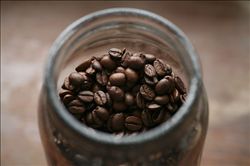
The morphological characteristics of coffee trees the geographical distribution of coffee trees
Coffee fruit Coffee Tree is a shrub or small tree of Rubiaceae; the leaves are opposite, leathery and long ovate; every March, the branches appear white flowers, petals spirally arranged, and the heart jumps around the petals. Take a closer look, it is really like a small windmill playing in childhood, emitting the fragrance of jasmine flowers; the fruit is oval, berry, crimson, hidden two

The taste is rich and perfect. Kenya Berman Estate Coffee Flavor Description Grind Treatment Method Mouth
Kenya has a total population of 41.8 million (2013) and a population growth rate of 2.7%. There are 42 ethnic groups in the country, mainly Kikuyu (17 per cent), Luhia (14 per cent), Kalenjin (13 per cent), Luo (10 per cent) and Kamba (10 per cent). In addition, there are a small number of Indians, Arabs and Europeans. Kenya's mineral deposits mainly include soda ash, salt, fluorite, limestone,

Grinding scale of Colombian coffee beans introduction to the taste of manor with variety treatment method
The main varieties of Colombian coffee are small grains of coffee. Plants are small trees or large shrubs, 5-8 m tall, usually much branched at base; old branches gray-white, nodes dilated, young branches glabrous, compressed. Leaves thinly leathery, ovate-lanceolate or lanceolate, 6-14 cm long and 3.5-5 cm wide, tip long acuminate, acuminate part 10-15 mm long, base cuneate or slightly obtuse, rarely rounded, entire or

The planting method of Coffee Tree the planting environment of coffee tree introduces what kind of environment is most suitable for growing coffee
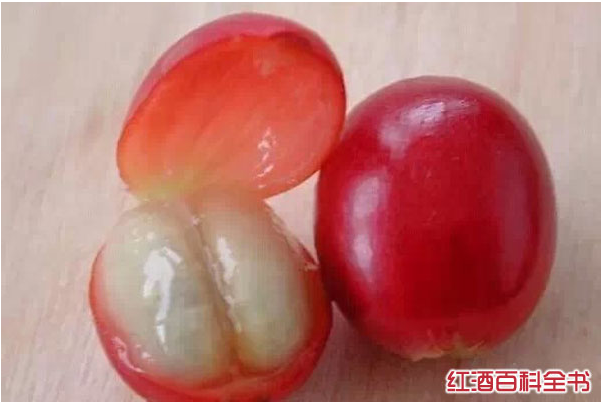
Coffee fruit contains two seeds, namely coffee beans. The two beans are connected face to face with each other on one side of the plane. Each coffee bean has a thin outer film, which is called silver skin, and its outer layer is covered with a yellow outer skin, called endocarp. The whole coffee bean is wrapped in a sticky pulp to form coffee pulp, which is soft and sweet.

Introduction to the characteristics and Flavor of Coffee varieties in Hope Manor of Colombia
The main varieties of Colombian coffee are small grains of coffee. Plants are small trees or large shrubs, 5-8 m tall, usually much branched at base; old branches gray-white, nodes dilated, young branches glabrous, compressed. Leaves thinly leathery, ovate-lanceolate or lanceolate, 6-14 cm long and 3.5-5 cm wide, tip long acuminate, acuminate part 10-15 mm long, base cuneate or slightly obtuse, rarely rounded, entire or

Introduction to the method of variety treatment in the grinding scale production area of Columbia Huilan coffee bean
The pure taste of Colombian coffee comes from Colombia's natural environment with the most favorable conditions for coffee growth. But beyond that, it is inseparable from the hard work of local growers. In Colombia, coffee cultivation has reached 1.07 million hectares, there are about 302000 coffee plantations in the country, and 30 to 40 per cent of the rural population depends directly on coffee production. Columby
How is a good cup of coffee born?
Do you still remember the self-cultivation of an actor by Zhou Xingchi, the king of comedy? This incident tells us that if salted fish want to turn around, self-cultivation is very important and key. Back to the point, how did a good cup of coffee come into being? We have to go back to the source and watch the self-cultivation of small coffee beans together with the editor. How does a small coffee seed go through several years of spring and autumn

The flavor of Kenyan coffee is still strong. Introduction to the taste of fine coffee with grinding degree.
Kenya has a total population of 41.8 million (2013), with a population growth rate of 2.7 per cent. There are 42 ethnic groups in the country, including Kikuyu (17%), Lucia (14%), Kalenjin (13%), Luo (10%) and Kangba (10%). In addition, there are a small number of Indo-Pakistani, Arab and European Kenyan mineral deposits, mainly soda ash, salt, fluorite, limestone,

Description of roasting degree and Flavor of Colombian Coffee introduction to the production area of Grinding scale by Taste treatment
Colombian coffee roasting flavor description, taste treatment, grinding scale production area introduces dry processing: the coffee fruit is dried and dehydrated by natural conditions such as sunlight and ventilation, and then the dried coffee fruit is put into the peeled pulp, peel and silver peel. This method is the most economical and traditional processing method. Coffee beans treated by this method can maintain their fragrance for a long time, but the same as that of coffee beans.

How many coffee fruits are processed per season and the planting environment are introduced
A coffee tree produces an average of how many coffee fruits per season and planting environment. Coffee fruits contain two seeds, namely coffee beans. The two beans stand upright facing each other on one side of their plane. Each coffee bean has a thin outer membrane, called the silver skin, which is covered with a yellow outer skin, called the endocarp. Whole coffee beans

Sweet aftertaste of Panamanian Ireta Manor Coffee Flavor taste the characteristics of fine coffee in the manor area
The Panamanian flag was launched on November 3, 1904. The flag is rectangular and the ratio of length to width is 3:2. The flag consists of four rectangles of white, red and blue. White symbolizes peace; red and blue represent the former Panamanian Liberal Party and the Conservative Party respectively, and they are also symbols of the two parties' United struggle for the interests of the nation. The blue star on the white background on the upper left represents loyalty and integrity, and the red star on the white background on the lower right represents

Introduction to Kenyan Jinchu coffee with strong taste and taste of manor boutique coffee
Kenya is divided into seven provinces (PROVINCE) and one provincial special district (Nairobi province). The following provinces are divided into districts (DISTRICT), townships (DIVISION) and villages (LOCATION). Under the new constitution, the four-tier administrative structure will be changed to the central and county (COUNTY) levels. The 47 counties established under the new constitution will officially operate on the coastal plain after the general election in 2013, and most of the rest

Coffee basic knowledge what conditions do you need to grow coffee?
Coffee is a perennial evergreen shrub or small tree of Rubiaceae. It is a horticultural perennial cash crop with the characteristics of fast growth, high yield, high value and wide market. Wild coffee trees can grow to a height of 5 to 10 meters, but coffee trees planted on the manor are often cut to a height of less than 2 meters in order to increase the amount of fruit and facilitate harvesting. The opposite leaves of coffee trees are long oval.

Flavor characteristics of small-grain coffee beans in Yunnan introduction of taste varieties produced by manor area
Cymes are clustered in leaf axils, each inflorescence has 2-5 flowers, without a total pedicel or with a very short total pedicel; flowers fragrant, with pedicels 0.5-1 mm long; bracts base ±connate, dimorphic, of which 2 are broadly triangular, nearly equal in length and width, the other 2 lanceolate, twice as long as wide, leaf-shaped; calyx