
"livelihoods"
789 article(s) found

Citrus-flavored Panamanian Rosa Coffee Flavor and Taste introduction to boutique coffee beans in manor area
The overall economy is at a low level of development, agriculture, forestry and fisheries account for the majority of people's livelihood, but shipping-related enterprises and part of the financial and insurance industry have international status, resulting in a small number of super-rich class, a large gap between the rich and the poor. Panama is rich in forest resources and has many tropical tree species. Mahogany, cedar, teak and other timber are abundant in the east, providing a small number of internationally competitive exports, farmers.

The new mission of coffee in Indonesia helps farmers improve their health.
Indonesian coffee merchants, in cooperation with the Indonesian Biodiversity Fund and the non-governmental organization Petra, will help farmers improve their farming skills, improve the quality of coffee beans, and attach importance to environmental conservation in order to improve farmers' livelihood. Indonesian coffee merchant Twind yesterday met with the Indonesian Biomulturation Fund (Indonesian Biodiversity Foundation) and the Land non-Governmental Group

Panamanian Coffee with Fruit flavor introduction to Esmeralda Manor Coffee Flavor
The overall economy is at a low level of development, agriculture, forestry and fisheries account for the majority of people's livelihood, but shipping-related enterprises and part of the financial and insurance industry have international status, resulting in a small number of super-rich class, a large gap between the rich and the poor. Panama is rich in forest resources and has many tropical tree species. Mahogany, cedar, teak and other timber are abundant in the east, providing a small number of internationally competitive exports, farmers.

Introduction of Erida Manor, a variety of flavor and taste in Panamanian coffee producing area.
In May 2014, the Panamanian government held a new presidential conference.

Kenyan coffee has a distinctive fruit flavor, hand-brewed coffee.
Kenya is located on the east coast of Africa, and the equator almost passes through the center of the country. The highland of Kenya is one of the best agricultural production areas in Africa, and its unique geographical features provide a living environment for many wild animals with great scientific and economic value. Agriculture is the main pillar of the Kenyan economy, providing livelihoods for 75% of the population, and agricultural output accounts for 20% of GDP.

The coffee producing area of Brenka, Costa Rica introduces the coffee flavor of Costa Rican treasure manor.
Professional coffee knowledge exchange more coffee bean information please follow coffee workshop (Wechat official account cafe_style) □ Costa Rican coffee has a history of more than 200 years, it is not only an important foundation of the country's economy and people's livelihood, but also an indispensable role in the global coffee history, in the past decade, it has become popular all over the world as a micro-processing farm, in this small Central American country, because

Costa Rica Finca La Guaca Precious Manor introduction Costa Rican Coffee introduction
Professional coffee knowledge exchange more coffee bean information Please follow the coffee workshop (Wechat official account cafe_style) Costa Rican coffee has a history of more than 200 years. It is not only an important basis for the country's economy and people's livelihood, but also an indispensable role in the global coffee history. In the past decade, it has become popular all over the world as a micro-processing plant, in this small Central American country.

Climate change has caused poor harvests of coffee and poor income for coffee farmers.
Professional coffee knowledge exchange more coffee bean information please follow the coffee workshop (Wechat official account cafe_style) due to the impact of climate change, people's food, clothing,

Uganda Coffee Bean Flavor Description Grind Scale Treatment Taste Region Variety Introduction
Uganda coffee beans flavor description grinding scale processing method taste production area variety introduction Uganda coffee cultivation is all family small scale operation The livelihoods of 25 per cent of the population are linked to coffee production. There are about 500000 farms growing coffee, but mainly producing roberts. Robusta accounts for 90% of coffee production, with the rest becoming Arabica coffee. ah

Tropical African Coffee Bean Elgon Mountain area, Uganda, which produces Robart Coffee beans
The cultivation of coffee in Uganda is all small-scale family operation. The livelihood of 25% of the population is closely related to coffee production. About 500000 farms grow coffee, but mainly Robster. Robster accounts for 90% of coffee production, and the remaining 1 is Arabica coffee. Arabica and Live Buster are harvested from October to February of the following year. Ugandan coffee

Research says wild coffee beans will become extinct in the future if global warming continues
[global Science and Technology Comprehensive report] according to a report by Singapore's Lianhe Zaobao on September 4, the Australian Climate Research Institute pointed out in a newly released research report that if global warming continues on the current trajectory, wild coffee beans could become extinct by 2080. According to reports, researchers say that due to rising temperatures and rampant pests and fungi, it is estimated that the number of farmland suitable for growing coffee trees worldwide will decrease by 2050.

Characteristics of Costa Rican Black Pearl Coffee Lajas processing Plant about Coffee Cherry Fruit
About Costa Rica's coffee about Costa Rica has a history of more than 200 years. It is not only an important basis for the country's economy and people's livelihood, but also an indispensable role in the global coffee history. In the past decade, it has become popular all over the world as a micro-processing farm. In this small Central American country, it has created thousands of positions because of its special geographical environment.

Organic washing processing of coffee beans in Xipi Waterfall, Uganda
The cultivation of coffee in Uganda is all small-scale family operation. The livelihood of 25% of the population is closely related to coffee production. About 500000 farms grow coffee, but mainly Robster. Robster accounts for 90% of coffee production, and the remaining 1 is Arabica coffee. Arabica and Live Buster are harvested from October to February of the following year. Ugandan coffee

Nicaraguan Coffee Manor Tianyi Manor introduces Matagalpa producing area
As a result, the overall revenue of coffee farmers in our country has been reduced by US $1 million, which has a direct impact on the livelihood of about 30, 000 coffee farmers, especially in the growing areas. For Nicaragua, the overall coffee industry is depressed, which has a great impact on the country. In Nicaragua, the coffee industry provides 200000 of the country's jobs, and coffee beans are the country's most economically valuable crop, accounting for the country's exports.

What is arusha coffee?| How does the arusha blue mountain coffee variety taste?
Professional coffee knowledge exchange More coffee bean information, please pay attention to coffee workshop (Weixin Official Accounts cafe_style) First of all, Arabica series in addition to Bourbon and Kent main varieties, there are Tibika, Blue Mountain, Arusha. And then there's Robusta. 450,000 smallholder farmers in productive farming systems depend on coffee (locally known as kahawa) for their livelihoods. These five hectare plots

Kenyan Jinchu Valley Coffee Bean Grinding Scale Variety Production Area Treatment Method Introduction
The livelihoods of millions of coffee farmers were severely affected last year when international coffee prices continued to fall as global supply increased, with Kenyan coffee prices at one point falling to their lowest level since 2007. Coffee prices have rebounded this year as dry weather in Brazil has led to an expected decline in coffee production.

Uganda Coffee Flavor description characteristics of varieties in producing areas introduction and treatment of grindability and price of fine coffee
The cultivation of coffee in Uganda is all small-scale family operation. The livelihood of 25% of the population is closely related to coffee production. About 500000 farms grow coffee, but mainly Robster. Robster accounts for 90% of coffee production, and the remaining 1 is Arabica coffee. Arabica and Live Buster are harvested from October to February of the following year. Ugandan coffee
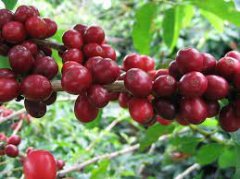
Is Mexican decaf healthy? Decaffeinated? decaffeinated? Processing method of decaf coffee
Coffee is the most popular drink in the world, consuming more than 4000 billion cups a year. It is part of a healthy and balanced diet, and the pleasure experience of drinking coffee plays a key role in many cultures around the world, providing opportunities for friends, family and colleagues to communicate. But there are also some people who are extremely sensitive to caffeine intake, and the existence of decaf coffee is very important to these people.

What is the growing environment of coffee beans in East Timor? How many kinds of coffee are there in East Timor?
Professional coffee knowledge exchange more coffee bean information please follow the coffee workshop (Wechat official account cafe_style) how is the growing environment of coffee beans in East Timor? How many kinds of coffee are there in East Timor? In 1994, after years of conflict, the coffee industry in East Timor began to emerge. With the help of NCBA and USAID, coffee farmers formed the cooperative CooperativaCafTimor

Fruit Ripe and Aromatic Uganda Coffee Bean Grind Scale Variety Production Area Treatment Manor Introduction
Coffee cultivation in Uganda is entirely family-based and small-scale. The livelihoods of 25 per cent of the population are linked to coffee production. There are about 500000 farms growing coffee, but mainly producing roberts. Robster accounts for 90% of coffee production, with the rest becoming Arabica coffee. Arabica and Hobbs are harvested from October to February. Uganda coffee