
"mesocarp"
470 article(s) found

Introduction to Coca Cauca Lazmus Manor, Columbia Coffee with mild Climate
The main varieties of Colombian coffee are small grains of coffee. Plants are small trees or large shrubs, 5-8 m tall, usually much branched at base; old branches gray-white, nodes dilated, young branches glabrous, compressed. Leaves thinly leathery, ovate-lanceolate or lanceolate, 6-14 cm long and 3.5-5 cm wide, tip long acuminate, acuminate part 10-15 mm long, base cuneate or slightly obtuse, rarely rounded, entire or

Introduction of Fine Coffee beans in Coffee Flavor and Taste area of Lazimus Manor, Colombia
The main varieties of Colombian coffee are small grains of coffee. Plants are small trees or large shrubs, 5-8 m tall, usually much branched at base; old branches gray-white, nodes dilated, young branches glabrous, compressed. Leaves thinly leathery, ovate-lanceolate or lanceolate, 6-14 cm long and 3.5-5 cm wide, tip long acuminate, acuminate part 10-15 mm long, base cuneate or slightly obtuse, rarely rounded, entire or

Colombia Coffee Culture Colombia Coffee History
One: it is said to have come from Haiti in the Caribbean via El Salvador in Central America. Second, coffee beans were first introduced into Colombia in 1808 by a priest from the French Antilles via Venezuela. One of them is that the first coffee seeds from Colombia came from Venezuela through the province of Santander. [1]Third: the earliest coffee cultivation in Colombia
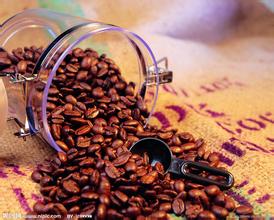
Fine coffee Colombian coffee species morphology
The main varieties of Colombian coffee are small grains of coffee. Plants are small trees or large shrubs, 5-8 m tall, usually much branched at base; old branches gray-white, nodes dilated, young branches glabrous, compressed. Leaves thinly leathery, ovate-lanceolate or lanceolate, 6-14 cm long and 3.5-5 cm wide, tip long acuminate, acuminate part 10-15 mm long, base cuneate or slightly obtuse, rarely rounded, entire or

Wet treatment and step-by-step washing of Yunnan coffee beans
In this blog post, I will introduce to you the steps of wet treatment in Yunnan after coffee picking. After harvest, the berries are either sent directly to the pulp collector (if the harvest is done well), or concentrated in a siphon tank filled with water. The berries are washed and separated in this jar. The stone sank to the bottom of the jar and picked it up by hand when the jar was emptied.

Colombia coffee-producing country Lazmus farm with the most favorable natural conditions for coffee growth
Colombia, located in the northwest of South America, is a beautiful country with a long history. Indians have lived on this land since ancient times. It became a Spanish colony in 1531 AD and gained independence in 1819. It was renamed in 1886 to commemorate Columbus, the discoverer of the American continent. Colombia, beautiful mountains, beautiful scenery, pleasant climate, four seasons

Characteristics of Colombian Coffee Flavor Manor
The main varieties of Colombian coffee are small grains of coffee. Plants are small trees or large shrubs, 5-8 m tall, usually much branched at base; old branches gray-white, nodes dilated, young branches glabrous, compressed. Leaves thinly leathery, ovate-lanceolate or lanceolate, 6-14 cm long and 3.5-5 cm wide, tip long acuminate, acuminate part 10-15 mm long, base cuneate or slightly obtuse, rarely rounded, entire or

Wet treatment methods and steps of Yunnan coffee beans treated with honey
As the harvest season is almost over, I would like to add an overview of the coffee processing process. In this blog post, I will introduce to you the steps of wet treatment in Yunnan after coffee picking. After harvest, the berries are either sent directly to the pulp collector (if the harvest is done well), or concentrated in a siphon tank filled with water. The berries are here.

Columbia Coffee Coca Cauca producing area with unique sour and mellow taste
The earliest record of coffee cultivation in Colombia appears in a book called The Illustrated Orinoca by Spanish missionary Jose Gumilla. He describes what he saw when he preached on both sides of the Meta River in 1730, in which he mentioned the local coffee plantation. By 1787, other missionaries had spread coffee to other parts of Colombia.

Colombia Emerald Roast Deep Coffee Flavor Description Treatment Taste Grind Scale Introduction
Colombia Emerald Roast Deep Coffee Flavor Description Processing Method Taste Grinding Scale Introduction Colombia is rich in products, especially coffee, flowers, gold and emeralds known as the four treasures. Coffee was first introduced to Colombia in 1808 by a priest from the French Antilles via Venezuela. Today the country is the second largest coffee producer after Brazil and the largest Arabica in the world.

What are the processing procedures for raw coffee beans? Coffee bean treatment
With the growing culture of cafes, many people have fallen in love with coffee, but most coffee consumers do not know how coffee has changed from a tree to a drinkable coffee. Chongqing Brista Coffee West Point training Institute will take you to meet it now. 1. The fresh fruit of the mature coffee on the tree can be picked at this time, and picking coffee is not an easy task.

Colombia Na Linglong Coffee Flavor Description Grinding Characteristics Treatment Variety Introduction
Colombia, located in the northwest of South America, is a beautiful country with a long history. Indians have lived on this land since ancient times. It became a Spanish colony in 1531 AD and gained independence in 1819. It was renamed in 1886 to commemorate Columbus, the discoverer of the American continent. Colombia, beautiful mountains, beautiful scenery, pleasant climate, four seasons
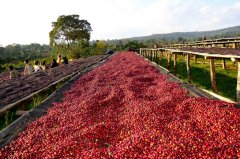
Basic knowledge of Coffee Wet treatment methods and steps of Yunnan Coffee beans
As the harvest season is almost over, I would like to add an overview of the coffee processing process. In this blog post, I will introduce to you the steps of wet treatment in Yunnan after coffee picking. After harvest, the berries are either sent directly to the pulp collector (if the harvest is done well), or concentrated in a siphon tank filled with water. The berries are here.

Introduction to the quality of coffee bean berry treatment method, taste and flavor description method
Coffee treatment quality introduction semi-washing method, also known as honey treatment, is a compromise between drying and washing, eliminating the need for water-washing to ferment the coffee fruit. Harvesting and storage tank (removal of impurities and impurities) pulp removal machine (removal of pulp and impurities) washing pool (selection of light and hard beans) sun field (or dryer) sheller (removal

Columbia Coffee Lazimus Manor introduces Starbucks Colombian Coffee
The main varieties of Colombian coffee are small grains of coffee. Plants are small trees or large shrubs, 5-8 m tall, usually much branched at base; old branches gray-white, nodes dilated, young branches glabrous, compressed. Leaves thinly leathery, ovate-lanceolate or lanceolate, 6-14 cm long and 3.5-5 cm wide, tip long acuminate, acuminate part 10-15 mm long, base cuneate or slightly obtuse, rarely rounded, entire or

Colombian Hope Manor Coffee Bean production area Taste treatment Grinding scale
Colombia hopes that the taste treatment of manor coffee beans in the region of grinding scale Colombian coffee is mainly small-grain coffee. Plants are small trees or large shrubs, 5-8 m tall, usually much branched at base; old branches gray-white, nodes dilated, young branches glabrous, compressed. Leaves thinly leathery, ovate-lanceolate or lanceolate, 6-14 cm long and 3.5-5 cm wide, tip long acuminate, acuminate
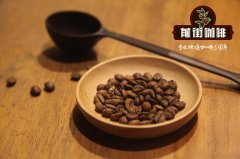
Flavor characteristics of Costa Rican coffee bean varieties in Tarazhu, Costa Rica
Professional coffee knowledge exchange more coffee bean information please follow the coffee workshop (Wechat official account cafe_style) front street-Costa Rica coffee industry started early, is the first country in Central America to grow coffee, 1820 with the first batch of coffee shipped to Colombia, 1854 by the British aristocracy as gold beans, coffee has since become the main Costa Rican

Costa Rican coffee bean honey treatment
Following Cafe (official Wechat account vdailycom) found that the coffee infrastructure of Costa Rica, which opened a small shop of its own, has long helped to get better prices on the international market. The washing treatment method was introduced in 1830; by 1905, there were 200 wet treatment plants in the country. Washed coffee can get a higher price, and the coffee treated in this way is usually of high quality.

The growth cycle and picking time of coffee
Coffee beans are the seeds of coffee trees. After three or four years of growth, the coffee tree matures and begins to bear fruit, with one fruit arranged in clusters or clusters along the branches.

Introduction to the Grinding degree of the characteristic varieties of Rosa Coffee from Hope Manor in Colombia
Columbia Hope Manor has pedicels 0.5-1 mm long; bracts basally somewhat connate, dimorphic, of which 2 are broadly triangular, nearly equal in length and width, and the other 2 lanceolate, 2 times as long as wide, leaf-shaped; calyx tube tube, 2.5-3 mm long, calyx eaves truncated or 5-denticulate; Corolla white, length varies from variety to breed, generally 10-18 mm long, apically often 5-lobed, rarely 4-or 6-lobed, lobes often 5-lobed.