
"native"
9658 article(s) found

Lim Limu washing local native coffee how to drink? What are the producing areas of Ethiopian coffee?
Professional coffee knowledge exchange more coffee bean information please follow the coffee workshop (Wechat official account cafe_style) Ethiopian coffee is mainly produced in eight major areas: Lekempti, Limu, Illubabor, Djimmah, Harar, Teppi/Bebeka, Sidamo, Yirgacheffe. Ethiopian coffee is highly rated in China, especially for Ethiopian coffee.

Lim producing area of Ethiopia | Keshagsi Farm-Wind from the sun treatment of native species in Teana
Professional coffee knowledge exchange more coffee bean information please follow Coffee Workshop (Wechat official account cafe_style) Lim production area of Ethiopia | Kesakesi Farm-what is the flavor of Teana native species sun treatment? Sounds of nature this bean is different from the familiar Yegashifi and Sidamo, and the producing area of Limu (Lim) is only in recent years.

Introduction to the characteristics of Ethiopian native variety heirloom coffee beans the difference between heirloom and Landrace coffee
Professional coffee knowledge exchange more coffee bean information please follow the coffee workshop (Wechat official account cafe_style) class minions-phylum-class-order-family-genus-species, coffee is Rubiaceae coffee, including three major varieties Arabica species Arabica, Robusta species Robusta and Lee

What is Ethiopia's native coffee? What kind of coffee is Ethiopian Heirloom beans?
Professional coffee knowledge exchange More coffee bean information Please pay attention to coffee workshop (Weixin Official Accounts cafe_style) Coffee can be divided into three main varieties, namely Coffeaarabica and Robu Coffeacanephora.

Ethiopian heirloom coffee bean Gujisidamo flavor difference Arsi native coffee brewing suggestion
Although there are more than 10000 unique varieties in Ethiopia, it can be difficult to grow any of them on a large scale. Each variety has its own unique requirements and is usually applicable to a region of the country. Family heirlooms actually refer to Arabica coffee beans of origin that have survived for a long time and can even be found in the wild. But by

Coffee native species What does it mean? Ye Jia Xue Fei heirloom is a confidential work of local coffee varieties
Professional coffee knowledge exchange More coffee bean information Please pay attention to coffee workshop (Weixin Official Accounts cafe_style) Front Street-Heirloom Coffee Introduction There are hundreds of coffee species existing on the earth before, only Arabica species are close to 100 species, but when it comes to fine coffee, only Arabica beans may be called fine coffee, but not all Arabica.

Coffee from Africa with sweet taste and rich floral aroma Ethiopian gardenia G1
For more information on coffee beans, please follow the Coffee Workshop (official Wechat account cafe_style) although Ethiopia is an underdeveloped country in northeast Africa, it is a famous coffee producer in the world. Ethiopia has the most diverse coffee ecosystem in the world (forest coffee, semi-forest coffee, pastoral coffee and plantation coffee).

Is the original Ethiopian mocha coffee good? how to buy a real Ethiopian mocha
Professional coffee knowledge exchange more coffee bean information please follow the coffee workshop (Wechat official account cafe_style) Ethiopian coffee-native species ancient early taste mocha native species mocha Native Species local native varieties in fact, in general, it is really difficult for consumers to identify coffee beans because the only signs and certification are mostly in the hemp bags of the original beans.

Tasting white coffee is a native product of Malaysia.
White coffee is a native product of Malaysia with a history of more than 100 years. White coffee does not mean that the color of coffee is white, but uses high-grade Liberica, Arabica and Robusta coffee beans and super skim cream raw materials to remove a large amount of caffeine after moderate and mild low temperature baking and special processing, remove the bitter and sour taste produced by high temperature carbon roasting, and remove the bitterness of coffee.

The three primary species of coffee are Arabica coffee, Robsta coffee, Liberian coffee.
Professional coffee knowledge exchange more information about coffee beans Please follow the coffee workshop (Wechat official account cafe_style) native species are plant types that develop naturally in the wild without human intervention. Coffee native species means coffee trees that are native to ancient countries such as Ethiopia without hybridization. There are three kinds of coffee that are edible.

Lim region of Ethiopia | what is the flavor of native species washed by limu Kossa Xhosa?
Professional coffee knowledge exchange more coffee bean information please follow the coffee workshop (Wechat official account cafe_style) Ethiopia Lim production area | limu Kossa Xhosa washing local native species flavor? Finding coffee on a farm is very rare in Ethiopia, but Gidey Berhe Retta is in Limu Kossa
Ethiopian gardenia G1 comes from Africa with sweet taste and rich floral flavor of coffee.
For more information on coffee beans, please follow the Coffee Workshop (official Wechat account cafe_style) although Ethiopia is an underdeveloped country in northeast Africa, it is a famous coffee producer in the world. Ethiopia has the most diverse coffee ecosystem in the world (forest coffee, semi-forest coffee, pastoral coffee and plantation coffee).
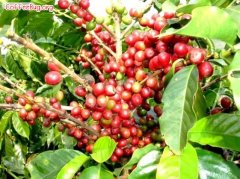
The basics of coffee beans the three native species of coffee
Coffee belongs to the evergreen shrub of the genus Rubiaceae, which is centered in the tropics. There are about 6000 species of Rubiaceae belonging to 500 genera. Coffee has always been thought to have certain effects, such as strengthening the stomach, waking up the brain, stopping bleeding, dissipating heat, strengthening the body, and so on. The more famous Rubiaceae plant is Gardenia jasminoides, whose fruit was dried and used as medicinal material a long time ago. The three native species of coffee

Introduction to the Flavor description Grinding scale of Ethiopian Native seed 90 + Honey Kiss Coffee
Looking forward to Ruby (Perci Ruby N2): [Origin]: 90 + Panamanian Rosa Manor [season]: 2013 to 2014 [Variety]: Rosa [Level]: 195 [altitude]: 1250m-1650m [treatment]: 90 + patented Ruby treatment [Flavor]: the ruby treatment has strong tropical fruit flavours of brandy and honey. The heat of mangoes and pineapples

General knowledge of boutique coffee culture Greek native coffee
In fact, espresso came to Greece as early as 20 years ago, but it was not until 10 years later that it became popular there. Greek food critic Marie Antimilona (Marianthi Milona) believes that locally, going to a coffee shop for coffee can give people a sense of social identity. She pointed out that although the Greek economy has been depressed in recent years, people will not hesitate.

The basic knowledge of Coffee beans Coffee beans are the three native species of coffee
Coffee belongs to the evergreen shrub of the genus Rubiaceae, which is centered in the tropics. There are about 6000 species of Rubiaceae belonging to 500 genera. Coffee has always been thought to have certain effects, such as strengthening the stomach, waking up the brain, stopping bleeding, dissipating heat, strengthening the body, and so on. The more famous Rubiaceae plant is Gardenia jasminoides, whose fruit was dried and used as medicinal material a long time ago. The three native species of coffee

Toarco Kalossi Toraja, native species of coffee bean Sulawesi
Toarco Kalossi Toraja, the native species of Sulawesi, began to grow coffee (old trees) in this special volcanic terrain in 1750. the coffee beans and appearance are similar to Mantenin in Sumatra, beautiful and full-bodied, with a more fresh aroma! Many Japanese experts describe her as sweet like single malt whisky, with a rich nutty flavor and a smooth taste.

90 + Fine Coffee Honeykiss NekisseN2 Ethiopia Native species
Honey kiss (NekisseN2): [origin]: 90 + Ethiopia Wellega (Woliga) and Sidama (Hidamo) producing areas [season]: 2013-2014 [variety]: Ethiopian native species [Level]: 12 [altitude]: 17502000m [treatment]: sun [flavor]: taste clean, multi-layered. Peaches, berries, passion fruit and cream,

Red Honey Kiss (Nekisse Red N2) Ethiopian native species Wellega (Waliga) and
The second wave of coffee people are used to describing the essence of coffee with subjective rules of thumb.
Nekisse Red N2 Ethiopian Native Species Fine Coffee Black Coffee
The second wave of coffee people used subjective rules of thumb to describe coffee extraction